

The small pull of the hook through each loop feels especially gentle when the phone case begins to take shape. The fabric rests lightly across your palm, and the cherry colors bring a little brightness to a quiet corner of the day. This Crochet Cherry Phone Case Pattern Tutorial makes a small, useful project for a Sunday morning, a rainy evening on the couch, or a few calm minutes beside your coffee.
Why This Project Is So Calming
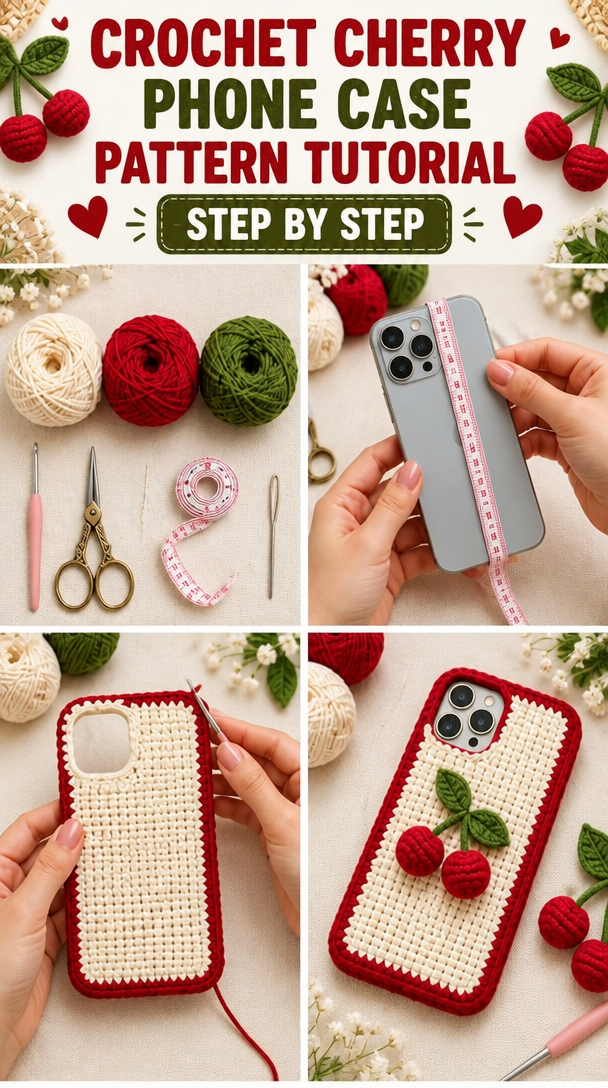
A phone case is just large enough to feel satisfying without asking for a whole season of your time. You can see the rows grow quickly, but you still get the soothing repetition of working the same stitch again and again. After the first ten minutes, my hands usually warm up, and the hook finds a comfortable little rhythm.
The cherry design adds interest without turning the project into a puzzle. The red and green color changes give your eyes something to notice, while the simple double crochet fabric keeps your hands moving. On a rainy evening, this is the kind of work that can sit beside you on the couch without taking over the room.
I like making this case when I want a project that feels finished in several evenings rather than several weeks. The first rows may curl slightly, which is normal for a small strip of double crochet. Once the fabric grows heavier, it settles across your fingers and becomes easier to handle.
How This Project Feels as It Grows
This pattern uses double crochet, a taller stitch that builds a soft fabric with a little drape. Each row moves along quickly, and the cherry motif comes from simple color blocks rather than complicated embroidery. You will also use chain stitches, which create the foundation and turning chain that lift the work into the next row.
The pattern uses US crochet terms. UK readers often find these posts too, and the same word can mean a different stitch there, so check your labels and references before you begin. I will explain each abbreviation as it appears.
The case is worked as one flat rectangle, then folded and joined along the sides. That keeps the shaping clear and gives you a chance to check the width before you sew anything together. Allow about two to three evenings, or roughly 3 to 4 hours of relaxed crochet, depending on your tension and how often you pause.
Pattern at a Glance
Keep this small overview nearby while you gather your yarn and settle into the first rows.
- Skill level: Easy, with basic color changes and seaming
- Finished size: 4.25 inches wide by 7.25 inches tall (11 cm by 18.5 cm)
- Gauge: 14 double crochet and 8 rows measure 4 inches (10 cm)
- Yarn: Worsted weight (weight 4, medium), about 120 total yards (110 m)
- Hook: H-8 (5.0 mm)
- Other supplies: Yarn needle, scissors, tape measure, and two optional stitch markers
- Stitch multiple: Any multiple of 2 stitches plus 2 for the turning chain
- Estimated time: 3 to 4 hours, spread over two to three evenings
What You Need for This Project
- About 120 yards (110 m) total of worsted weight (weight 4, medium) cotton yarn, divided into about 90 yards (82 m) of cherry red and 30 yards (28 m) of leaf green. A 100 g skein usually provides about 170 yards, so one skein of red and a small amount of green will be enough.
- H-8 (5.0 mm) crochet hook. A half size up or down is fine depending on your tension.
- Yarn needle for joining the case and weaving in the ends.
- Small scissors.
- Tape measure.
- Two stitch markers, optional, for marking the fold or keeping track of the first stitch.
I used a smooth worsted weight cotton because it gives the case a firm, pleasant fabric and handles regular handling well. Lily Sugar’n Cream is one easy-to-find example of this type of yarn, though you can use another worsted weight cotton with a similar yardage. The yarn slides through the hook with a quiet little drag, and the stitches stay easy to see.
Make a gauge swatch for twenty minutes if you can. Fourteen double crochet and eight rows should measure 4 inches (10 cm). The swatch tells you whether the phone case will fit your phone before you spend an evening on the full rectangle, and it also shows whether your fabric feels protective rather than floppy.
For a safe substitution, choose another worsted weight, smooth cotton that offers about 170 yards per 100 g skein. Acrylic can work, but it may feel warmer and less structured, and it can melt under a hot iron, so use distant steam or block it cold. Keep the yarn label with your project if possible, especially if you want to match the color later.
Step by Step
- Difficulty and repeat: This is an easy project using any multiple of 2 stitches plus 2 for the turning chain. Begin with red cotton yarn and an H-8 (5.0 mm) hook. Make a foundation chain of 18 chains, or ch, which creates the starting length of the case.
- Work one double crochet, or dc, into the fourth chain from the hook. A double crochet means you yarn over, insert the hook, pull up a loop, then work through two loops twice. Make one dc in each chain across. You will have 16 double crochet stitches at the end of the row.
- Chain 3 for the turning chain. This chain lifts the yarn to the height of the next row and counts as the first double crochet unless the pattern says otherwise. Turn your work, then make one dc in each stitch across. Row 2 has 16 dc.
- Continue with one dc in each stitch across every row. Keep the turning chain loose enough that the side edge does not pull inward. Work Rows 3 through 8 in red, with 16 dc in each row.
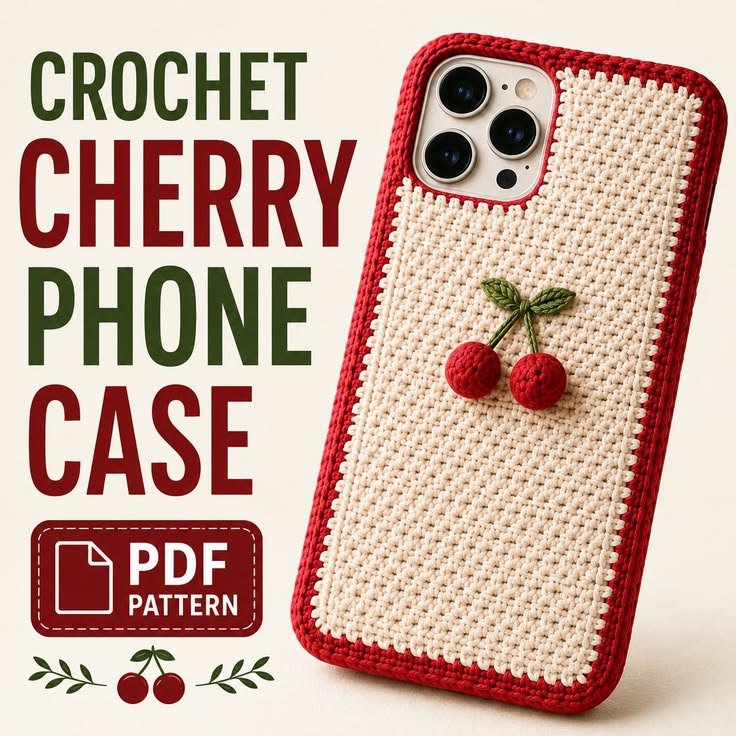
- For the cherry band, change to green at the end of Row 8 by completing the final yarn over with green. Chain 3 and turn. Work one dc in each stitch across for Row 9, keeping 16 dc. This small green row gives the design a gentle leafy break.
- Change back to red at the end of Row 9. Chain 3 and turn, then work one dc in each stitch across for Rows 10 through 14. Each row has 16 dc. Let the fabric rest in your hand as you work; it should feel flexible but not loose enough for a phone corner to show through.
- Make the cherry shapes on Rows 15 and 16 with red and green color changes. For Row 15, work 3 red dc, 2 green dc, 6 red dc, 2 green dc, and 3 red dc. You will have 16 dc. For Row 16, repeat the same color placement so the green stitches sit directly above the first green stitches.
- On Row 17, return to red and work one dc in each stitch across. Keep 16 dc. Rows 18 through 22 are also red, with 16 dc in each row. If you prefer a quieter case, you can leave out the green band and cherry blocks and make the whole piece in one color.
- Check the size before joining. The rectangle should measure about 4.25 inches wide by 7.25 inches tall (11 cm by 18.5 cm). If your width is smaller, your tension is tighter than the sample; if it is larger, your tension is looser. A small difference is fine, but adjust now if your phone needs a closer fit.
- Fold the rectangle so the short sides meet and the cherry design faces outward. Use optional stitch markers to hold the side edges together. With red yarn and a yarn needle, sew the two side seams using small whip stitches, leaving the top edge open. Keep your stitches secure but not tight enough to pucker the fabric.
- Weave in the ends by threading each tail through several stitches on the wrong side, meaning the inside or less visible side of the work. Trim the extra yarn after it feels secure. Turn the case right side out and gently shape the corners with your fingers.
- If the cotton looks slightly uneven, block the case by dampening it, shaping it to the finished measurements, and allowing it to dry flat. Blocking means shaping a finished crochet piece while it dries. Cotton responds well to a light wet block, but do not stretch the case so much that it becomes loose.
If a mistake appears several rows back, pause before pulling anything apart. Look at the final stitch of the row and count backward across the top loops; a missing stitch often shows as a shorter edge or a small diagonal gap. If you need to undo, pull back one stitch at a time and let the yarn relax before continuing. I have pulled back a full round after losing one stitch, and the quiet repair always felt better than trying to hide it.
Where This Piece Finds Its Place
The finished case slips easily into a tote, a basket beside the armchair, or a small pocket in your everyday bag. The cotton gives it enough body to protect the phone from ordinary scratches while keeping the piece soft in your hand. It also makes a cheerful little companion for errands, porch sitting, or a slow afternoon at the kitchen table.
For a simple gift, make the case in the recipient’s favorite two colors and tuck a handwritten note inside before wrapping it. A red and green version feels welcome in a holiday stocking, while soft yellow and cream can suit a spring birthday. You could also add a small matching key fob, but keep any loose parts firmly secured.
This project is not designed for a crib, car seat, or unsupervised young child. Small parts and long loose stitches can be unsafe for children under three, so give it as an adult accessory or check the finished construction carefully before gifting it to an older child.
Care and Storage
Because this case uses cotton, wash it by hand or on a gentle cycle with cold or warm water. Place it in a mesh bag if you use the washing machine, and choose a mild detergent. Avoid hot water, which can encourage cotton to shrink and can make the colors bleed into one another.
Press out water with a towel rather than wringing the case. Dry it flat in its natural shape, and never hang it wet because the fabric can stretch at the seams. If the case needs reshaping, dampen it lightly and block it cold on a clean towel.
Do not put this cotton case under a hot iron. If you ever make a version with acrylic yarn, remember that acrylic can melt under direct heat; use steam from a distance or block it cold instead. Store the case folded or lying flat in a breathable drawer rather than hanging it by a loop.
Keep the leftover yarn with its label so you have the dye lot if you need a repair. Cotton does not attract moths in the same way wool can, but a breathable storage space still helps the fabric stay fresh. If you make a wool version, untreated wool can felt with heat and agitation, while superwash wool tolerates the washing machine more easily, so always follow that yarn’s label.
Small Ways to Make It Your Own
Try a thicker yarn. A bulky yarn will make a larger, warmer case with more cushion, but the stitch definition will soften and the finished piece may not fit a standard phone. A thinner yarn will create a smaller, lighter case with more delicate drape. Make a new gauge swatch whenever the yarn weight changes.
Shift the colors. Deep burgundy and sage give the cherries an autumn feeling, while coral and leafy green feel bright in summer. You can also work the main rectangle in one color and add the green band only, which keeps the design simple while preserving the handmade detail.
Use single crochet for a firmer fabric. Single crochet, or sc, is a shorter stitch that makes a denser case with less drape. You will need more rows to reach 7.25 inches, and the fabric may feel more protective. This works well if your phone tends to slide around in looser crochet.
Resize with the stitch multiple. Add or remove stitches in groups of 2, keeping the extra 2 stitches for the turning chain. Measure the phone’s width, add a little ease, and make your foundation chain to that length. The height can change by adding or removing full rows.
Add a simple border. A round of single crochet around the top edge can make the opening look neat and help it hold its shape. Work evenly and avoid pulling the border tight. For a gift, you could make the border green and add a small embroidered stem with the yarn needle.
Frequently Asked Questions About the Crochet Cherry Phone Case Pattern Tutorial
Can I use a different hook size for this phone case?
Yes, you can use a different hook size if your tension needs it. Start with H-8 (5.0 mm), then go down to G-6 (4.0 mm) for a denser fabric or up to I-9 (5.5 mm) for a looser fabric. Check the finished width after several rows because the hook changes both the size and the amount of stretch.
What yarn can I substitute for the cotton?
Choose a smooth worsted weight yarn with about 170 yards per 100 g skein. Another worsted weight cotton is the closest substitute, while acrylic gives a softer, sometimes stretchier result. Avoid novelty yarn because the texture can hide missed stitches, and remember that acrylic cannot take direct heat from an iron.
What should I do if I find a mistake several rows later?
Pull back calmly to the row where the mistake began, working one stitch at a time. Look for the missing stitch at the row edge or compare the color blocks with the written sequence. If the case still measures correctly and the mistake is hidden inside a seam, you can leave it, but do not force the sides together if the stitch count changes the width.
Is this phone case suitable for a beginner?
Yes, this project suits a beginner who knows how to make a chain and a double crochet. The rectangle uses the same 16-stitch count for every row, and the color changes are small. The side seams take a little patience, but you can place markers before sewing and work slowly around the corners.
How long does the crochet cherry phone case take?
Plan on about 3 to 4 hours of crochet, spread over two to three evenings. Your time may change with tension, color changes, and sewing speed. The crocheting itself moves quickly, while weaving in ends and joining the seams can feel fiddly. Leave yourself an unhurried final session for finishing.
Does this pattern use US or UK crochet terms?
This pattern uses US crochet terms. The main stitch is double crochet, abbreviated dc, which is called treble crochet in UK terminology. The pattern also uses chain, or ch, and single crochet, or sc, in the variations. Check your favorite stitch guide before beginning if you usually read UK patterns.
Take the Time You Need
Let the little rows arrive at their own pace. Some evenings you may finish several, and other times you may only make a few while the coffee cools beside you. The case does not need perfect tension to carry the warmth of your hands, and a careful pause is always part of the making.
—META—
SEO Title: Crochet Cherry Phone Case Pattern Tutorial
Meta Description: Crochet a calm cherry phone case with simple US stitches, cotton yarn, clear steps, and gentle care for a useful handmade accessory.
Slug: crochet-cherry-phone-case-pattern
Category: Crochet Accessories
Tags: crochet phone case, cherry crochet, easy crochet, cotton crochet, crochet gift
Image Alt Text: Cherry crochet phone case rectangle with red and green color blocks
Hands crocheting the cherry phone case with a red yarn ball nearby
Pinterest Title: Cherry Crochet Phone Case Tutorial
Pinterest Description: Make a sweet cherry phone case with simple stitches and cotton yarn. A small, calming project for quiet evenings and thoughtful gifts

Crochet Cherry Phone Case
- Total Time: 240 minutes
Description
This Crochet Cherry Phone Case Pattern Tutorial makes a small, useful project for a Sunday morning, a rainy evening on the couch, or a few calm minutes beside your coffee.
Materials
- About 120 yards (110 m) total of worsted weight cotton yarn, divided into about 90 yards (82 m) of cherry red and 30 yards (28 m) of leaf green.
- H-8 (5.0 mm) crochet hook.
- Yarn needle for joining the case and weaving in the ends.
- Small scissors.
- Tape measure.
- Two stitch markers (optional).
Instructions
- Begin with red cotton yarn and an H-8 (5.0 mm) hook. Make a foundation chain of 18 chains.
- Work one double crochet (dc) into the fourth chain from the hook. Make one dc in each chain across. You will have 16 dc at the end of the row.
- Chain 3 for the turning chain and turn your work. Make one dc in each stitch across. Row 2 has 16 dc.
- Continue with one dc in each stitch across every row. Work Rows 3 through 8 in red with 16 dc in each row.
- For the cherry band, change to green at the end of Row 8 by completing the final yarn over with green. Chain 3 and turn. Work one dc in each stitch across for Row 9, keeping 16 dc.
- Change back to red at the end of Row 9. Chain 3 and turn, then work one dc in each stitch across for Rows 10 through 14, each with 16 dc.
- Make the cherry shapes on Rows 15 and 16 with red and green color changes. For Row 15, work 3 red dc, 2 green dc, 6 red dc, 2 green dc, and 3 red dc.
- For Row 16, repeat the same color placement.
- On Row 17, return to red and work one dc in each stitch across with 16 dc. Rows 18 through 22 are also red, with 16 dc in each row.
- Check the size before joining. The rectangle should measure about 4.25 inches wide by 7.25 inches tall.
- Fold the rectangle so the short sides meet and the cherry design faces outward. Use optional stitch markers to hold the side edges together.
- With red yarn and a yarn needle, sew the two side seams using small whip stitches, leaving the top edge open.
- Weave in the ends by threading each tail through several stitches on the wrong side. Trim the extra yarn after it feels secure. Turn the case right side out and gently shape the corners with your fingers.
- If the cotton looks slightly uneven, block the case by dampening it, shaping it to the finished measurements, and allowing it to dry flat.
Notes
This project is not designed for a crib, car seat, or unsupervised young child. Small parts and long loose stitches can be unsafe for children under three.
- Active Time: 180 minutes