
This post contains Amazon affiliate links. As an Amazon Associate I earn from qualifying purchases.
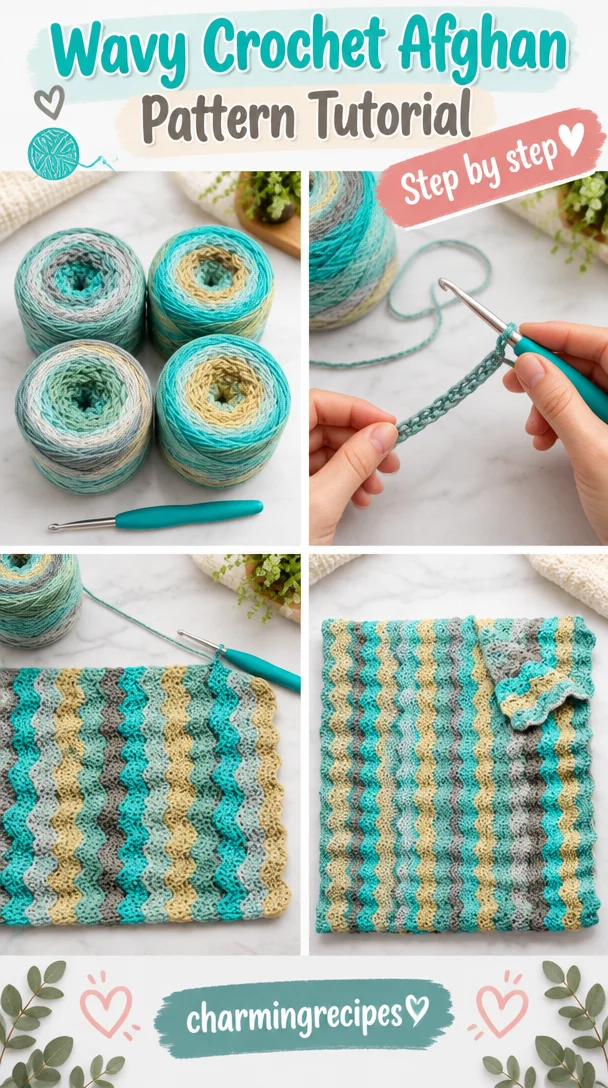
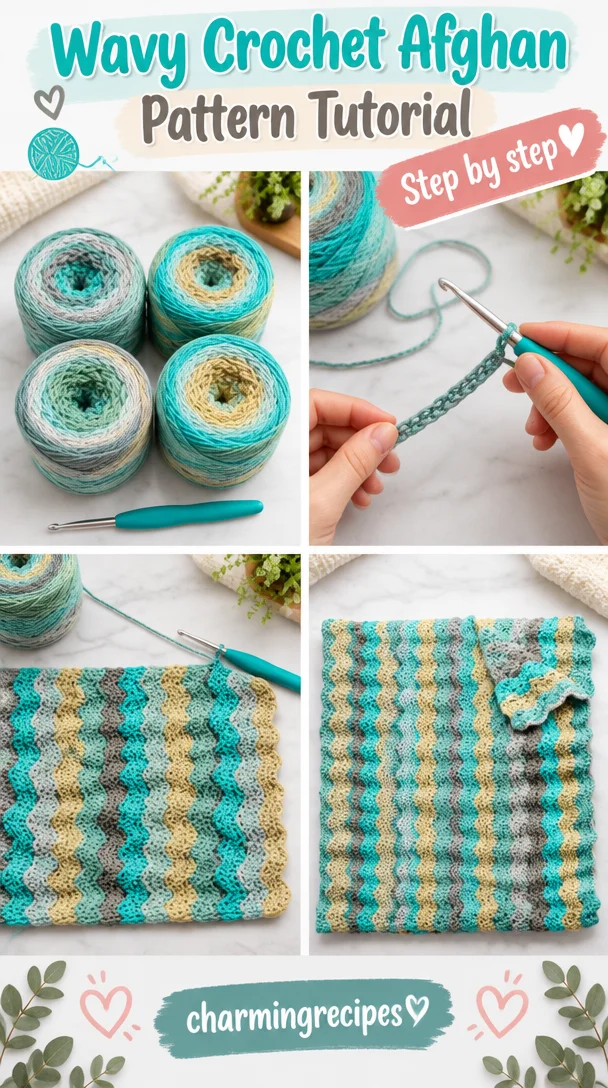
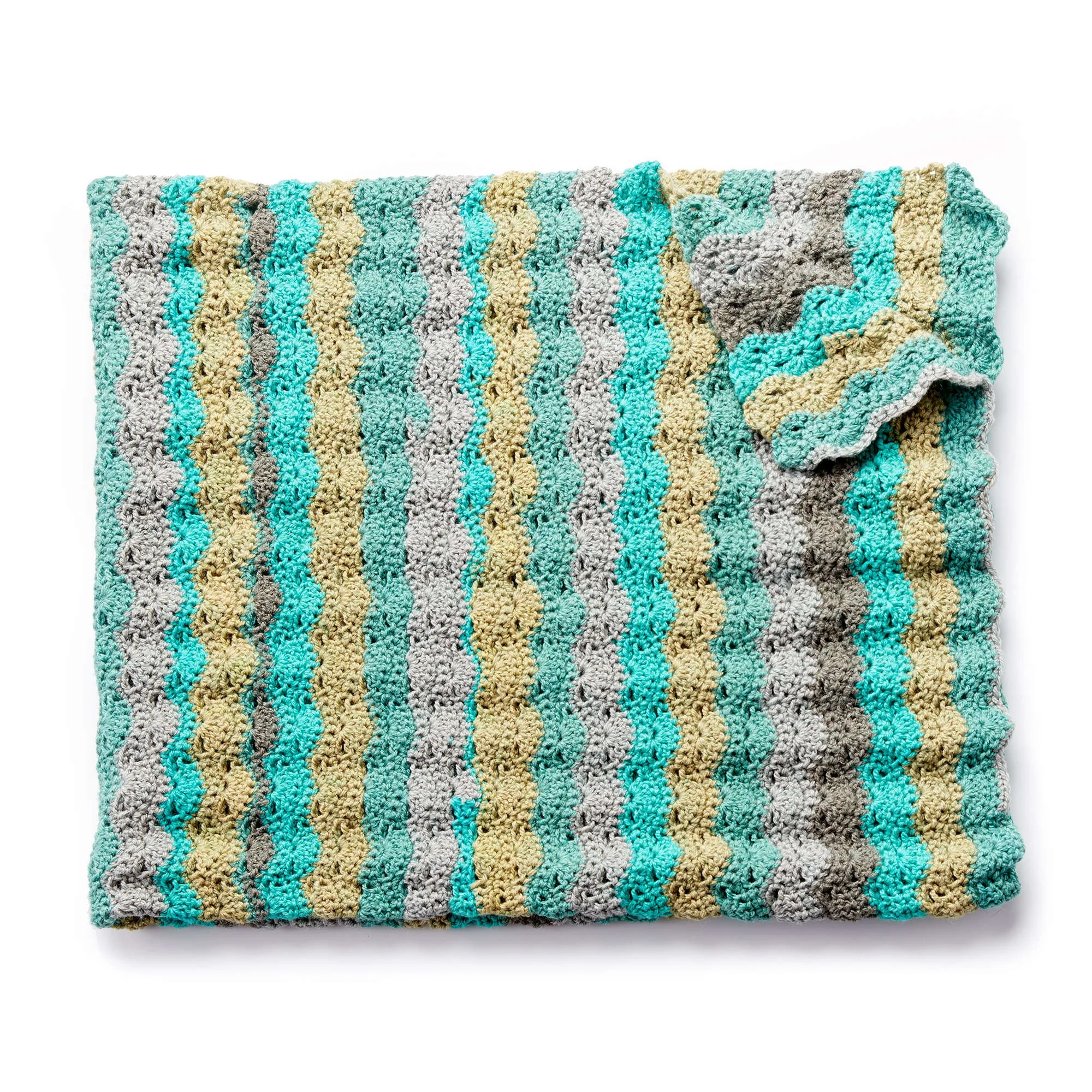
The Wavy Crochet Afghan is made with repeated peaks and valleys that create a soft, flowing ripple across the fabric. It’s a satisfying project for crocheters who enjoy a steady stitch pattern, and the simple repeating rows make it easy to settle into a relaxed rhythm. The finished afghan is a welcoming layer for a sofa, reading chair, or bed—and a thoughtful handmade gift for someone who appreciates cozy home comforts.
Why you’ll love this pattern
The wave effect comes from alternating groups of single crochet and double crochet. You don’t need to shape each ripple separately: the stitch groups create the curves as you work across the row. Once you have the pattern repeat established, the four-row sequence is straightforward to follow.
This project is a useful way to practice keeping track of stitch groups and maintaining even edges across a long row. It also makes a versatile home accessory. The changing colors in Caron® Cakes™ yarn can add visual interest to the waves without requiring you to switch yarn colors yourself.
The afghan’s generous length makes it well suited to curling up under or draping over furniture. It can also make a special gift for a housewarming, birthday, or holiday. Because the pattern repeats, you can work on it a little at a time and pause between sessions without losing your place—especially if you note which row you just finished.
“Once I marked the first wave repeat, the pattern became easy to follow. I enjoyed watching the colors move through the ripples, and the finished afghan feels right at home on my sofa.”
Before you begin
You’ll make a long, ripple-textured afghan using a foundation chain, a single-crochet base row, and a four-row stitch pattern. The shaping is created by placing seven double crochet stitches together in designated stitches, then working stretches of single crochet between the wave groups. The pattern’s two main texture rows alternate with plain single-crochet rows.
The instructions specify a starting chain of 171 and a length of approximately 56 inches (142 cm), ending after the fourth pattern row. The finished width is not provided, so it’s best to work from the stated yarn and hook and check the width as you go if it matters for your intended use.
The pattern uses familiar stitches: chain, single crochet, and double crochet. A confident beginner can try it, but the long starting chain and repeated stitch counts call for careful counting. Allow for a substantial project rather than a quick weekend make; the time will depend on your pace, how often you crochet, and how much time you can set aside.
Abbreviations used: ch = chain; sc = single crochet; dc = double crochet; st(s) = stitch(es); rep = repeat; beg = beginning.
Materials you’ll need
- Caron® Cakes™ yarn: 4 balls
- Size U.S. H/8 (5 mm) crochet hook
The pattern is written for Caron® Cakes™. Check the yarn label for its fiber content, recommended care, and dye-lot information, as these details can vary by product or yarn line. If you substitute a different yarn, choose one with a similar thickness and check that the fabric has a comparable drape. Changing yarn weight or hook size can change the afghan’s width, length, texture, and yarn requirement.
Step-by-step instructions
The pattern begins with a foundation chain and a single-crochet foundation row. Then you work four rows in sequence to form the ripples. The chain count and stitch counts are important: if the first row does not line up as written, pause and recount before continuing.
-
Make the foundation chain.
Chain 171. -
Work the foundation row.
Make 1 single crochet in the second chain from the hook. Make 1 single crochet in each remaining chain to the end. Turn. You should have 170 single crochet stitches. -
Work the first pattern row.
Chain 3; this turning chain counts as 1 double crochet. Make 3 double crochet in the next single crochet.Then repeat the following sequence: skip the next 3 stitches, make 1 single crochet in each of the next 7 stitches, skip the next 3 stitches, and make 7 double crochet in the next stitch.
Repeat that sequence until 14 stitches remain. Skip the next 3 stitches, make 1 single crochet in each of the next 7 stitches, skip the next 3 stitches, and make 4 double crochet in the last stitch. Turn.
-
Work the second pattern row.
Chain 1. Make 1 single crochet in every stitch across the row. Turn. -
Work the third pattern row.
Chain 1. Make 1 single crochet in each of the first 4 stitches.Repeat the following sequence: skip the next 3 stitches, make 7 double crochet in the next stitch, skip the next 3 stitches, and make 1 single crochet in each of the next 7 stitches.
Repeat until 11 stitches remain. Skip the next 3 stitches, make 7 double crochet in the next stitch, skip the next 3 stitches, and make 1 single crochet in each of the last 4 stitches. Turn.
-
Work the fourth pattern row.
Chain 1. Make 1 single crochet in every stitch across the row. Turn. -
Repeat the four pattern rows.
Continue repeating the first, second, third, and fourth rows until the work measures approximately 56 inches (142 cm) from the beginning. Finish after completing a fourth row. -
Fasten off.
Fasten off the yarn. Weave in the yarn ends securely, taking care not to pull the fabric out of shape.
Understanding the ripple repeats
On the first pattern row, the groups of 7 double crochet form one set of wave peaks, while the single-crochet sections create the lower portions between them. On the third row, the placement of the double-crochet groups shifts to build the next part of the ripple. The second and fourth rows are worked in single crochet across, giving the fabric a calmer row between the more sculptural rows.
In the first pattern row, the turning chain counts as a double crochet. Remember that when you work into the row’s first stitches. At the end of that row, the final group is 4 double crochet in the last stitch, not 7. These edge groups help the row begin and end neatly.
The instructions call for 7 double crochet stitches in a single stitch. Work all 7 into the same stitch, rather than spreading them over several stitches. This makes the cluster of tall stitches that produces the rounded wave. Keep the skipped stitches easy to see as you work; if a stitch count is off, it’s often because a skip or a group was missed.
Ways to use your finished project
Drape the afghan over the back of a sofa or the arm of a reading chair for an easy, cozy accent. Fold it at the foot of a bed so it’s ready as an extra layer on a cool evening. Its ripple rows give it enough texture to look inviting even when it’s folded or casually tossed over furniture.
The afghan also makes a practical handmade gift. If you’re making one for someone else, consider their home colors and whether they prefer a lighter or more substantial blanket. A finished project can also be a comforting addition to a quiet reading corner, guest room, or family room.
Caring for your crochet afghan
Follow the care instructions on the yarn label. The fiber content of the yarn is not specified here, so avoid assuming that it can be washed or dried in a particular way. When in doubt, gentle handling is the safest choice.
If the label allows washing, use the recommended water temperature and cycle. A mesh laundry bag can help protect the afghan from snagging in a machine. Avoid hot water and high heat unless the label specifically says they are safe for the yarn. If washing by hand, support the afghan rather than lifting it by one edge while wet, as the weight of damp crochet can stretch the fabric.
After washing, gently press out excess water without twisting or wringing. Reshape the afghan and dry it flat on a clean surface, if the care label permits. This helps prevent the long edges from stretching unevenly. Pinning or blocking is not essential unless the fabric needs tidying; if you do block it, use a method suitable for the yarn fiber and avoid stretching the ripples beyond their natural shape.
Store the afghan clean and completely dry. Fold it loosely in a breathable storage space, away from direct sunlight and moisture. If you notice loose fibers or pills, follow the yarn maker’s care advice and remove pills gently rather than pulling them.
Helpful tips for a smoother finish
- Count the foundation chain carefully. A chain of 171 can be easy to miscount. Check it before beginning the foundation row, and consider placing a marker every 20 or 25 chains while you count.
- Keep the foundation chain relaxed. A tight starting chain can pull in the lower edge and make the afghan narrower at the bottom. Try to chain loosely but consistently, or use a larger hook just for the foundation chain if you tend to crochet tightly. Return to the stated 5 mm hook for the rest of the work.
- Check the first row before moving on. The foundation row should contain 170 single crochet stitches. Confirm this count before starting the ripple pattern.
- Use a marker to track the repeat. Place a removable stitch marker at the start or end of a repeat, then move it as you work. It won’t replace counting, but it can make it easier to see where each group begins.
- Count the single crochet sections. On the first and third pattern rows, the stretches of 7 single crochet stitches are easy to miscount when you’re focused on the double-crochet waves. Count each stitch as you make it.
- Work all the specified stitches into one stitch. The groups of 7 double crochet belong together in a single stitch. Placing them across several stitches changes the ripple shape.
- Watch the edges. The first row begins with a turning chain that counts as a double crochet, and its last stitch contains 4 double crochet. These details help preserve the edge shape and stitch count. At the end of each row, check that you have worked into the correct last stitch before turning.
- Check the fabric every few repeats. Spread the afghan out on a flat surface and look for consistent wave peaks and valleys. A misplaced cluster may stand out more clearly across several rows than it does while the project is bunched on your lap.
- Measure after a fourth row. The pattern says to stop at approximately 56 inches and end on a fourth row. Measuring after that row makes it easier to follow both instructions.
- Weave in ends securely. Work ends through several stitches on the wrong side and change direction once or twice. Avoid pulling the yarn tight enough to pucker the fabric.
Creative variations
Choose a different color palette. The pattern’s ripple texture works well with gradual color changes, high-contrast stripes, or a coordinated set of shades. Caron® Cakes™ provides color changes as you crochet, but you could also use another suitable yarn. If changing colors manually, plan where you want the color changes to fall so they look intentional across the waves.
Adjust the length carefully. The instructions give an approximate finished length of 56 inches, so you may choose to stop earlier or repeat the four-row sequence for longer. Keep the row sequence intact and finish on a fourth row. A longer afghan will use more yarn, and the pattern does not provide an exact estimate for a changed length.
Change the width with caution. The original foundation chain and stitch counts create the repeat used by this pattern. Simply adding or removing a few chains can disrupt the wave pattern or leave the edges uneven. For a width adjustment, you would need to preserve the ripple repeat and check the row counts carefully. A wider afghan will require more yarn.
Add an edging. A simple border of single crochet can give the sides and ends a tidier finish, but it is an optional change—the instructions do not include a border. Work evenly along the edges without pulling them tight, which can cause curling or draw the afghan inward. An edging may also change the finished size and yarn requirement.
Try a texture change only after testing. A different yarn thickness or a highly textured yarn can alter the definition of the waves and the softness of the drape. Make a small sample first if you are changing yarn or hook size. The finished afghan may be wider, narrower, denser, or more open than the version made with the specified materials.
Frequently asked questions
Is this crochet afghan suitable for beginners?
It can be a good project for a confident beginner who knows how to chain, single crochet, and double crochet. The stitches are familiar, but the long chain and repeated stitch groups require attention. Practicing the four-row sequence on a small sample can help you learn where the wave peaks and valleys fall before working on the full afghan.
What yarn and hook does the pattern call for?
The pattern specifies 4 balls of Caron® Cakes™ and a Size U.S. H/8 (5 mm) crochet hook. Check the yarn label for fiber and care details. A different yarn may change the finished size and drape, so use the stated materials when you want to follow the instructions as closely as possible.
How much yarn do I need?
The listed amount is 4 balls of Caron® Cakes™. If you make the afghan longer or wider, add yarn as needed, but the pattern does not provide a calculation for custom dimensions. If you’re substituting yarn, check the yardage per ball and allow extra for differences in thickness, gauge, or color changes.
How long does it take to make?
There is no set completion time. The afghan is a long project, and the time will depend on your pace, your stitch size, and how much time you crochet each day. Because the pattern uses a repeating four-row sequence, many crocheters find it easy to pick up again between sessions.
Can I use a different hook size?
You can, but changing the hook can affect the afghan’s dimensions, texture, and drape. A smaller hook usually makes a denser fabric, while a larger hook often creates a looser fabric. If you want to try another size, make a sample first and compare how the fabric feels before committing to the full project.
How do I make the afghan larger or smaller?
To change the length, work fewer or more four-row repeats, and finish on a fourth row as instructed. A longer afghan will need more yarn. Changing the width is more complicated because the ripple depends on the chain and stitch groups lining up; you’ll need to maintain the pattern repeat rather than adding or removing an arbitrary number of chains.
Why is my ripple pattern uneven?
Check that each group of 7 double crochet is worked into one stitch and that you skip the correct 3 stitches before and after the group. Also verify the 7 single crochet sections and the edge stitches. Uneven tension can change how pronounced the waves look, but a missed stitch or misplaced group is a common cause of ripples that don’t line up.
Why are the edges pulling in or curling?
A tight foundation chain can pull the bottom edge inward. Tight turning chains or inconsistent stitch placement can also affect the edges. Keep your chain and stitches relaxed, make sure you are working into the correct first and last stitches, and check the fabric after a few pattern repeats. If the piece is simply curling while you work, lay it flat to see whether the shape improves as more rows are added.
How should I wash the finished afghan?
Use the care instructions on the yarn label because the fiber content is not specified here. Wash gently using the recommended method and water temperature. Support the afghan when it is wet, reshape it, and dry it flat if the label permits. Avoid high heat unless the label says it is safe.
Can I sell an afghan made from this pattern?
The pattern details provided here do not state whether finished items may be sold. Check the original designer’s usage terms before selling an afghan made from the pattern.
Print
Wavy Crochet Afghan
Description
The Wavy Crochet Afghan is a cozy and visually appealing project that features repeated peaks and valleys created from alternating single and double crochet stitches. Perfect for crocheters looking for a relaxing stitching experience, this afghan makes a delightful addition to any home or a thoughtful gift.
Materials
- Caron® Cakes™ yarn: 4 balls
- Size U.S. H/8 (5 mm) crochet hook: 1
Instructions
- Make the foundation chain. Chain 171.
- Work the foundation row. Make 1 single crochet in the second chain from the hook. Make 1 single crochet in each remaining chain to the end. Turn. You should have 170 single crochet stitches.
- Work the first pattern row. Chain 3; this turning chain counts as 1 double crochet. Make 3 double crochet in the next single crochet. Then repeat the following sequence: skip the next 3 stitches, make 1 single crochet in each of the next 7 stitches, skip the next 3 stitches, and make 7 double crochet in the next stitch. Repeat that sequence until 14 stitches remain. Skip the next 3 stitches, make 1 single crochet in each of the next 7 stitches, skip the next 3 stitches, and make 4 double crochet in the last stitch. Turn.
- Work the second pattern row. Chain 1. Make 1 single crochet in every stitch across the row. Turn.
- Work the third pattern row. Chain 1. Make 1 single crochet in each of the first 4 stitches. Repeat the following sequence: skip the next 3 stitches, make 7 double crochet in the next stitch, skip the next 3 stitches, and make 1 single crochet in each of the next 7 stitches. Repeat until 11 stitches remain. Skip the next 3 stitches, make 7 double crochet in the next stitch, skip the next 3 stitches, and make 1 single crochet in each of the last 4 stitches. Turn.
- Work the fourth pattern row. Chain 1. Make 1 single crochet in every stitch across the row. Turn.
- Repeat the four pattern rows. Continue repeating the first, second, third, and fourth rows until the work measures approximately 56 inches (142 cm) from the beginning. Finish after completing a fourth row.
- Fasten off. Fasten off the yarn. Weave in the yarn ends securely, taking care not to pull the fabric out of shape.
Notes
A good project for a confident beginner who knows basic crochet stitches. The pattern can be adjusted for different color palettes and sizes, but care should be taken to maintain the integrity of the ripple pattern.