
As the sunlight filters softly through a window, illuminating the rich textures around the room, a quiet moment unfolds. A gentle rustle of paper fills the air as fingers reach for colorful materials, each piece waiting to come alive with creativity. Salt painting for kids is not just about art; it invites calm, connection, and a tactile experience that soothes. The feeling of the salt grains slipping between fingertips adds a delightful layer to this simple yet profound creative journey. Every dip of the brush into vibrant, mixed colors becomes a moment of mindfulness, encouraging both young and old to slow down and savor the process.
Why Make This Salt Painting for Kids
Salt painting for kids offers more than just a fun way to create. It beautifully blends art with a moment of reflection and discovery. In the act of sprinkling salt, the sensory experience captivates. The sound of salt pouring, the crunch under pressure, and the sight of it shining in the light weave together to create a peaceful atmosphere. Kids and caregivers alike find joy not only in the artwork but in the slow, intentional actions involved.
This project invites a pause—a time to breathe deeply and engage with materials. Allowing space for each brush stroke, for every sprinkle of salt, offers quiet satisfaction. As colors merge and textures clash, feelings of serenity grow, grounding everyone in the present. The mindful act of creating something beautiful together fosters connection. It nurtures a sense of achievement that is as wonderful as the finished piece.
A Gentle Look at the Process
Creating salt paintings unfolds as a rhythmic journey, inviting movement and flow. Begin by preparing a workspace adorned with your collected materials, letting their colors and textures inspire your project. The warm, inviting sound of paint stirring lends an air of anticipation, encouraging exploration and spontaneity.
Each droplet of glue gives way to the tactile nature of salt as it glistens against the painted background. The way colors flow, blend, and define edges brings a mesmerizing quality that enhances focus and calm. Through this gentle exploration, one finds delight—not only in finished pieces but also in the very act of making.
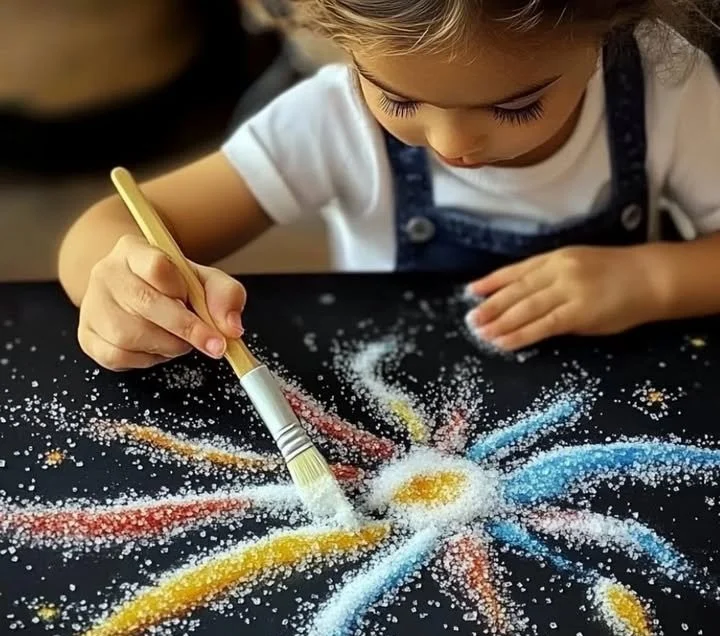
Materials You’ll Need
- Thick watercolors or liquid watercolors (easy to find in art stores)
- Table salt (a simple common kitchen staple)
- Heavy cardstock or watercolor paper (thick surfaces are best)
- Liquid glue (white glue works wonderfully)
- Small bowls or containers for mixing colors (optional)
- Brushes or droppers (to create different effects)
- A shallow tray or sheet for catching excess salt (optional)
Gather these materials at your own pace, allowing the textures and colors around you to engage your senses.
Step-by-Step Directions
-
Start by preparing your workspace. Lay out your cardstock or watercolor paper. Take a moment to feel how it rests against the table, observing its smooth surface.
-
Using the liquid glue, create a design on the paper. Let your hand move freely. Feel the glue glide under your fingers, and relish the flow.
-
Once your design is in place, gently sprinkle salt over the glued areas. Watch how the salt adheres, creating delicate textures that elevate your artwork.
-
If using, mix your watercolors in small bowls or directly on the palette. The colors should feel smooth and vibrant. Dip your brush or dropper into the paint and let the colors dance onto the salt. Observe how they spread, intertwining with one another.
-
After a moment of creation, tilt the paper slightly. Allow the excess salt to tumble away into the tray or sheet below. Delight in the sight of colors emerging from under the layer of salt.
-
Allow your artwork to dry completely. Take your time here; the anticipation adds to the enjoyment of your creation.
-
Finally, gently shake any remaining salt off the paper. Your salt painting is now a unique piece of art, showcasing both your creativity and the joy of the process.
Enjoying the Finished Piece
Once the salt painting is dry, its charm continues through the way it catches light and draws the eye. Display it on a favorite wall or shelf—perhaps by a window where the sunlight can play upon it. Each glance reminds you of the peaceful moments spent creating. You might even create a small gallery, showcasing multiple salt paintings made over time, celebrating the journey of mindful making.
These paintings can serve as lovely gifts as well. Offer them to family members or friends, sharing not just the artwork but also the story of the creation. The warmth of handmade art deeply resonates with the recipient, adding a personal touch to their space.
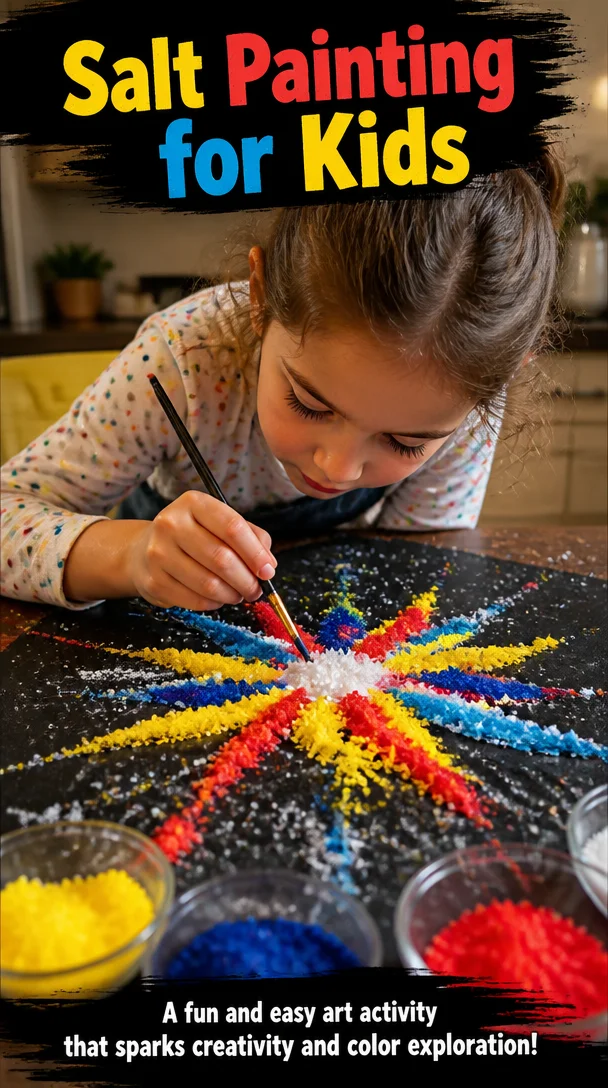
Making This DIY Last
To ensure your vibrant salt painting lasts through time, store it in a flat, dry location. You may want to place it in a protective frame to guard against dust and smudges. If you need to save space, keep it between sheets of clean paper wrapped in a folder, preserving its beauty while ensuring easy access for display or gifting.
If the colors start to fade or look dull over time, consider adding a new layer of watercolor to freshen it up. The salt naturally absorbs some moisture from the air, so keeping it dry helps maintain both appearance and integrity.
Gentle Tips & Variations
- Try using different types of paper. Experimenting with textured papers can lead to new and exciting results in your artwork.
- Mix in glitter with the salt for added sparkle and texture, turning your painting into a shimmering delight.
- Encourage kids to create seasonal themes, using colors that reflect the nature around them—like warm earth tones in autumn or bright pastels in spring.
- Explore using stencils or stamps to create unique shapes within your salt paintings, letting creativity flow in different directions.
- Allow for collaborative pieces, bringing friends or family into the process for shared moments of joy.
FAQs About Salt Painting for Kids
What ages is salt painting suitable for?
Salt painting can engage a wide range of ages. Young children benefit from the sensory aspects, while older kids may enjoy the act of creating refined designs. It makes for great family fun.
How long does the painting take to dry?
Typically, allow 24 hours for the painting to dry completely. Ensure it has space to breathe, free from dust and items that might disturb it.
Can we reuse the salt after making the painting?
While reusing the salt is possible, it’s best to use a new batch for future projects to keep the paintings vibrant and avoid any contamination from the glue or paint.
What if we don’t have liquid watercolors?
You can easily substitute with regular watercolors mixed with water to create a thin paint. Just be mindful of the amount of water to ensure it adheres well to the salt.
Can adults join in on this project too?
Absolutely! Salt painting is as much for adults as it is for children. Join in the fun and create your own pieces, fostering a shared experience of mindful making.
A Gentle Note Before You Go
As you take a moment to reflect on your salt painting experience, treasure not just the art but the tranquility found along the way. Each brush stroke and sprinkle of salt captures a moment of intention and connection. Cherish your creative time and remember that the journey itself holds as much beauty as the finished piece. Allow yourself to slow down, enjoy the simple pleasures, and celebrate the joy of making and being present.
PrintSalt Painting for Kids
- Total Time: 10 minutes
- Yield: 1 artwork
- Diet: N/A
Description
Engage in a calm and creative experience with salt painting, perfect for children and adults alike. This project blends art with sensory exploration.
Ingredients
- Thick watercolors or liquid watercolors
- Table salt
- Heavy cardstock or watercolor paper
- Liquid glue
- Small bowls or containers for mixing colors (optional)
- Brushes or droppers
- A shallow tray or sheet for catching excess salt (optional)
Instructions
- Start by preparing your workspace. Lay out your cardstock or watercolor paper.
- Using the liquid glue, create a design on the paper.
- Once your design is in place, gently sprinkle salt over the glued areas.
- If using, mix your watercolors in small bowls or directly on the palette.
- After a moment of creation, tilt the paper slightly to allow the excess salt to tumble away.
- Allow your artwork to dry completely.
- Finally, gently shake any remaining salt off the paper.
Notes
Experiment with different types of paper and add glitter for extra sparkle.
- Prep Time: 10 minutes
- Cook Time: 0 minutes
- Category: Art
- Method: Crafting
- Cuisine: N/A