

This post contains Amazon affiliate links. As an Amazon Associate I earn from qualifying purchases.
The yarn has a soft, steady weight in your lap as the afternoon light moves across the room. Your hook slips through a loop, pulls the yarn through, and makes one more small piece of fabric. The Dinosaur Dog Snood grows quietly while the coffee cools beside you, and before long you have something useful for a chilly walk, a patient dog, or a thoughtful handmade gift.
Why Dinosaur Dog Snood Is So Soothing to Crochet
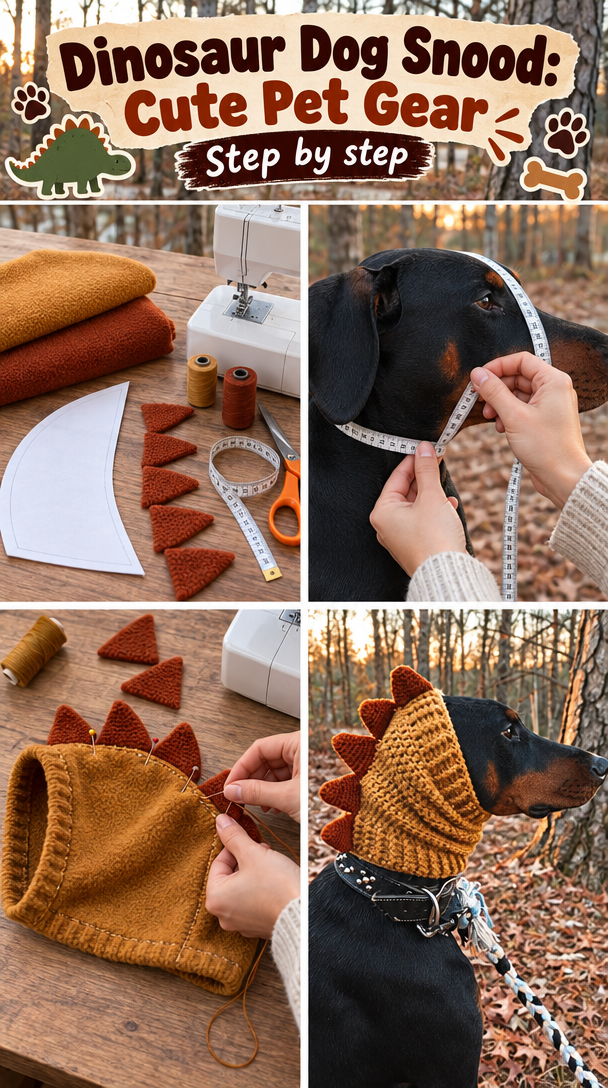
This project has a gentle rhythm. You work across simple rows, pause at the edges, and watch the fabric become wide enough to wrap around a dog’s neck. The stitch pattern has enough texture to keep your hands interested without asking you to solve a puzzle every few minutes.
I made this snood on the couch during a rainy evening, with the yarn basket tucked beside my chair. The first rows curled a little, as crochet often does, but the fabric settled once it gained weight. After the first ten minutes, my hands warmed up and the quiet click of the hook became part of the room.
The finished piece suits ordinary American home life. You can make it on a front porch in late summer, work a few rows beside the armchair on a cold fall evening, or keep it in a project bag for slow weekend mornings. Many people find crocheting calming because the repeated motion gives the mind one small place to rest.
This snood also feels satisfying because it has a clear purpose. It is not a large blanket that waits for months, and it is not so tiny that the finished object disappears in your hand. You can see progress after each row, which makes the work feel manageable even when you only have twenty quiet minutes.
How Dinosaur Dog Snood Comes Together
The snood uses half double crochet, usually written as hdc. A half double crochet sits between a single crochet and a double crochet in height, so it creates a fabric with warmth, flexibility, and a little more coverage than a short stitch. That balance works well around a dog’s neck.
The pattern begins with a foundation chain, which is the first row of linked loops. You will then work back across the chain in rows. A chain at the beginning of a new row acts as the turning chain, giving the next row enough height to sit evenly.
This pattern uses US crochet terms. UK readers often find these posts too, and the same word can mean a different stitch there, so please use the US meaning of half double crochet throughout.
The main fabric repeats across a multiple of two stitches, plus one extra stitch for the edge. The construction stays simple, but the fold-over shape gives the snood a little character. Plan on about two to three evenings, or roughly three to four hours of relaxed crocheting, depending on your pace and how often you pause.
Pattern at a Glance
Here are the details in one calm little list before you gather your supplies.
- Skill level: Easy, with basic shaping and seaming
- Finished size: 8 inches tall by 18 inches around (20 cm tall by 46 cm around)
- Gauge: 14 half double crochet stitches and 10 rows measure 4 inches (10 cm)
- Yarn: Worsted weight (weight 4, medium), about 340 yards total, or two 100 g skeins of about 170 yards each
- Hook size: H-8 (5.0 mm)
- Other supplies: Yarn needle, scissors, tape measure, and two optional stitch markers
- Stitch multiple: Any multiple of 2 stitches plus 1
- Estimated time: Three to four hours, spread across two to three evenings
Materials for Dinosaur Dog Snood
- Worsted weight yarn (weight 4, medium), acrylic, about 340 yards total; use two 100 g skeins of about 170 yards each. A washable acrylic yarn such as Red Heart is an easy-to-find example.
- H-8 (5.0 mm) crochet hook. Half a size up or down is fine depending on your tension and the fabric you prefer.
- Yarn needle for weaving in the ends.
- Sharp scissors.
- Tape measure for checking the dog’s neck and the finished snood.
- Two stitch markers, optional, for marking the first stitch of a row or holding the folded edge.
A gauge swatch takes about twenty minutes, but it saves more time later. Work enough half double crochet rows to measure 4 inches (10 cm), then count 14 stitches across and 10 rows tall. If your swatch comes out smaller, try a larger hook; if it comes out larger, try a smaller hook.
Acrylic suits this project because it stays affordable, washes easily, and keeps its shape without special handling. You can substitute another worsted weight yarn with a similar yardage, including a cotton-acrylic blend, but check the fabric before committing. A very soft novelty yarn may hide the stitches, while a stiff cotton can make the snood less flexible.
If you choose wool, remember that untreated wool can felt with heat, agitation, and warm washing. Superwash wool tolerates the washing machine better, but it may still behave differently from acrylic. Keep the fiber in mind when you plan the care routine.
Step by Step
- Difficulty and setup: This is an easy project using a stitch multiple of 2 plus 1. Measure the dog’s neck where the snood will sit, allowing a little ease so the finished fabric does not feel tight.
- Make a foundation chain of 29 stitches. A chain, abbreviated ch, forms the starting row of loops. Keep the chain relaxed; if it pulls tight, go up one hook size just for the foundation chain.
- Row 1: Yarn over, insert the hook into the second chain from the hook, yarn over, pull up a loop, yarn over, and draw through all three loops on the hook. This makes one half double crochet, abbreviated hdc. Work 1 hdc in each chain across. You will have 28 hdc.
- Row 2: Chain 1 and turn. The chain 1 is the turning chain and does not count as a stitch in this pattern. Work 1 hdc in the first stitch and in every stitch across. Count 28 hdc at the end of the row.
- Repeat Row 2 until you have 20 rows total. Each row has 28 hdc, and the fabric should measure close to 8 inches (20 cm) tall. Let the work rest in your hand from time to time so you can feel whether your tension is becoming tighter.
- Check your shape before seaming. Lay the rectangle flat and measure across the row direction. It should measure about 18 inches (46 cm), though your exact measurement may shift with tension. For a smaller dog, remove two foundation chains and work two fewer stitches in every row. For a larger dog, add two foundation chains and two stitches per row.
- Fold the rectangle so the short ends meet and the right side faces inward. The right side, or RS, is the side you want to show on the outside; the wrong side, or WS, is the inside. Match the rows carefully along the seam.
- Join the short ends with slip stitches. A slip stitch, abbreviated sl st, joins without adding much height. Insert the hook through both layers, yarn over, and pull through the fabric and the loop on your hook. Continue across all 28 stitches.
- Fasten off with a yarn tail about 8 inches (20 cm) long. Use a yarn needle to weave in the ends through several stitches, then change direction and weave back through the fabric. A tail left loose inside a dog’s snood can catch on a nail or become an irritating dangling thread.
- Turn the snood right side out and gently smooth the seam. If the fabric feels too loose, you can add a second line of slip stitches beside the first seam. If it feels too snug, remove the seam and use a looser joining tension.
- If a mistake appears, stop at the end of the current row and look for the last group of 28 stitches. A missed stitch often shows as a slanted edge or a small gap. Pull back one stitch at a time by easing the hook out, then redo the row calmly rather than tugging the whole piece apart.
- Block the finished snood only if it needs evening out. For acrylic, smooth it flat and use gentle steam from a distance without touching the yarn with a hot iron. Let it cool completely before moving it, because acrylic can melt under direct heat.
Where This Piece Finds Its Place
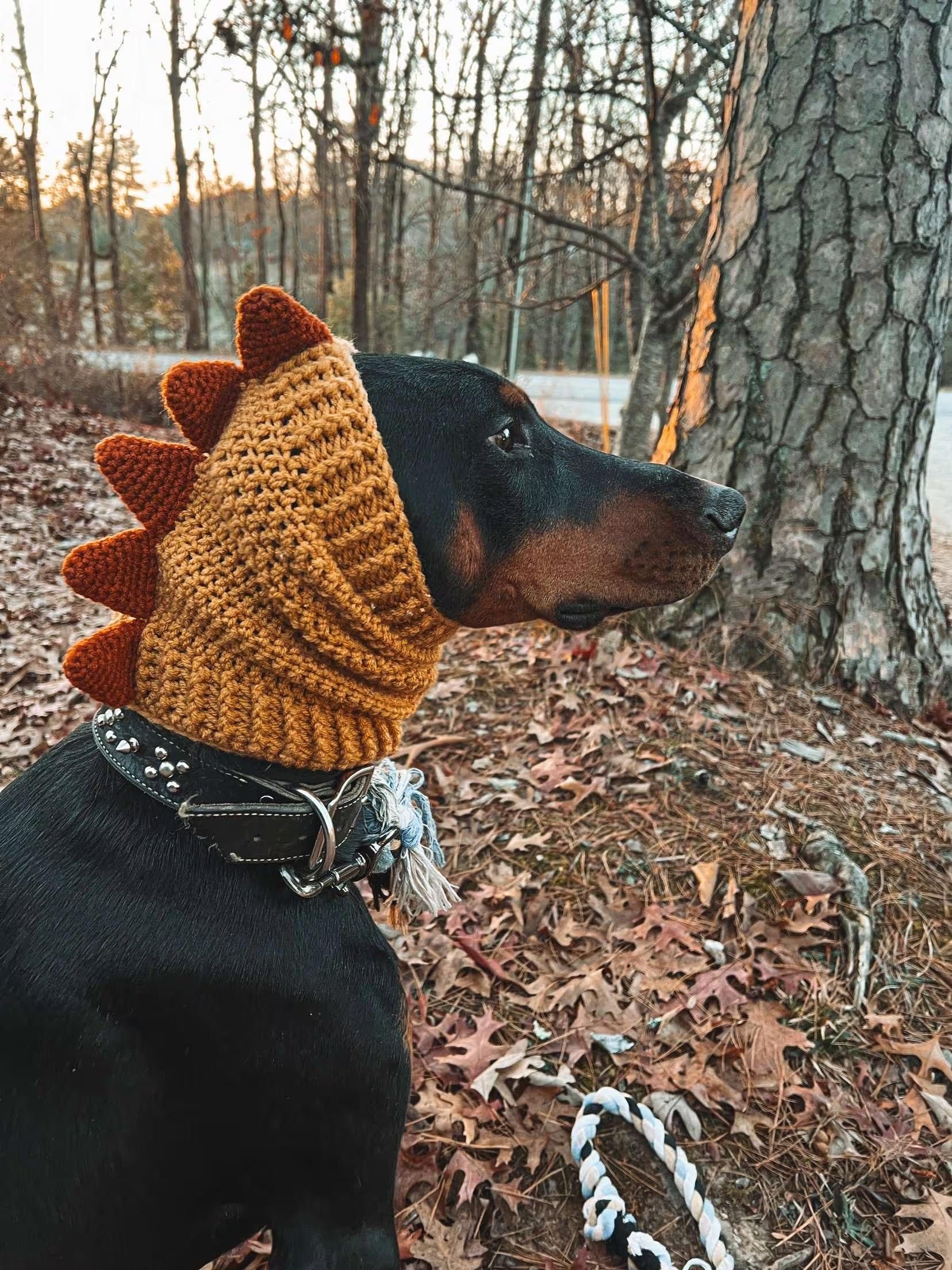
The finished snood works best as a soft neck covering for a supervised dog walk or a cool evening outside. It can sit in the basket beside the armchair, ready for the first cold snap, or travel in a tote with a leash and a small towel.
Check the fit each time you use it. The snood should sit comfortably without pressing on the throat, blocking breathing, or catching on the dog’s legs. Do not leave a dog unattended while wearing it, and do not use it in a crate, carrier, or car seat where loose fabric could become unsafe.
For a gift, measure the recipient dog’s neck before you begin if possible. A small tag with the fiber content and washing instructions makes the handmade present more useful. You can also pair the snood with a matching crocheted leash charm, as long as every small part stays secure and the dog cannot chew it loose.
If you sell finished items, my policy is simple: I sell only pieces I have checked for secure seams, comfortable fit, and safe use under supervision.
Caring for Your Crochet
This version uses acrylic yarn, so wash the snood by hand or on a gentle cycle with cold or warm water. Use a small amount of mild detergent and avoid bleach, fabric softener, and high heat. Acrylic usually handles ordinary washing well, but rough cycles can still distort the shape.
Reshape the snood while it is damp and dry it flat on a clean towel. Never hang it wet, because the weight of the water can stretch the rows and pull the seam out of alignment. Keep it away from a radiator, hot dryer setting, or direct iron.
Blocking can help the rectangle lie evenly. For acrylic, smooth it into shape while damp or use steam from a distance, keeping the heat away from the yarn. Acrylic can melt under a hot iron, so never press the iron directly onto the fabric.
Store the snood folded rather than hung, in a breathable basket or drawer. If you make a wool version, add cedar or lavender nearby for moth protection, but keep those materials where the dog cannot reach them. Save the leftover yarn with its label so you have the dye lot if you need to repair or enlarge the snood later.
Small Ways to Make It Your Own
Try a thicker yarn if you want a warmer, chunkier snood. A bulky yarn will make the piece grow faster and feel plush, but it will also change the finished size and drape. Make a fresh gauge swatch instead of relying on the numbers for worsted weight yarn.
A thinner yarn creates a lighter fabric with more flexibility. You may need more rows for the same height, and the snood may feel less protective in cold weather. This can work nicely for a small dog, a mild climate, or a dog that dislikes heavy clothing.
Play with color in a quiet way. One solid shade keeps the texture easy to see, while two shades can create simple color blocks. Change colors at the end of a row, carry no long floats inside the fabric, and weave the tails securely so nothing dangles.
You can swap half double crochet for single crochet, abbreviated sc, if you want a denser fabric. Single crochet makes shorter, firmer rows and usually takes more time. A double crochet, abbreviated dc, creates taller, airier fabric, which may feel too open for a warm snood but can suit a lightweight decorative version.
Resize by adjusting the foundation chain in groups of two stitches. Add or remove two chains at a time, then keep the matching stitch count in every row. A simple single crochet border can also tidy the edges, though it may slightly reduce the opening, so check the fit again afterward.
Frequently Asked Questions About the Dinosaur Dog Snood
Can I use a different hook size for the Dinosaur Dog Snood?
Yes, you can use a different hook size if your gauge or desired fabric calls for it. Try I-9 (5.5 mm) for a softer, looser fabric or G-6 (4.0 mm) for a denser fabric. Make a swatch first, because changing the hook changes the finished measurements and the way the snood stretches.
What yarn can I substitute for the acrylic worsted weight yarn?
Choose another worsted weight yarn, also called weight 4 or medium, with about 170 yards per 100 g skein. A cotton-acrylic blend or washable superwash wool can work, but each fiber changes the drape and care. Avoid very fuzzy yarns because they can hide missed stitches and make the seam harder to check.
What should I do if I notice a mistake several rows later?
Pull back only as far as the mistake if the error affects the shape or stitch count. Place the hook into the last correct loop before undoing stitches, then redo the row with a calm count of 28 hdc. If the mistake only changes a small bit of texture and does not affect the fit, you may decide to leave it as part of the handmade fabric.
Is this Dinosaur Dog Snood suitable for a beginner?
Yes, this pattern suits a beginner who knows how to chain, turn, and make a half double crochet. The project uses one main stitch and a simple seam. The fiddliest part is joining the short ends neatly, but matching the rows and using a yarn needle slowly makes that step manageable.
How long does it take to crochet this dog snood?
Most people can finish it in about three to four hours, spread across two to three evenings. Your time will depend on tension, interruptions, and whether you stop to measure the dog’s neck. The actual crocheting is straightforward, but checking the fit and weaving in the ends deserves a few unhurried minutes.
Does this pattern use US or UK crochet terms?
This pattern uses US crochet terms. The main stitch is US half double crochet, abbreviated hdc. UK terminology names that stitch differently, so check your reference before beginning if you usually follow UK patterns. The listed chain, slip stitch, single crochet, and double crochet meanings are all from the US system.
Take the Time You Need
Let the snood take the shape it wants under your hands. Count when counting helps, pause when your attention wanders, and trust that a small uneven place can usually be repaired with patience. The finished piece will carry the quiet evidence of your time, which is part of what makes handmade work feel at home.
Meta title: Dinosaur Dog Snood Crochet Pattern
Meta description: Crochet a cozy Dinosaur Dog Snood with this easy US-term pattern, simple half double crochet rows, clear sizing, care guidance, and gentle beginner tips.
Slug: dinosaur-dog-snood-crochet-pattern
Print
Dinosaur Dog Snood
- Total Time: 260 minutes
Description
Crochet a cozy Dinosaur Dog Snood with this easy US-term pattern, suitable for chilly walks or as a thoughtful handmade gift.
Materials
- Worsted weight yarn (weight 4, medium), acrylic, about 340 yards total; use two 100 g skeins of about 170 yards each
- H-8 (5.0 mm) crochet hook
- Yarn needle for weaving in the ends
- Sharp scissors
- Tape measure for checking the dog’s neck and the finished snood
- Two stitch markers, optional
Instructions
- Measure the dog’s neck where the snood will sit, allowing a little ease.
- Make a foundation chain of 29 stitches.
- Row 1: Yarn over, insert the hook into the second chain from the hook, yarn over, pull up a loop, yarn over, and draw through all three loops on the hook. Work 1 hdc in each chain across to have 28 hdc.
- Row 2: Chain 1 and turn. Work 1 hdc in the first stitch and in every stitch across. Count 28 hdc at the end of the row.
- Repeat Row 2 until you have 20 rows total. Each row should have 28 hdc and the fabric should measure close to 8 inches tall.
- Check the shape before seaming. The rectangle should measure about 18 inches across.
- Fold the rectangle so the short ends meet and the right side faces inward. Join the short ends with slip stitches.
- Fasten off with a yarn tail about 8 inches long and weave in the ends with a yarn needle.
- Turn the snood right side out and smooth the seam.
- If needed, block the finished snood only if it needs evening out.
Notes
The finished snood works best as a soft neck covering for a supervised dog walk or a cool evening outside. Check the fit each time you use it.
- Preparation Time: 20 minutes
- Active Time: 240 minutes