
This post contains Amazon affiliate links. As an Amazon Associate I earn from qualifying purchases.
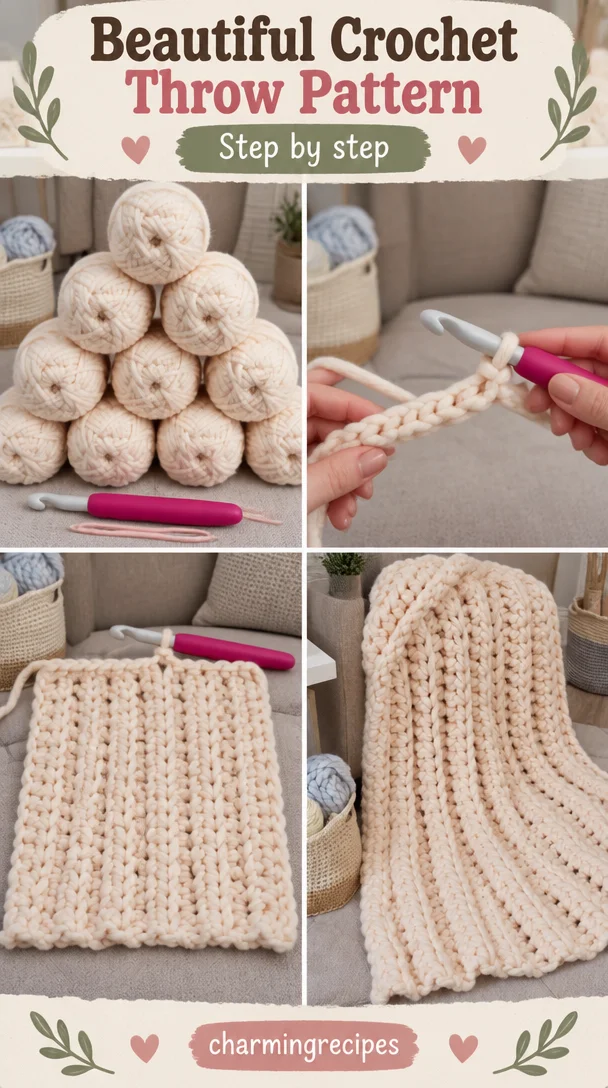
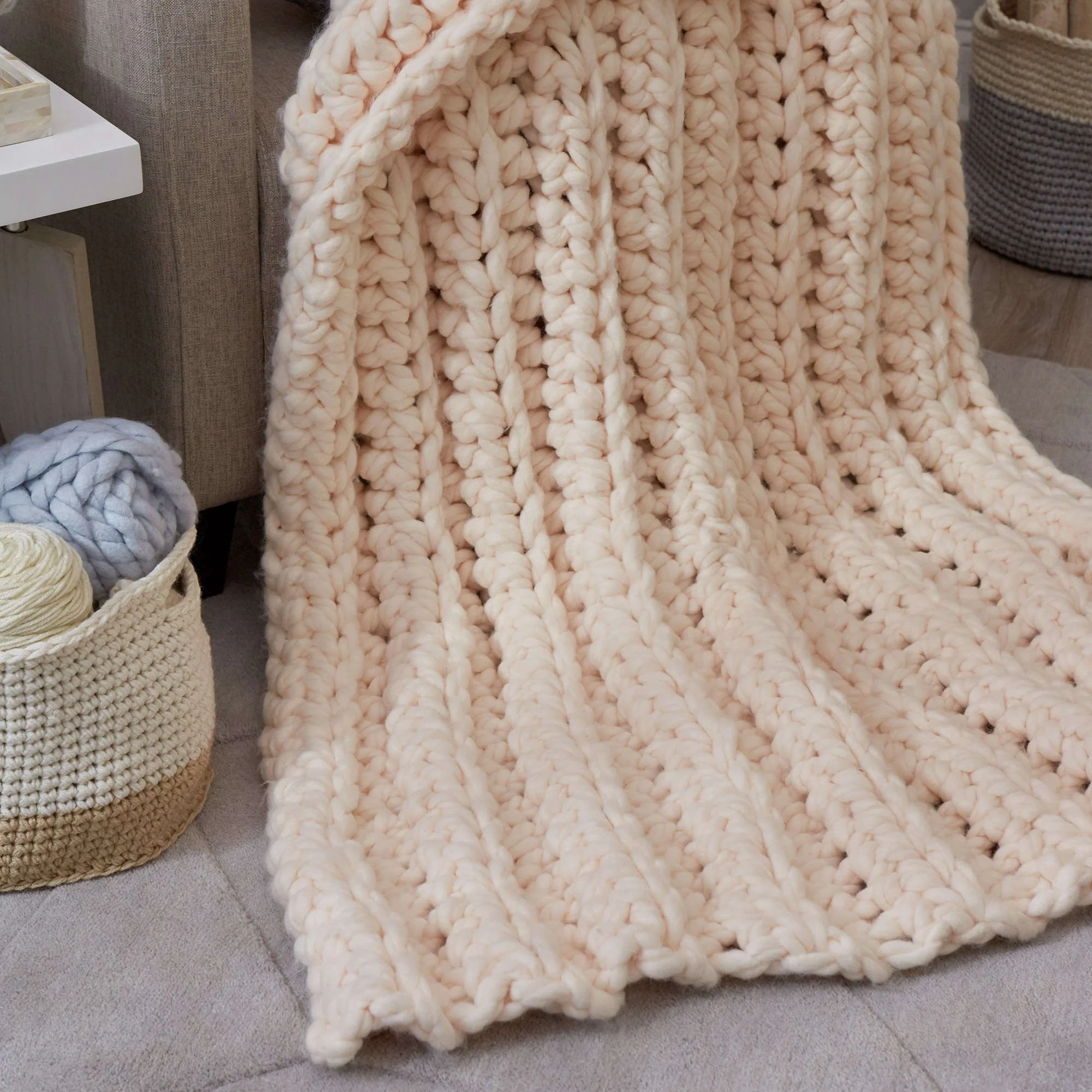
This plush crochet throw is made with oversized yarn, a very large hook, and a simple back-loop-only half double crochet stitch. The result is a bold, ridged fabric that works up without complicated shaping or stitch changes. It’s a satisfying project for crocheters who want a straightforward blanket-making rhythm, and its cozy texture makes it a lovely accent for a sofa, reading chair, or bed.
Why you’ll love this pattern
The construction is refreshingly simple: make a foundation chain, crochet across it, then repeat the same stitch across the remaining rows. That makes this throw a good choice for practicing half double crochet and getting comfortable working into back loops. The back-loop technique creates visible horizontal ridges, giving the fabric texture without needing a complicated stitch pattern.
The large yarn and 25 mm hook also make the stitches easy to see and handle. You can settle into a steady rhythm instead of keeping track of frequent pattern changes. Although the yarn is bulky, the finished project may be physically large to hold, so it is more comfortable to work on a table or couch than to carry around.
A handmade throw is useful every day and makes a thoughtful housewarming or holiday gift. Its substantial texture suits cozy home décor, especially when folded over a sofa arm or layered at the foot of a bed. Because the pattern is worked in rows, there is no joining rounds or assembling separate panels.
“I enjoyed how quickly the rows became familiar. The ridges gave the throw a lovely texture, and using the oversized hook made the simple stitch pattern feel extra satisfying.”
Before you begin
You’ll make a rectangular crochet throw in rows using half double crochet stitches. The first row is worked into the foundation chain. For the next 18 rows, chain 2 to begin each row, then work half double crochet stitches through the back loops only. The back-loop stitches produce the ridged surface.
The pattern uses a total of 19 rows. It is best suited to a crocheter who knows how to make a chain and a half double crochet. A newer crocheter can also try it, but should take extra care with the first stitch of each row and with the unusually large yarn and hook. The pattern does not provide finished measurements or a specific completion time. The thick materials can make the rows progress quickly, though the throw’s overall size and the effort of handling the bulky fabric will affect how long it takes.
Materials you’ll need
- RED HEART® Irresistible™ yarn: 11 balls, color 7110 Aran
- Susan Bates® crochet hook: size 25 mm (US U-50)
- Large-eyed plastic needle: for weaving in ends
Use the specified yarn and hook together for the intended chunky look and fabric. The pattern does not list a yarn fiber or weight, so check the ball band for care information and confirm that your yarn is the named product. A different yarn may change the throw’s size, thickness, drape, and yardage needs. If you substitute, choose a similarly bulky yarn and make a small test swatch first; you may need to adjust the hook to achieve a comfortable fabric.
The plastic needle is useful for finishing, and its large eye should accommodate the yarn. Keep the yarn label until the project is complete so you can refer back to its washing and drying guidance.
Step-by-step instructions
Abbreviations:
- Hdc: half double crochet
- BLO: back loop only
-
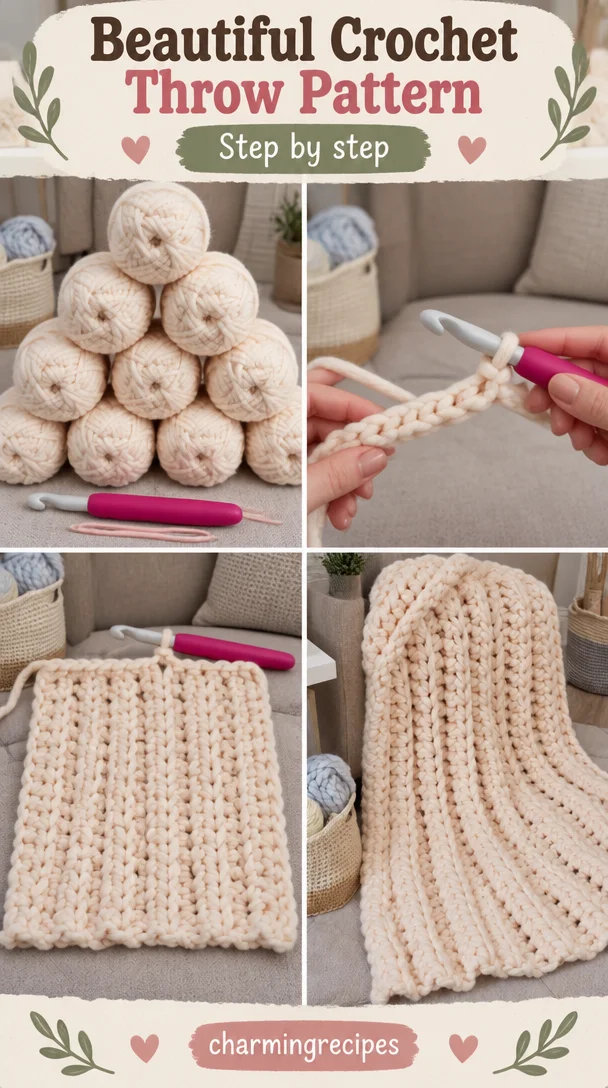
Make the foundation chain. Chain 41. Keep the chain relaxed rather than pulling it tight; a tight foundation can draw in the bottom edge.
-
Work Row 1. Hdc in the third chain from the hook, then hdc in each chain across. Turn your work. You should have 40 hdc in this row. The two skipped chains at the beginning do not count as stitches in the stated total.
-
Work Rows 2–19. Chain 2; this chain counts as the first hdc of the row. Work one hdc in the back loop only of each stitch across. Turn at the end of the row. Repeat this instruction through Row 19, for 18 rows in this section.
-
Fasten off. After completing Row 19, fasten off and leave a tail for finishing.
-
Weave in the tails. Split each tail into 2 or 3 plies. Using the large-eyed plastic needle, weave each ply through the rows. Handle the plies gently so the yarn does not become overly thin or snag while you secure the ends.
The pattern specifies the chain-2 turning chain as the first hdc in Rows 2–19. Count it as one stitch, then work into the remaining stitches across the row. This helps keep the stitch total consistent. The instructions do not specify a separate border or blocking step, so those are optional finishing choices rather than required parts of the pattern.
Ways to use your finished project
Drape the throw over the back of a sofa or fold it across an armchair for an inviting, textured accent. It can also be layered at the foot of a bed or kept beside a favorite reading spot for extra warmth. The ridges catch the light and make the fabric stand out even in a solid color, so the Aran shade can suit neutral, rustic, or natural-toned rooms.
This crochet throw is also a practical handmade gift. If you are making it for someone else, consider their décor and available storage space when choosing where it will be used. Its bulky fabric may take up more room than a lightweight blanket, so a basket or open shelf can be a helpful place to keep it nearby.
How to care for your crochet project
The yarn fiber and specific care method are not given in the pattern. Follow the instructions printed on the RED HEART® Irresistible™ yarn label, especially for washing and drying. If the label is unavailable, check the manufacturer’s care guidance before laundering the finished throw.
For gentle handling, avoid twisting or wringing the fabric, which can stretch the stitches and distort the rectangular shape. If hand washing is appropriate for the yarn, use cool or lukewarm water and a mild detergent, then press out excess water carefully. Support the throw’s full weight when lifting it while wet. Reshape it on a flat surface and allow it to dry as directed by the yarn manufacturer. Do not assume it is safe to tumble dry unless the label says so.
Store the throw clean and completely dry. Folding it loosely helps prevent long-term stretching, and keeping it away from rough surfaces can reduce snagging and pilling. If you add a contrasting border or embellishments, check that those materials can be cared for in the same way as the yarn.
Tips for success
- Keep the foundation chain relaxed. Oversized yarn can make tight chains especially noticeable. If the bottom edge pulls inward, try a looser chain on your next project.
- Count the first row. Row 1 should contain 40 hdc. Confirm that count before moving on so you have a reliable reference for the later rows.
- Mark the first stitch if needed. A removable stitch marker in the first stitch of a row can help you identify where to work the final stitch on the next row. This is useful while learning how the chain-2 turning chain fits into the pattern.
- Check the stitch total regularly. The pattern does not state a row-by-row count for Rows 2–19, but the fabric should maintain the same width as the 40-stitch first row. If the edges begin to angle, count the stitches and check that you have not skipped the last stitch or worked an extra one.
- Work consistently through the back loops. For each hdc in Rows 2–19, insert the hook under the back loop only. Accidentally using both loops will interrupt the ridges.
- Handle the fabric with support. Eleven balls of bulky yarn can create a heavy, awkward piece before it is finished. Let completed rows rest on your lap or a table rather than pulling the working fabric.
- Finish the tails carefully. Splitting each tail into 2 or 3 plies is part of the supplied finishing method. Weave each ply through the rows with light tension so the ends are secure without puckering the fabric.
Creative variations
A new color is the simplest way to personalize this throw. Choose a shade that complements your room, or work in a seasonal palette if the yarn is available in suitable colors. Changing the color alone should not alter the stitch structure, though differences between yarn shades or batches can make consistent dye lots important when buying multiple balls.
You could add a contrasting border for a more finished frame. The original pattern does not include border instructions, so you would need to choose a suitable edging separately. A border adds yarn use and can affect the finished width and length. Keep the edging loose enough that it does not pull the edges inward.
For a larger or smaller throw, the foundation chain and the number of rows are the main dimensions to consider. A longer foundation makes the piece wider; adding or removing rows changes its length. The supplied pattern gives no gauge or finished measurements, so make a sample with your chosen yarn and hook before changing the dimensions. Any size adjustment will affect the amount of yarn needed.
Avoid substituting a much thinner yarn or a substantially different hook without testing. A smaller hook can make the fabric denser and firmer, while a different yarn weight can alter the finished size and drape. Embroidery or appliqués can add a personal touch, but secure them firmly and consider how the added details will hold up to use and washing.
Frequently asked questions
Is this crochet throw pattern beginner-friendly?
It is suitable for a confident beginner who can chain and make half double crochet stitches. The stitch pattern is repeated across the rows, and there are no increases or decreases. The main learning points are working into the back loop only and keeping the edges even.
What yarn works best for this pattern?
The listed yarn is RED HEART® Irresistible™, 11 balls in color 7110 Aran. Using the specified yarn and 25 mm hook is the most reliable way to follow the pattern as written. If you use another yarn, choose a similar bulky texture and test it first; the finished dimensions, thickness, and drape may change.
Can I use a different crochet hook size?
You can, but it may change the fabric. A smaller hook generally creates tighter stitches, while a larger one usually makes a looser fabric. Because no gauge or finished measurements are provided, make a small swatch and assess its texture before committing to the full throw.
How much yarn does the pattern require?
The materials list calls for 11 balls of RED HEART® Irresistible™ yarn. The pattern does not provide yardage, so check the ball band for the amount on each ball. A substitute yarn may require a different number of balls depending on its yardage, thickness, and the size you make.
How long does it take to crochet?
The source pattern does not give a completion time. The stitch pattern is repetitive, and the oversized yarn and hook can help the rows progress quickly. Your pace, the time you spend checking stitches, and how comfortably you can handle the bulky fabric will affect the total.
How can I make the throw larger or smaller?
To change the width, adjust the foundation chain; to change the length, work fewer or more rows. The original pattern does not include a gauge, so crochet and measure a sample before making a substantial change. Increasing the dimensions will also increase yarn use, and a larger throw will be heavier to manage.
Why are my edges uneven?
The most common causes are missing the first or last stitch, miscounting the chain-2 turning chain, or accidentally working into both loops instead of the back loop. Keep the first row at 40 hdc, count regularly, and use a stitch marker to identify the row’s first stitch while you get used to the turning chain.
Can I add a border?
Yes, a border is an optional customization, but it is not included in the source instructions. Choose an edging that suits the bulky fabric and work it with relaxed tension so the throw stays flat. A border will use extra yarn and may change the finished dimensions.
How should I wash the finished throw?
Follow the care instructions on the yarn label because the fiber and washing method are not specified in the pattern. Handle the fabric gently, avoid wringing, and reshape it while drying if the label’s care guidance allows. Support the throw when lifting it wet to reduce stretching.
Can I sell finished throws made from this pattern?
The pattern details provided here do not state whether finished items may be sold. Check the original designer’s usage terms before listing or selling a throw made from the pattern.
Print
Plush Crochet Throw
Description
This plush crochet throw is made with oversized yarn, a very large hook, and a simple back-loop-only half double crochet stitch. The result is a bold, ridged fabric that works up without complicated shaping or stitch changes.
Materials
- RED HEART® Irresistible™ yarn: 11 balls, color 7110 Aran
- Susan Bates® crochet hook: size 25 mm (US U-50)
- Large-eyed plastic needle: for weaving in ends
Instructions
- Make the foundation chain. Chain 41. Keep the chain relaxed rather than pulling it tight; a tight foundation can draw in the bottom edge.
- Work Row 1. Hdc in the third chain from the hook, then hdc in each chain across. Turn your work. You should have 40 hdc in this row. The two skipped chains at the beginning do not count as stitches in the stated total.
- Work Rows 2–19. Chain 2; this chain counts as the first hdc of the row. Work one hdc in the back loop only of each stitch across. Turn at the end of the row. Repeat this instruction through Row 19, for 18 rows in this section.
- Fasten off. After completing Row 19, fasten off and leave a tail for finishing.
- Weave in the tails. Split each tail into 2 or 3 plies. Using the large-eyed plastic needle, weave each ply through the rows. Handle the plies gently so the yarn does not become overly thin or snag while you secure the ends.
Notes
The pattern specifies the chain-2 turning chain as the first hdc in Rows 2–19. Count it as one stitch, then work into the remaining stitches across the row. This helps keep the stitch total consistent.