
-
Introduction
Creating fun and educational experiments is a fantastic way to engage with science at home, and the Balloon Baking Soda Experiment is a perfect example. This hands-on activity combines simple household ingredients to create a whimsical and interactive experience that helps explain chemical reactions. Kids and adults alike will enjoy watching as the balloon inflates, demonstrating the power of gas production. It’s not just entertaining but also provides an excellent opportunity to learn about the properties of acids and bases through a fun and visually stimulating experiment. Whether you’re looking for a rainy day activity, a science project, or simply a way to spark curiosity and creativity, this experiment is both captivating and educational. -
Why You’ll Love This Balloon Baking Soda Experiment:
- Interactive Learning: Kids will love seeing the immediate results of the chemical reaction.
- Encourages Curiosity: It sparks questions about science and encourages exploration.
- Minimal Supplies: Uses common household items; easy to gather and set up.
- Visual Impact: The balloon inflates, providing a fun visual representation of gas production.
- Reproducible: Experiment can be repeated easily, allowing for continual learning and fun.
- Materials:
- 1 balloon
- 1 tablespoon of baking soda
- 1/2 cup of vinegar
- A plastic bottle (empty, around 16-20 oz)
- Funnel (optional, for easier pouring)
- Protective covering for the area (newspaper or cloth)
- Full Step-by-Step:
Prepare Your Materials
- Gather all materials on a flat surface, preferably covered for easy cleanup.
Fill the Balloon
- Using a funnel (if you have one), carefully add 1 tablespoon of baking soda into the balloon.
- Ensure it’s securely attached to the funnel while filling to minimize spills.
Combine the Ingredients
- Pour 1/2 cup of vinegar into the plastic bottle.
- Take care to pour slowly to avoid splashes.
Attach the Balloon
- Carefully stretch the opening of the balloon over the mouth of the bottle without letting the baking soda fall in just yet.
Start the Reaction
- Once the balloon is securely on the bottle, lift it slightly to allow the baking soda to pour into the vinegar.
- Watch closely as the reaction occurs; the mixture will fizz and the balloon will begin to inflate!
- Tips & Variations:
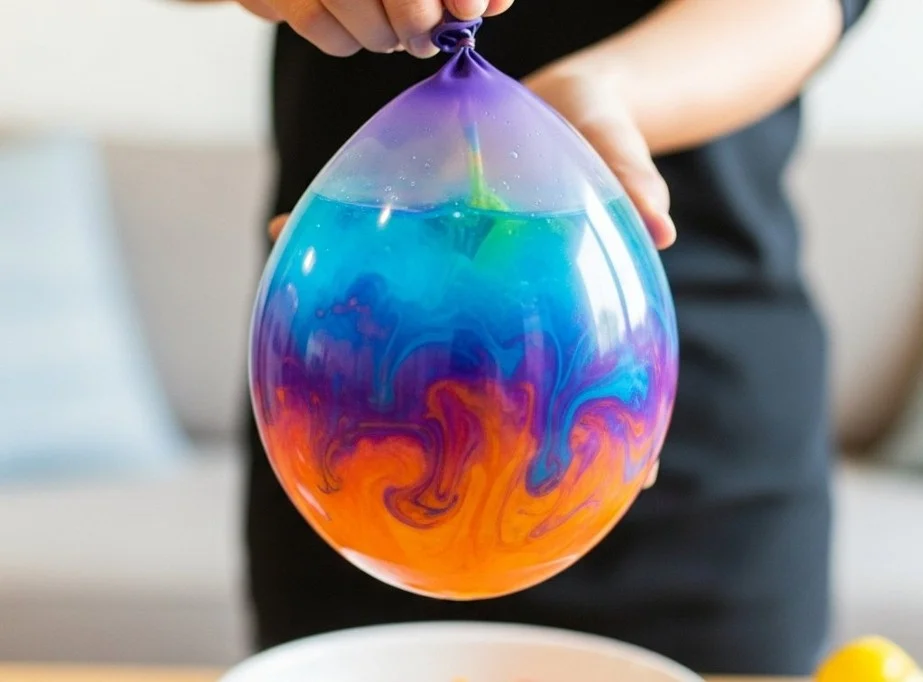
- Colorful Bubbles: Add a few drops of food coloring to the vinegar for colorful effects.
- Experiment with Ratios: Try varying the amount of baking soda or vinegar for different levels of reaction.
- Shape the Balloon: Use different sizes or types of balloons to see how the reaction changes.
- Make it a Race: Have multiple teams perform the experiment and see whose balloon inflates the fastest!
- Frequently Asked Questions:
-
Q: What happens if my balloon doesn’t inflate?
- A: Make sure there are no leaks in the balloon, and ensure the baking soda properly enters the vinegar for gas production.
-
Q: Can I use lemon juice instead of vinegar?
- A: Yes, lemon juice is acidic like vinegar and should create a similar reaction, though it might vary slightly in intensity.
-
Q: What age group is this experiment suitable for?
- A: This experiment is great for kids aged 6 and up, but younger children should be supervised.
-
Q: How do I clean up afterward?
- A: Simply dispose of the leftover materials in the trash. Use a damp cloth to wipe down any spills.
- Suggestions:
- Capture the experiment on video to share with friends or family.
- Use the inflating balloon to spark further experimentation, like timing how long it stays inflated.
- Consider integrating a drawing or writing exercise about what was learned from the experiment.
- Final Thoughts
The Balloon Baking Soda Experiment is an incredible way to bring science to life right in your kitchen. Not only does it foster curiosity, but it also ignites the joy of discovery. We encourage you to try this fun experiment and share your results or any variations you create. Leave a comment below and let us know how your balloon adventure turned out!

Balloon Baking Soda Experiment
- Total Time: 5 minutes
- Yield: 1 experiment 1x
- Diet: N/A
Description
A hands-on activity that demonstrates chemical reactions using simple household ingredients.
Ingredients
- 1 balloon
- 1 tablespoon of baking soda
- 1/2 cup of vinegar
- A plastic bottle (empty, around 16-20 oz)
- Funnel (optional, for easier pouring)
- Protective covering for the area (newspaper or cloth)
Instructions
- Gather all materials on a flat surface, preferably covered for easy cleanup.
- Using a funnel (if you have one), carefully add 1 tablespoon of baking soda into the balloon. Ensure it’s securely attached to the funnel while filling to minimize spills.
- Pour 1/2 cup of vinegar into the plastic bottle, taking care to pour slowly to avoid splashes.
- Carefully stretch the opening of the balloon over the mouth of the bottle without letting the baking soda fall in just yet.
- Once the balloon is securely on the bottle, lift it slightly to allow the baking soda to pour into the vinegar. Watch closely as the reaction occurs; the mixture will fizz and the balloon will begin to inflate!
Notes
Tip: Add a few drops of food coloring to the vinegar for a colorful effect. Experiment with different amounts of baking soda or vinegar for varying reactions.
- Prep Time: 5 minutes
- Cook Time: 0 minutes
- Category: Science Experiment
- Method: Chemical Reaction
- Cuisine: Educational
Nutrition
- Serving Size: 1 balloon
- Calories: 0
- Sugar: 0g
- Sodium: 0mg
- Fat: 0g
- Saturated Fat: 0g
- Unsaturated Fat: 0g
- Trans Fat: 0g
- Carbohydrates: 0g
- Fiber: 0g
- Protein: 0g
- Cholesterol: 0mg