

This post contains Amazon affiliate links. As an Amazon Associate I earn from qualifying purchases.
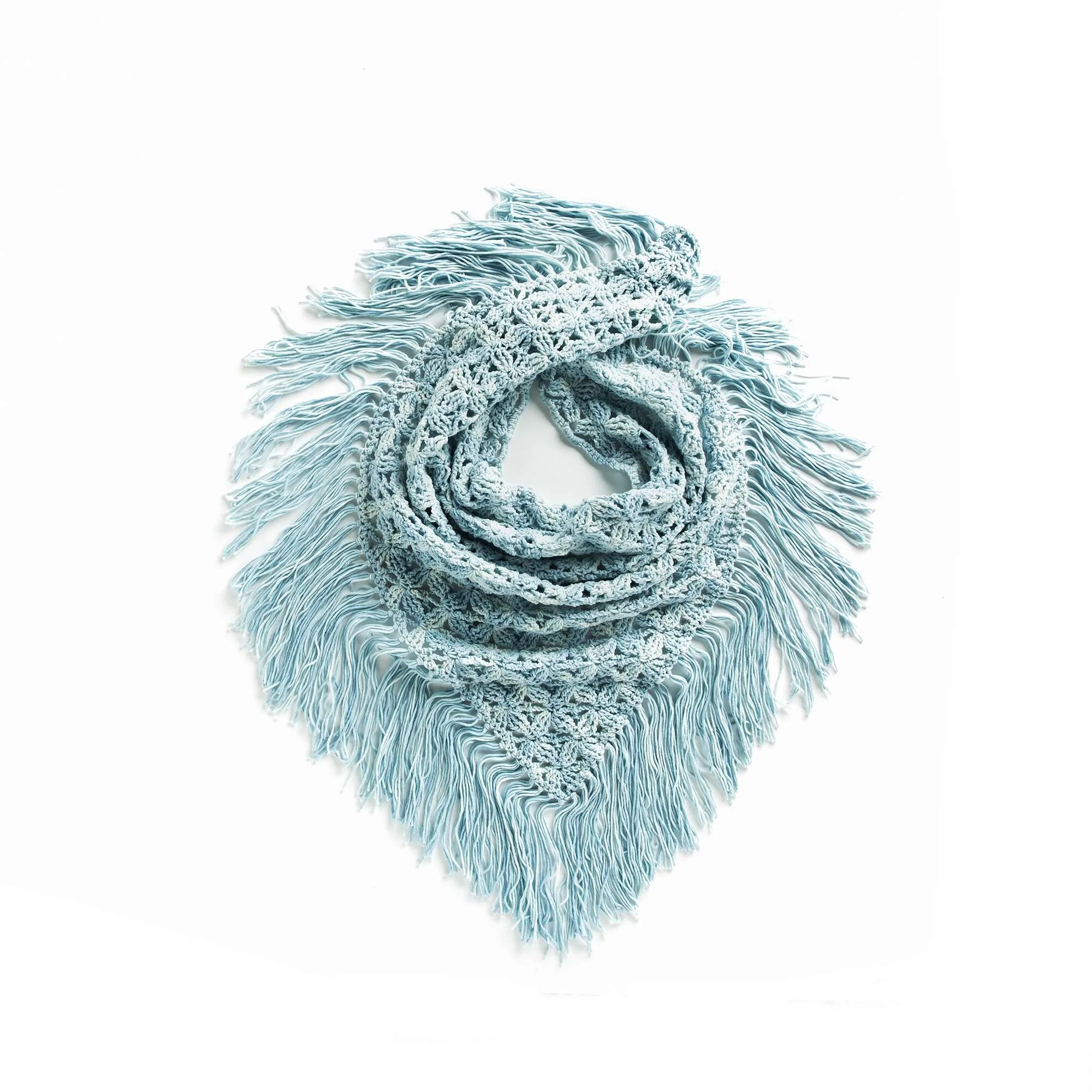
A long, open crochet pattern gives this fringed shawl its airy drape and distinctive, knotted look. Made with cotton-blend cake yarn and a 5 mm hook, it is a relaxing project for crocheters who enjoy repeating a stitch sequence and watching the fabric grow. The long foundation chain and tall stitches call for some patience, but the pattern is manageable if you are comfortable with basic crochet stitches and want to practice keeping rows even.
Why you’ll love this pattern
The shawl is built from a repeating openwork pattern, so once you understand the stitch sequence, the rows become easier to follow. That rhythm makes it a satisfying project for a quiet evening or a trip where you can bring your yarn and hook along. The generous fringe gives the finished piece movement and a handmade finish without requiring a complicated edging.
This pattern also offers useful practice with treble crochet, single crochet, chain spaces, and slip stitches. Working those stitches together helps you recognize how openwork fabric is formed and how to place stitches consistently from row to row. The fringe is a practical way to use the remaining yarn, though the pattern calls for two balls, so keep enough aside for the border and finishing.
A finished shawl makes a thoughtful handmade gift for someone who enjoys layering pieces. Its lightweight, open construction is especially suited to adding a decorative layer over a top or dress when the weather is mild.
“I enjoyed the repetition once I had the stitch pattern in front of me. The open fabric feels light, and adding the fringe made the shawl look finished and ready to wear.”
Before you begin
You will make a long, rectangular shawl worked in rows. The first row is formed along a foundation chain of 233 chains. The body then develops through a sequence of rows that use chain spaces and a combination of tall and short stitches. The pattern repeats its fourth and fifth rows 17 more times, creating the main fabric.
Treble crochet (tr) makes the tall, open sections, while single crochet (sc) and slip stitches (sl st) help shape and connect the stitch pattern. The finished shawl is bordered with single crochet worked evenly around the sides, then decorated with knotted fringe.
The stitch types are straightforward for a crocheter who already knows basic crochet, but the source instructions leave some stitch details unspecified. In particular, “work specified stitches around” does not identify the full stitch sequence for the second, third, and fourth rows. That missing information matters: it is not possible to reproduce those rows accurately from the abbreviated instructions alone. If you have the complete original pattern, keep it nearby and follow its stitch details for those rows. Do not guess at the missing sequence, as a guessed repeat could change the texture, width, and edge shape.
No finished measurements or gauge are provided, so the final size will depend on your yarn, tension, and the complete stitch repeat. The project is likely to take multiple sessions: the long foundation chain and repeated body rows are the main time commitment, with the border and fringe completed afterward.
Materials you’ll need
- Caron® Cotton Angel Cakes™: 2 balls
- Crochet hook: U.S. H/8, 5 mm
- Yarn needle: For weaving in ends
The specified yarn is a cotton blend, but fiber content and care details can vary by product information and label. Check the ball band for the exact fiber, recommended washing method, and any guidance on drying. The pattern does not give a yarn weight or a gauge, so use the named yarn if possible for the closest match to the intended drape and fabric.
If you choose a different yarn, look for a similar thickness and a soft, flexible hand. A thicker yarn can make the shawl heavier and larger, while a thinner yarn may create a finer, smaller fabric. Changing yarn may also affect how much is needed, especially because the fringe uses extra length. A contrasting yarn can be used for the border or fringe, but allow enough yardage to complete those finishing details.
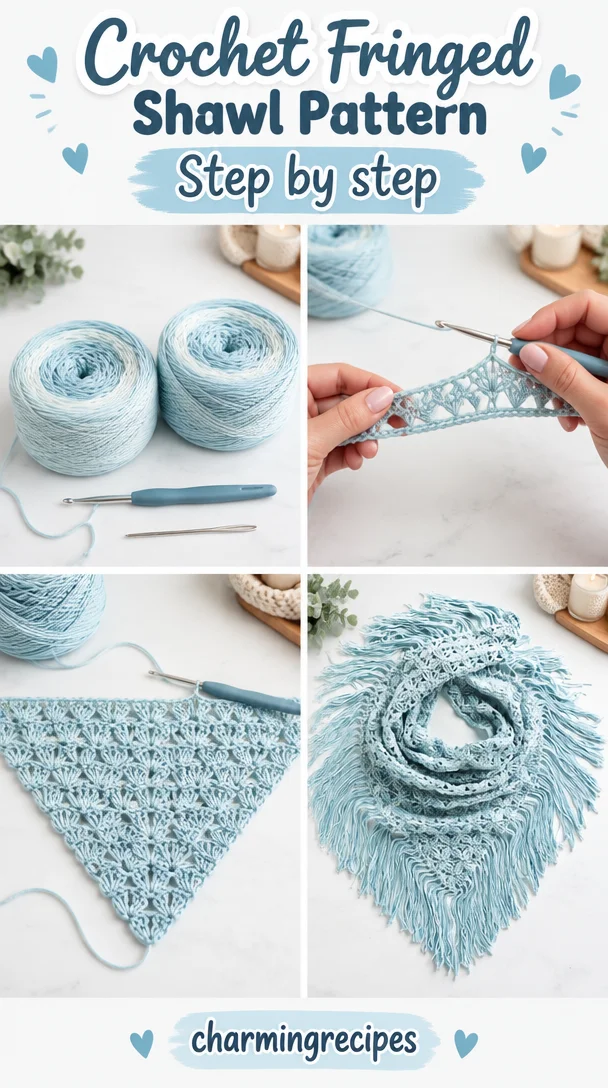
Pattern instructions
Abbreviations: ch = chain; sc = single crochet; tr = treble crochet; sl st = slip stitch; sp = space.
The source instructions specify some rows only by referring to “specified stitches” and do not include the actual repeat for those rows. The steps below preserve the information provided, but you will need the complete stitch sequence from the original pattern to work the incomplete rows accurately.
-
Make the foundation chain. Chain 233. Keep the chain relaxed rather than pulling it tight; a tight foundation can draw in the lower edge and make the shawl bow.
-
Work the first row. Make 3 treble crochet stitches in the fifth chain from the hook. Skip the next 5 chains, then make 1 single crochet in the next chain. Repeat the pattern as given in the complete instructions across the chain. Work 4 treble crochet stitches in the last chain.
-
Work the second row. Chain 1, then make 1 single crochet in the first treble crochet. Continue around using the specified stitches from the complete pattern. The source description does not provide the remaining stitch sequence, so refer to the full pattern rather than filling in the repeat from guesswork.
-
Work the third row. Chain 1, then repeat the specified stitches from the complete pattern. The exact stitch sequence is not included in the abbreviated instructions.
-
Work the fourth row. Slip stitch to the first chain-3 space, then repeat the specified stitches as given in the complete pattern. The instruction indicates that the row begins by joining to a chain-3 space, but it does not provide the rest of the repeat.
-
Work the fifth row. Follow the same instructions as the third row. Use the complete pattern’s stitch sequence for this row.
-
Repeat the body pattern. Repeat the fourth and fifth rows 17 more times. Keep track of each repeat so you do not accidentally add or omit a pair of rows. If you have the full pattern, check the stitch placement at the start and end of each repeat.
-
Fasten off. Cut the yarn, leaving a tail long enough to secure. Pull the tail through the final loop and weave it in with a yarn needle. Avoid pulling the fabric out of shape as you hide the end.
-
Add the border. Join the yarn and work single crochet evenly around the sides, as directed. Space the stitches consistently so the edge lies flat. If you place too many stitches along a side, it may ruffle; too few can draw the fabric inward. The source does not specify a stitch count for the border, so use even spacing and follow any additional details in the complete pattern.
-
Add the fringe. Cut lengths of yarn and knot them into fringe along the sides, following the placement shown in the complete pattern if available. Make the fringe bundles consistent in thickness and length. Trim the ends evenly once the fringe is attached.
Important note about the abbreviated instructions
The row descriptions for rows 2, 3, and 4 do not include their stitch repeats, and row 1 also refers to a pattern repeat without stating all of its details. These are essential instructions, not optional refinements. If you have only this shortened version, you will need the original full pattern to complete the shawl as designed. The foundation chain, stated stitches, row progression, border, and fringe can be followed as written, but inventing the missing repeat could produce a different result.
Ways to use your finished project
Wear the shawl as a light layer over a simple outfit, letting the openwork and fringe take the focus. It can also be draped around the shoulders indoors when you want a decorative extra layer without the bulk of a dense blanket-style wrap. The long fringe moves naturally as you walk, so it adds a relaxed finish to casual and dressier looks alike.
As a gift, this shawl works well for someone who appreciates handmade accessories. You can choose colors that suit the recipient’s wardrobe, or use a neutral shade for a versatile piece. If you are making it for a particular person, consider how they like to wear shawls and whether they prefer a subtle fringe or a more noticeable one.
For a craft fair or handmade shop, present the shawl folded or draped so shoppers can see the open stitch texture and fringe. Include care information based on the yarn label. Before listing or selling an item made from a pattern, check the original designer’s usage terms; the abbreviated instructions here do not state whether finished items may be sold.
How to care for your crochet project
Check the yarn label before washing. If it recommends hand washing, use cool or lukewarm water and a gentle detergent. Support the shawl while lifting it from the water, because wet crochet can stretch under its own weight. Avoid twisting or wringing, which can distort the open stitch pattern and pull the fringe out of alignment.
If the label allows machine washing, place the shawl in a mesh laundry bag and use the gentle cycle with cool water. Wash it with similar colors, especially the first time, in case the yarn releases dye. Skip high heat, which may affect the yarn’s finish or change the fabric’s drape.
Press out excess water gently between clean towels, then lay the shawl flat to dry. Smooth the sides and arrange the fringe so it lies evenly. Do not hang it while wet, as the long fabric may stretch. If the shawl needs shaping, gently arrange it flat without pulling the stitches wider than they naturally sit. Follow the yarn label’s guidance before using steam or an iron; heat can damage some fibers.
For storage, fold the shawl loosely and keep it in a clean, dry place. Avoid hanging it for long periods, since the weight of the fabric and fringe may lengthen it. Store it away from rough surfaces and items with zippers or hooks that could catch the openwork.
Tips for success
- Keep the foundation chain relaxed. A tight chain can make the bottom edge shorter than the rest of the shawl. If your chains are naturally firm, pause to check that the foundation lies flat before starting the first row.
- Use the complete stitch repeat. Several row descriptions in the abbreviated instructions are incomplete. The missing details determine where the stitches go, so use the original pattern rather than improvising.
- Mark repeat boundaries. Place a removable stitch marker at a useful repeat point or at the edge of a row. This can help you notice a missed repeat before it affects the next row.
- Count the body repeats. The pattern calls for repeating rows 4 and 5 a further 17 times. Write down each completed pair or use a row counter to stay on track.
- Check the edges as you work. The first and last stitches are easy places to add or miss a stitch, particularly in openwork. Compare each edge with the previous row and make sure the fabric is not gradually widening or narrowing.
- Keep treble crochet height consistent. Trebles that are much taller than the surrounding stitches can make the fabric uneven. Wrap the yarn consistently and pull the loops up to a similar height.
- Try the border spacing before finishing it. Single crochet worked around the sides should be evenly distributed. If the edge waves, there may be too many stitches; if it pulls inward, there may be too few.
- Make fringe bundles uniform. Cut several lengths together using a consistent measuring method, then knot the bundles with similar tension. Trim only after all the fringe is attached, with the shawl laid flat.
- Weave in ends securely. Use the yarn needle to work each tail through several stitches in different directions. Keep the fabric relaxed while weaving so the end does not pucker the openwork.
Creative variations
Color is an easy way to personalize the shawl without changing its construction. A single-color version highlights the stitch texture, while a soft gradient or cake yarn can create gentle color shifts across the rows. If you use a different yarn, remember that its thickness and fiber can change the shawl’s finished size, weight, and drape.
A contrasting border can frame the openwork and make the edges more noticeable. Use a compatible yarn thickness so the border does not feel stiff compared with the body. A contrast fringe can carry the accent color through to the ends; allow extra yarn for both the border and fringe.
You can also adjust the fringe’s visual impact by changing its length or fullness. Longer or thicker fringe uses more yarn and adds weight to the sides, which can alter how the shawl hangs. For a lighter finish, use fewer or shorter fringe bundles, keeping their placement balanced on both sides.
To make a wider or narrower shawl, the foundation chain may need to change, but the stitch repeat must still work evenly across the chain. Because the full repeat is not present in the abbreviated instructions, check the complete pattern before changing the starting chain. A different hook size can also alter the fabric: a larger hook usually makes it looser and may increase the finished dimensions, while a smaller hook tends to make it denser and may reduce them. Swatch first if you are adapting the materials.
Frequently asked questions
Is this crochet shawl suitable for beginners?
It can suit a beginner who already knows chain, single crochet, treble crochet, and slip stitch. The long starting chain and openwork require attention, and the abbreviated instructions do not include all of the row repeats. A beginner should have the complete pattern available before starting so the missing stitch details can be followed accurately.
What yarn should I use for this pattern?
The listed yarn is Caron® Cotton Angel Cakes™, and the pattern calls for 2 balls. Using the named yarn is the most reliable way to match the intended texture. If it is unavailable, choose a yarn with a similar thickness and flexible drape, but expect the finished size, weight, and yardage to vary. Check the replacement yarn’s label for fiber and care guidance.
Can I use a different crochet hook?
The specified hook is U.S. H/8, or 5 mm. A different size will change the fabric: a larger hook generally creates looser stitches and may make the shawl larger, while a smaller hook can produce denser fabric and a smaller result. Since no gauge or finished measurements are provided, changing hook size is best tested with a swatch.
How much yarn does the shawl require?
The materials list calls for 2 balls of Caron® Cotton Angel Cakes™. The source does not provide a yardage amount, so check the ball band for the yardage per ball. If substituting yarn or making longer fringe, buy extra where possible, since those choices can increase the amount needed.
How do I make the shawl larger or smaller?
The foundation chain controls the starting width, but any change must fit the pattern’s stitch repeat. The repeat is not fully included in the abbreviated instructions, so do not change the chain count without checking the complete pattern. Changing the hook or yarn can also alter the finished size, but it may affect the drape and texture as well.
Why are the edges curling or drawing inward?
A tight foundation chain can pull in the starting edge. Uneven stitch placement or inconsistent border spacing can also cause the sides to draw inward or wave. Check that the chain is relaxed, compare the edges after each row, and space the single crochet border evenly. If the fabric still curls, confirm that you are following the complete stitch sequence correctly.
How can I keep the sides even?
Check the first and last stitches of every row, and count the pattern repeats as you go. Use markers to identify repeat boundaries if that helps. Since the abbreviated instructions do not give a complete stitch count for each row, compare your work with the full pattern rather than relying on a guessed count.
Can I machine wash the finished shawl?
Follow the care instructions on the yarn label. If machine washing is permitted, use cool water, a gentle cycle, and a mesh bag. Otherwise, hand wash gently. In either case, support the wet shawl, reshape it flat, and avoid hanging it to dry so the openwork does not stretch.
Can I sell a shawl made from this pattern?
The instructions provided here do not state the designer’s terms for finished items. Check the original pattern’s usage or licensing information before selling a shawl made from it.
Print
Fringed Shawl
Description
A long, open crochet pattern shawl with an airy drape and a distinctive knotted look, made from cotton-blend cake yarn. This shawl is great for crocheters who enjoy repeating a stitch sequence and watching the fabric grow.
Materials
- Caron® Cotton Angel Cakes™: 2 balls
- Crochet hook: U.S. H/8, 5 mm
- Yarn needle: For weaving in ends
Instructions
- Make the foundation chain. Chain 233. Keep the chain relaxed rather than pulling it tight.
- Work the first row. Make 3 treble crochet stitches in the fifth chain from the hook. Skip the next 5 chains, then make 1 single crochet in the next chain. Repeat the pattern as given in the complete instructions across the chain. Work 4 treble crochet stitches in the last chain.
- Work the second row. Chain 1, then make 1 single crochet in the first treble crochet. Continue around using the specified stitches from the complete pattern.
- Work the third row. Chain 1, then repeat the specified stitches from the complete pattern.
- Work the fourth row. Slip stitch to the first chain-3 space, then repeat the specified stitches as given in the complete pattern.
- Work the fifth row. Follow the same instructions as the third row.
- Repeat the body pattern. Repeat the fourth and fifth rows 17 more times.
- Fasten off. Cut the yarn, leaving a tail long enough to secure. Pull the tail through the final loop and weave it in with a yarn needle.
- Add the border. Join the yarn and work single crochet evenly around the sides, as directed.
- Add the fringe. Cut lengths of yarn and knot them into fringe along the sides.
Notes
The pattern contains some abbreviations and refers to specified stitches that are not detailed. Accessing the complete pattern is advised for proper execution of the missing stitch instructions.