

This post contains Amazon affiliate links. As an Amazon Associate I earn from qualifying purchases.
Late afternoon light rests on the yarn while the little fabric grows warm across your knees. Each quiet pull of the hook through a loop gives you one more soft row to hold, and Crochet Tip: Ghost Tassels begins to feel less like a task than a small place to settle. I made this piece over several evenings, usually with coffee beside the yarn basket and the window cracked just enough to hear the neighborhood settle. The first rows curled a little, then relaxed as the fabric gained weight. By the end, my hands had found an easy rhythm, and the finished piece had that gentle handmade texture that belongs on a couch, a porch chair, or in a gift basket.
Why Crochet Tip: Ghost Tassels Is So Soothing to Crochet
This is a small working project with enough repetition to quiet a busy mind without becoming dull. The main stitch moves steadily across each row, and the simple tassels add a soft finishing detail without asking you to count through a complicated motif. You can watch a rainy evening gather at the windows while your hands keep making their small, familiar movements.
I like projects that give you somewhere to rest your attention. A mug of coffee can sit next to the yarn basket, the television can stay low, and you can still feel the fabric changing under your fingers. The yarn slides, the hook clicks lightly against the stitches, and each completed row gives you a natural pause.
The finished piece measures about 12 inches (30 cm) square, so it works as a small lap mat, a chair accent, a basket liner, or a thoughtful handmade gift. It does not demand a whole weekend. Most people can finish it in two or three relaxed evenings, including the tassels and finishing.
You will use a steady double crochet fabric with a simple edge. That choice keeps the piece flexible and soft while giving it enough structure to hold its square shape. I chose a slightly smaller hook than the yarn label suggested because the denser fabric keeps the spaces between stitches neat and prevents the tassel attachment points from feeling loose.
How Crochet Tip: Ghost Tassels Comes Together
The piece begins with a foundation chain, which is the first row of chain stitches that supports the rest of the fabric. You will work double crochet into that chain, turn at the end of each row, and repeat the same calm movement until the square reaches its finished height.
A double crochet, abbreviated dc, uses a yarn over before you insert the hook, then pulls through two loops twice. It grows faster than single crochet and gives the fabric a light, draping surface. The final border uses single crochet, abbreviated sc, to give the edges a cleaner frame.
This pattern uses US crochet terms. That note matters because UK readers often find these posts too, and the same word can mean a different stitch there. The instructions use chain (ch), slip stitch (sl st), single crochet (sc), double crochet (dc), and the US meaning of every stitch name.
The skill level is easy. You should feel comfortable making a chain and working a basic double crochet, but I explain the movements as they appear. Allow about three to five hours total, spread across several evenings if you prefer. The tassels take a little patience, especially when you trim them evenly, but the main square moves along gently.
Pattern at a Glance
Keep this small overview nearby while you work.
- Skill level: Easy
- Finished size: 12 inches (30 cm) square
- Gauge: 14 double crochet and 8 rows measure 4 inches (10 cm)
- Yarn: Worsted weight (weight 4, medium), 450 total yards from 3 skeins of about 150 yards per 100 g skein
- Hook: H-8 (5.0 mm)
- Other supplies: Yarn needle, scissors, tape measure, and 4 stitch markers if desired
- Stitch multiple: Any multiple of 2 stitches plus 2 for the turning chain
- Estimated time: 3 to 5 hours
Materials for Crochet Tip: Ghost Tassels
- Worsted weight (weight 4, medium) cotton yarn, about 450 total yards, or 3 skeins of about 150 yards per 100 g skein. Choose a smooth yarn with enough body to show the stitches clearly. Lily Sugar’n Cream is one easy-to-find example, though you can use another worsted weight cotton with similar yardage.
- H-8 (5.0 mm) crochet hook. A half size up or down is fine depending on your tension.
- Yarn needle with a large eye for weaving in the ends and attaching the tassels.
- Sharp scissors for cutting yarn and trimming the tassels.
- Tape measure for checking gauge and finished dimensions.
- Four stitch markers, optional, for marking corners while you work the border.
- A small piece of cardboard about 4 inches (10 cm) wide for making even tassels.
Cotton suits this project because it gives the square a steady shape and handles frequent washing better than many delicate fibers. The yarn also shows the double crochet texture clearly, which helps you spot a missed stitch before it travels too far. If you prefer a softer hand, a worsted weight acrylic can work, but the drape may feel lighter and the tassels may spring back differently.
Make a gauge swatch before you begin, even for a small project. Work enough double crochet rows to measure 4 inches (10 cm), then count 14 double crochet across and 8 rows high. Those twenty minutes can save you from discovering after several evenings that your square is much wider than it is tall. If your foundation chain feels tight, go up one hook size just for the chain, then return to H-8 (5.0 mm) for the first row.
Step by Step
- Difficulty and repeat: This pattern is easy and uses any multiple of 2 stitches plus 2 for the turning chain. The finished square uses 42 chain stitches at the beginning, which creates 40 working stitches after the first row.
- Make a slip knot and chain 42. A chain, abbreviated ch, forms a row of linked loops. Keep your fingers relaxed so the foundation chain can bend easily instead of pulling tight.
- Row 1: Work 1 double crochet, or dc, in the fourth chain from your hook. To make a double crochet, yarn over, insert the hook, yarn over and pull up a loop, then yarn over and pull through two loops twice. Work 1 dc in each chain across. You will have 40 double crochet stitches.
- Chain 3 to turn. This turning chain counts as the first double crochet in the next row. Turn your work so the side facing you changes, and notice how the little posts line up beneath your hook.
- Row 2: Skip the first stitch because the chain 3 counts as your first dc. Work 1 dc in each stitch across, placing the last dc in the top of the turning chain from the row below. You will have 40 double crochet stitches.
- Repeat Row 2 until you have 24 rows total. Each row keeps the same count of 40 double crochet stitches. If you lose count, look for the last tall stitch at the edge and count the posts across the row in groups of five.
- Check the shape after Row 12 and again after Row 24. The first rows may curl until the piece grows heavy enough to settle. If one side looks shorter, count the stitches before changing your tension, because a missing edge stitch usually causes the unevenness.
- For the border, do not fasten off after Row 24. Chain 1, which does not count as a stitch, and work single crochet around the square. A single crochet, abbreviated sc, uses no yarn over before insertion: insert the hook, yarn over and pull up a loop, then yarn over and pull through both loops.
- Work 1 sc in each of the 40 stitches across the top, 2 sc in the side of each row down the next edge, 1 sc in each of the 40 foundation-chain spaces across the bottom, and 2 sc in the side of each row up the last edge. Place 3 sc in each corner to help the border turn neatly. Join with a slip stitch, or sl st, to the first sc. Your border count will be 136 sc, including the corner stitches.
- If the border ripples, you may have added too many stitches along a side. If it pulls inward, add one extra sc at the next corner. A small adjustment is easier than forcing the fabric flat, and cotton often relaxes after washing and blocking.
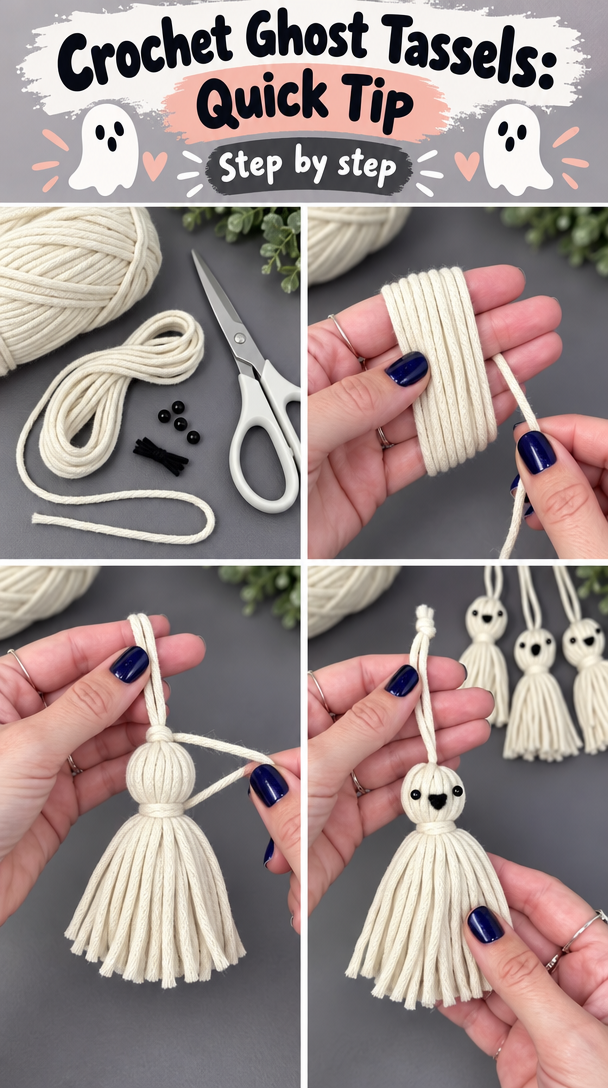
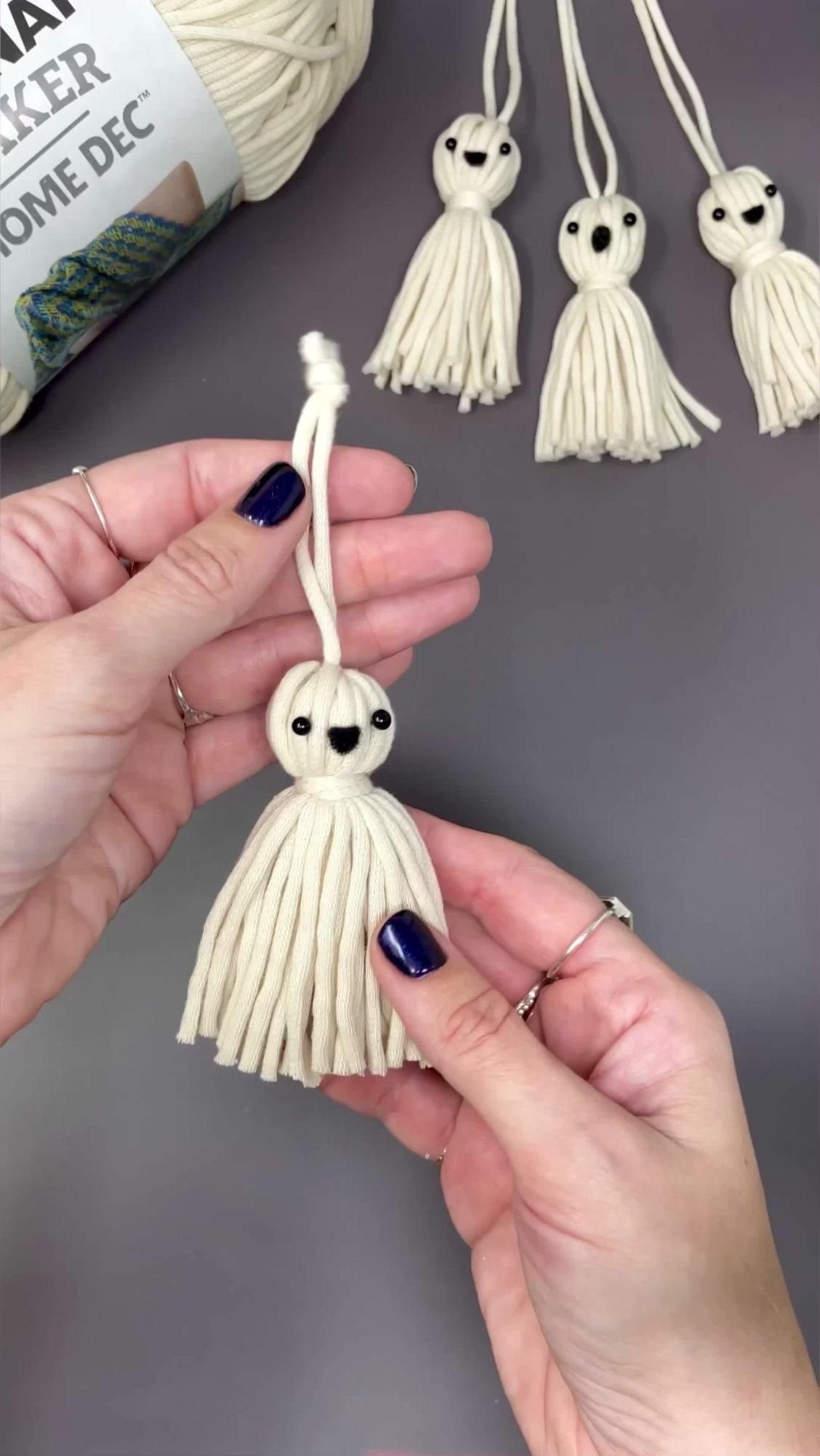
- Make four tassels. Wrap the cotton yarn around the 4-inch (10 cm) cardboard about 24 times. Cut a separate 10-inch (25 cm) strand, slide it under the wrapped yarn near one end, and tie it firmly. Cut the loops at the opposite end, then wrap another strand around the tassel about 1 inch (2.5 cm) below the top to form the neck.
- Attach one tassel at each corner using the yarn needle. Thread the two attachment strands through nearby border stitches, tie them securely on the wrong side, and weave in the ends. Keep the tassels firmly attached and trim the ends evenly with sharp scissors.
- Look over the whole square before finishing. If a mistake shows up several rows later, pause rather than tugging quickly. Mark the problem row, pull back one stitch at a time to the place where the count changed, and rebuild the row calmly. I once found a missing edge stitch after four rows and had to pull back that section, but the fabric looked much happier afterward.
- Weave in all remaining ends with the yarn needle, passing through several stitches in more than one direction. If your cotton feels stiff, block the piece by lightly dampening it, shaping it to 12 inches (30 cm) square, and letting it dry flat. Cotton responds well to gentle wet blocking, and you can pin the corners without using heat.
Where This Piece Finds Its Place
Once finished, Crochet Tip: Ghost Tassels works nicely beneath a small plant pot, beneath a candle arrangement, or folded over the arm of a living room chair. I like mine in the basket beside my armchair, where the tassels peek out between larger blankets and remind me that a small project can still make a corner feel cared for.
The square also suits a summer porch table, especially when you want a washable layer beneath a glass of iced tea. In the fall, it can sit beneath a lamp or a bowl of pinecones. The cotton fabric feels useful without looking too precious, which makes it a comfortable handmade gift.
For gifting, fold the square with a wooden spoon, a small candle, or a packet of tea and tie it with a paper label. A friend moving into a new apartment might use it as a table mat, while someone who enjoys handmade details may keep it in a basket for guests to discover.
Caring for Crochet Tip: Ghost Tassels
Because this version uses cotton yarn, wash it in cool or warm water on a gentle cycle, or hand wash it in a basin. Use a small amount of mild detergent and avoid very hot water, which can encourage shrinkage and make the tassels look uneven. Check the yarn label if you substitute, since fiber blends can have different care needs.
Gently reshape the square while it is damp and dry it flat. Never hang it wet, because the weight can stretch the corners and pull the tassels out of alignment. If the edges need help, block the piece cold and let it dry completely before moving it.
Store the square folded rather than hung, in a breathable basket or drawer. Cotton does not need moth protection in the same way wool does, but a cedar block or lavender sachet can keep stored textiles smelling fresh. Keep the leftover yarn with its label so you still have the fiber name and dye lot if a repair becomes necessary.
If you choose acrylic instead, remember that acrylic can melt under a hot iron. Use steam from a distance or block it cold, and never press the iron directly onto the fabric. Superwash wool can tolerate a washing machine on a gentle cycle, while untreated wool may felt, so read the label before washing any substitution.
Small Ways to Make It Your Own
- Try a thicker yarn for a larger, heavier square. A bulky yarn will make the piece grow quickly, but it will also change the drape and may need a larger hook. Work a swatch first rather than assuming the original stitch count will give the same finished size.
- Use two colors for gentle color blocking. Work 8 rows in one shade, 8 rows in a second shade, and 8 rows in the first shade again. Change colors at the final yarn over of the last stitch so the new color begins cleanly.
- Swap double crochet for single crochet if you want a denser, firmer fabric. Single crochet will make the project take longer and may require more yarn, but it suits a trivet-sized version or a piece that needs less drape.
- Resize the square by adjusting the starting chain in multiples of 2, then work until the height matches the width. Keep the same edge treatment, and check the size with a tape measure before adding the border.
- Add a simple second border round if you like a more finished frame. Work 1 sc in each stitch around, placing 3 sc in each corner. For a gift, use a contrasting border and matching tassels, or leave the tassels off for a cleaner everyday look.
You can also make a set of smaller squares for coasters by starting with 22 chains and working 12 rows, then adding the same border. For a baby shower gift, leave off the tassels and avoid buttons, beads, and other small parts. Small pieces and long loose stitches can be unsafe for children under three, and anything placed in a crib or car seat needs to stay snug and securely attached.
Frequently Asked Questions About Crochet Tip: Ghost Tassels
Can I use a different hook size for Crochet Tip: Ghost Tassels?
Yes, you can use a different hook size if your tension needs it. H-8 (5.0 mm) creates the listed gauge and a fairly firm cotton fabric, while I-9 (5.5 mm) will usually make a softer, slightly larger piece. A G-6 (4.0 mm) hook may create a denser, smaller square. Make a swatch so your choice stays intentional.
What yarn can I substitute for the cotton?
You can substitute another worsted weight yarn with similar yardage, such as a smooth acrylic or a cotton-acrylic blend. Choose about 450 total yards and check the label for care instructions. Acrylic may feel lighter and can soften after washing, while cotton holds its shape more firmly. Do not rely on the color name alone, because fiber content changes the finished fabric.
What should I do if I find a mistake several rows later?
Pull back calmly to the row where the mistake began. Look for a missing edge stitch, an extra stitch, or a turning chain that you forgot to count. Place the hook through the last secure loop, remove the stitches slowly, and rebuild the row. If the mistake sits in the middle and does not affect the shape, you can sometimes leave it rather than undoing several peaceful hours of work.
Is this project suitable for a beginner?
Yes, this project suits a beginner who knows how to make a chain and wants practice with double crochet. The fabric repeats one row, and the border introduces single crochet and slip stitch in a straightforward way. The tassels require more fiddling than the square itself, so take your time when tying and trimming them.
How long does this project take to finish?
Plan on about 3 to 5 hours, including the gauge swatch, 24 rows, border, tassels, and finishing. Your pace, yarn thickness, and comfort with double crochet will affect the range. I worked mine across several evenings, and my hands felt warmed up after the first ten minutes of each sitting.
Does this pattern use US or UK crochet terms?
This pattern uses US crochet terms. In this version, double crochet means the US double crochet, not the UK treble crochet. The instructions also identify chain, slip stitch, single crochet, and double crochet by their abbreviations so you can keep the terms clear if you usually read UK patterns.
Taking It Slow
Let the square take the time it takes. A row that feels uneven can be checked, a loose tension can settle, and a forgotten yarn tail can wait until you are ready to weave it in. Keep the piece near your favorite chair, listen for the quiet click of the hook, and trust the steady work of your hands as the fabric becomes something useful.
Meta title: Crochet Tip: Ghost Tassels | Easy Cotton Square Pattern
Meta description: Make Crochet Tip: Ghost Tassels, a calm and easy 12-inch cotton crochet square with a simple double crochet fabric, neat border, and soft tassels.
Slug: crochet-tip-ghost-tassels
Print
Crochet Tip: Ghost Tassels
- Total Time: 300 minutes
Description
A calming and easy 12-inch cotton crochet square with a simple double crochet fabric, neat border, and soft tassels.
Materials
- Worsted weight (weight 4, medium) cotton yarn, about 450 total yards, or 3 skeins of about 150 yards per 100 g skein
- H-8 (5.0 mm) crochet hook
- Yarn needle with a large eye
- Sharp scissors
- Tape measure
- Four stitch markers (optional)
- Small piece of cardboard about 4 inches (10 cm) wide for making tassels
Instructions
- Make a slip knot and chain 42.
- Row 1: Work 1 double crochet (dc) in the fourth chain from your hook. Work 1 dc in each chain across. You will have 40 double crochet stitches.
- Chain 3 to turn. This turning chain counts as the first double crochet in the next row. Turn your work.
- Row 2: Skip the first stitch because the chain 3 counts as your first dc. Work 1 dc in each stitch across.
- Repeat Row 2 until you have 24 rows total.
- For the border, do not fasten off after Row 24. Chain 1 and work single crochet (sc) around the square, placing 3 sc in each corner.
- Make four tassels. Wrap the cotton yarn around the cardboard about 24 times. Cut a separate 10-inch strand, slide it under the wrapped yarn near one end, and tie it firmly. Cut the loops at the opposite end and wrap another strand around the tassel to form the neck.
- Attach one tassel at each corner using the yarn needle. Trim the ends evenly.
Notes
Cotton yarn gives the square a steady shape and handles frequent washing better. Make a gauge swatch before beginning.