
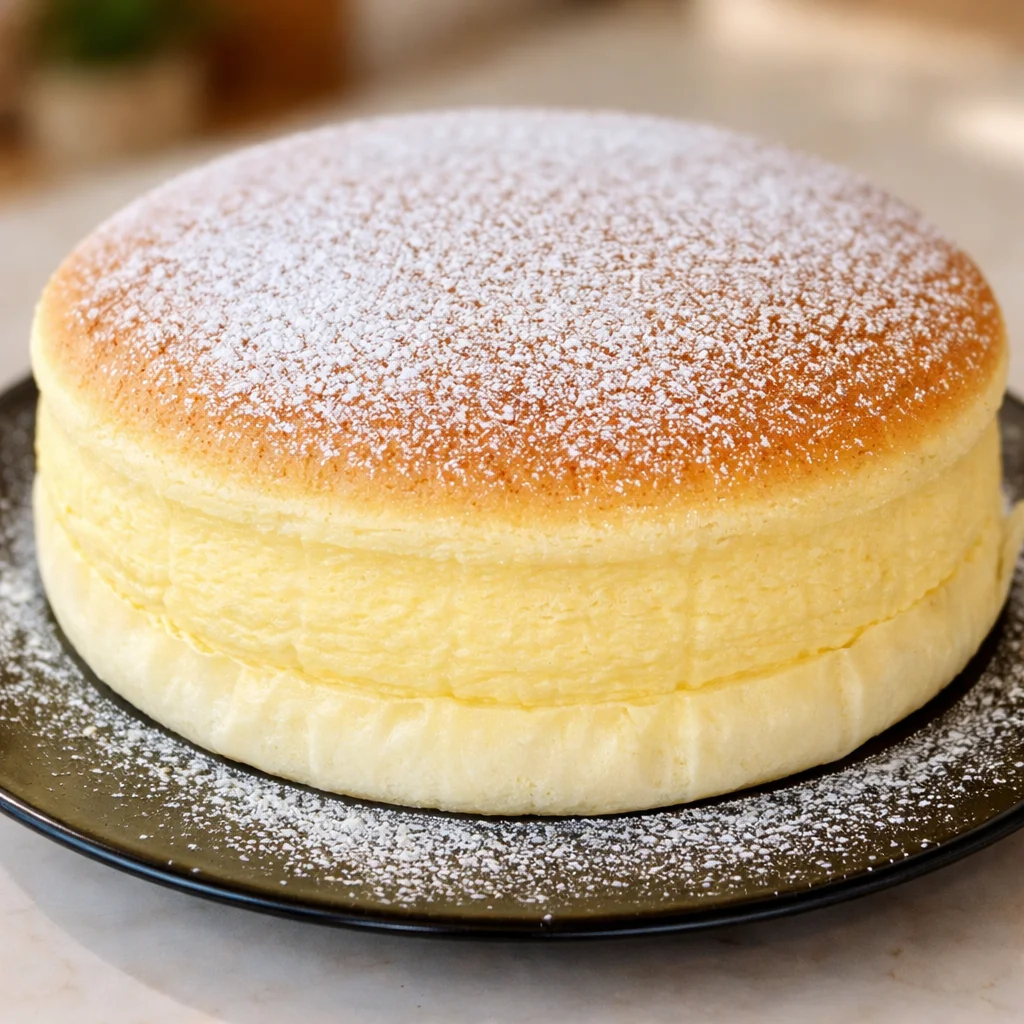
This post contains Amazon affiliate links. As an Amazon Associate I earn from qualifying purchases.
japanese cheesecake recipe panic ever hit at 8 pm when you want something light and dreamy but still big on comfort? I feel you. That’s exactly when I reach for my go-to Fluffy Japanese Cheesecake Recipe You’ll Want to Try Today!. It tastes like a cloud, melts on your tongue, and somehow manages to be both rich and airy at the same time. If regular cheesecake feels too heavy, this is your happy middle ground. I’ll walk you through everything, step by step, so yours comes out tall, soft, and jiggly in the best way. 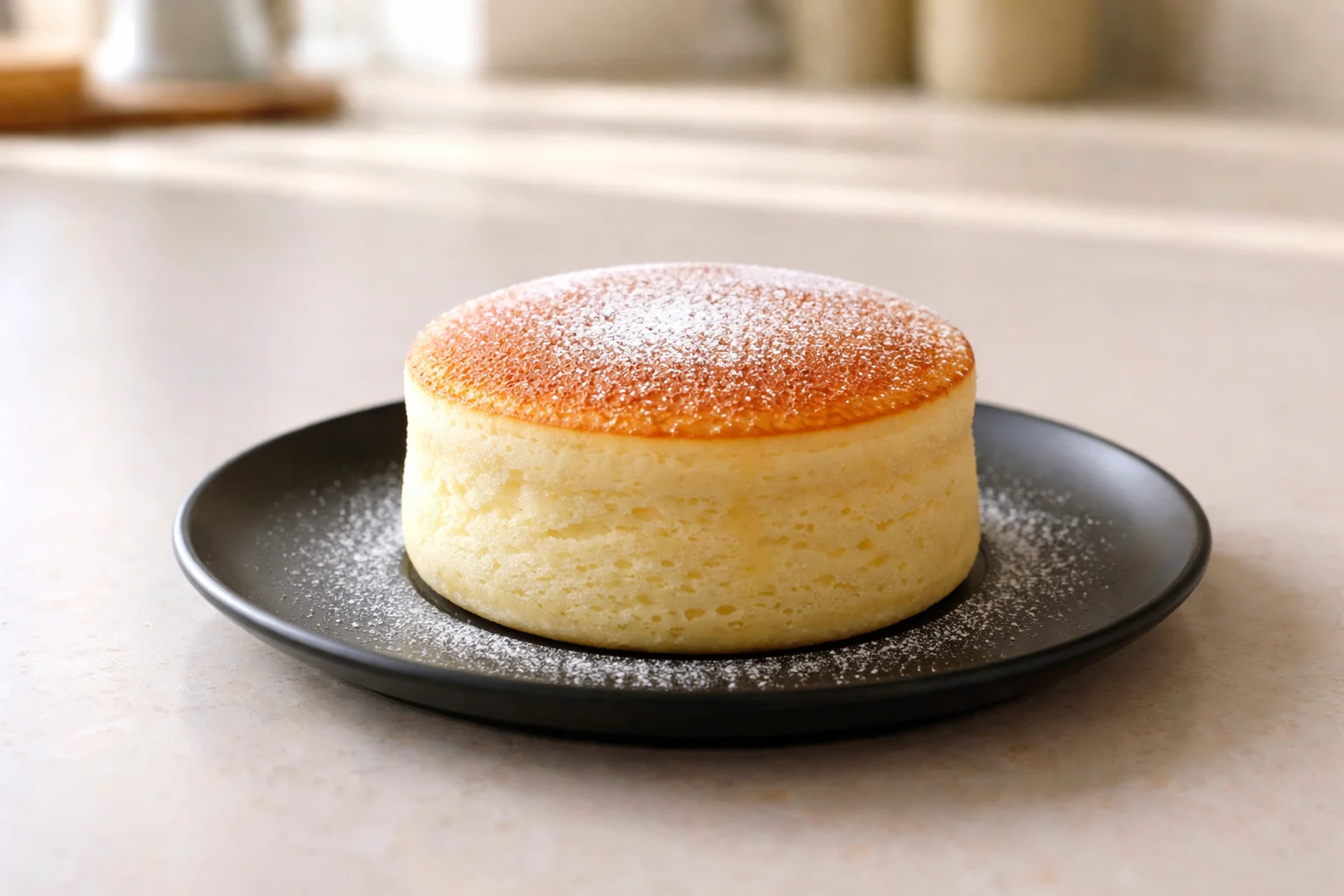
Best Japanese cheesecake recipe
I’ve baked a lot of cheesecakes over the years, and this one wins because it balances three things: gentle sweetness, milky creaminess, and that signature souffle-like rise. The batter is simple, but the magic comes from how you handle the eggs and the oven. A water bath keeps it moist, and a gradual cool-down stops cracks. When I’m craving a cozy dessert that still feels light, this is the one I bake for friends and family.
You’ll love this because the texture is whisper soft, the crumb is tight but tender, and the flavor is pure and clean with a hint of lemon. If you’re new to this style, don’t stress. I’ll show you exactly what to look for at each step, so you can get that tall, evenly baked finish. This is my Fluffy Japanese Cheesecake Recipe You’ll Want to Try Today! and it never fails to impress.
What really sets this apart: using room temperature ingredients, whipping the meringue just right, and baking low and slow. I’ll share my small tricks, like how to line the pan so your cake climbs the sides like a proud little cloud, and how to test for doneness without deflating it.
“I followed these steps for the first time and my cheesecake came out so light my kids called it a ‘pillow cake.’ It was gone in minutes. The gentle cool-down tip is gold.”
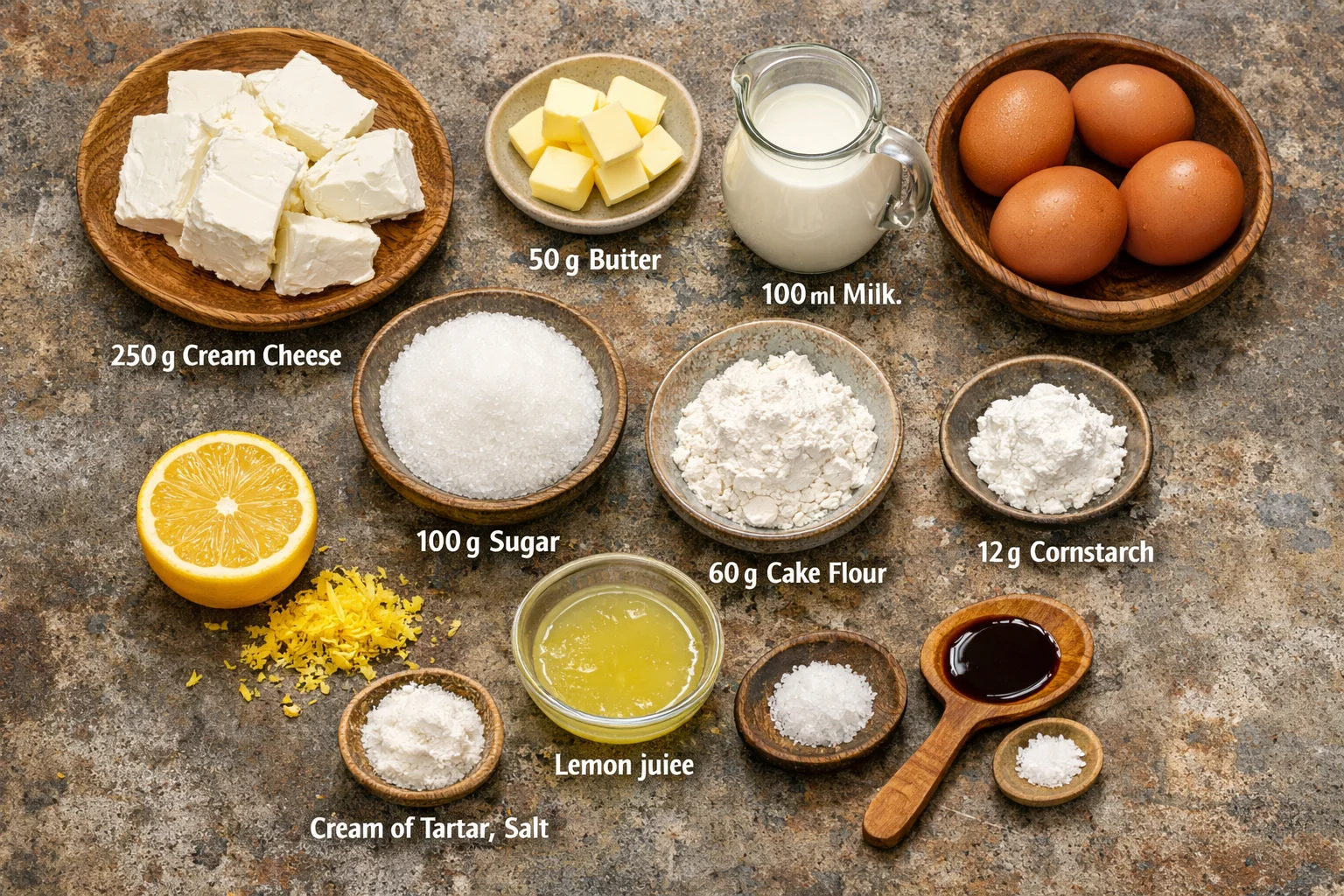
Key Ingredients in Japanese Cheesecake
Why these ingredients matter
This style of cheesecake is all about balance. These are the essentials and what each one does, so you know why you’re using them and how to swap if needed.
- Cream cheese: The base. Use full fat, room temperature for smoothness. About 250 g or 9 oz works great.
- Butter: Adds richness and stability. Unsalted is best. Roughly 50 g or 3.5 tbsp.
- Milk: Lightens the batter and helps with that custard vibe. Whole milk is ideal, around 100 ml or just under half a cup.
- Eggs: The star for lift. Yolks for creamy structure, whites for the meringue. I use 5 medium to large eggs.
- Sugar: Divided between the yolks and whites. It sweetens and helps stabilize the meringue. Aim for about 100 g or 1/2 cup total.
- Cake flour: Lower protein keeps the crumb soft and delicate. About 60 g or 1/2 cup.
- Cornstarch: A little insurance for tenderness and a smooth bite. 10 to 15 g or about 1 tbsp.
- Lemon juice and zest: Brightens the flavor and helps the meringue. Half a lemon is perfect.
- Vanilla: For warmth. Optional but lovely, about 1 tsp.
- Cream of tartar or vinegar: Just a pinch to stabilize the whites if your kitchen runs warm.
- Salt: Always a pinch. It makes the flavors pop.
When everything is at room temperature, the batter comes together silky smooth and bakes up even. Cold ingredients can make your batter lumpy and your cake dense. Warm everything gently if you forgot to take it out early.
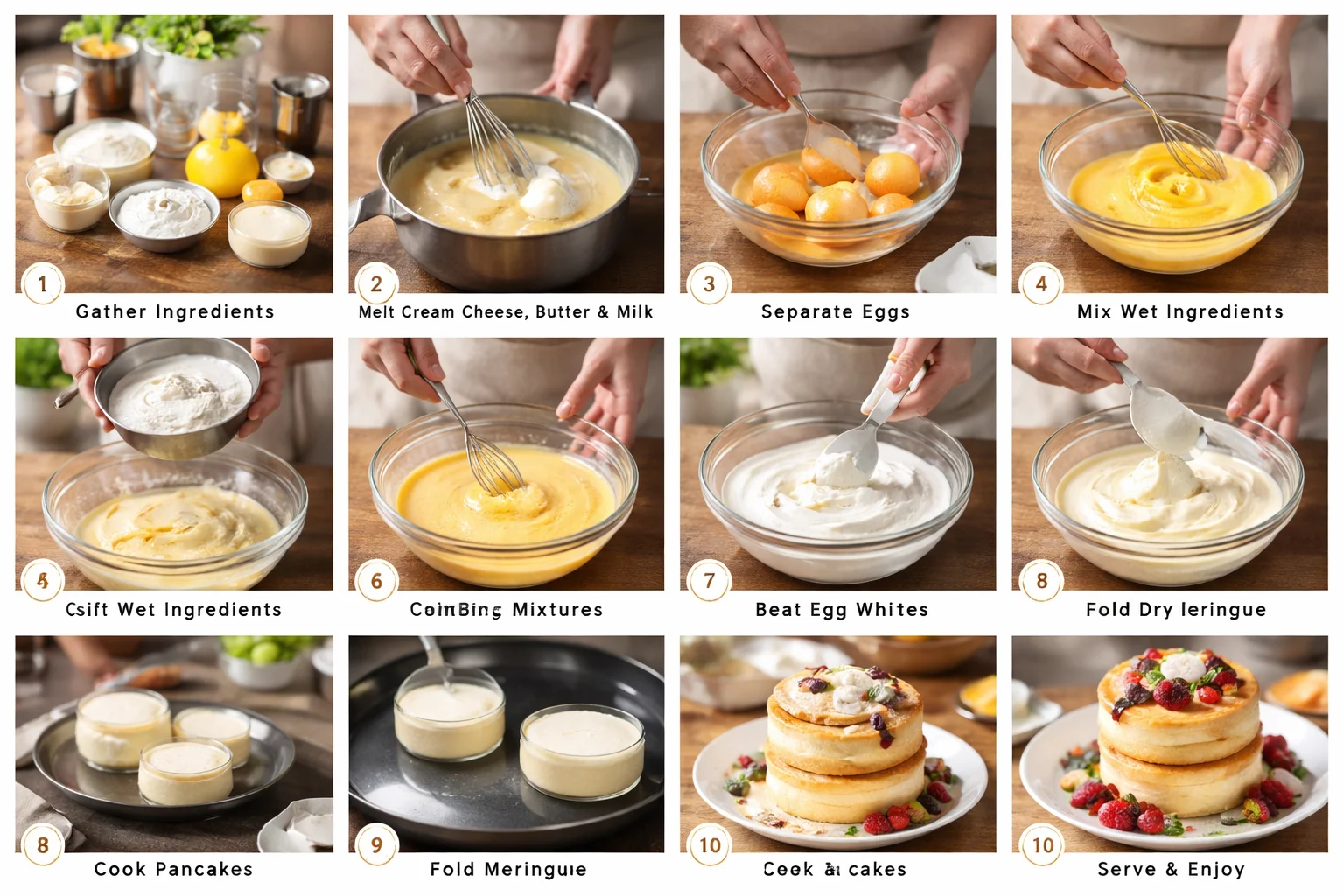
How to Make Japanese Cheesecake
Prep and set up
Line an 8-inch round pan with parchment on the bottom and tall sides. I like to line the sides higher than the pan so the cake has a little wall to climb. Wrap the bottom of the pan with foil to protect it from the water bath.
Preheat your oven to 320 F or 160 C. Place a larger roasting pan on the middle rack so it heats up too. You’ll set your cake pan in there with hot water later.
Make the base batter
In a small pot over low heat, melt 50 g butter and 100 ml milk together. Add 250 g room temperature cream cheese and whisk until smooth and glossy. Take it off the heat to cool slightly.
Whisk in 5 egg yolks, one by one, then add 60 g cake flour and 10 to 15 g cornstarch, sifted. Stir gently until just smooth. Add a pinch of salt, a splash of vanilla, and the zest of half a lemon. The mixture should look like a thick custard.
Whip the meringue
In a clean bowl, add the 5 egg whites with a few drops of lemon juice or a pinch of cream of tartar. Beat on medium speed until foamy. Start adding 100 g sugar gradually in 3 to 4 additions. Whip to soft peaks that curl over like a hook. Do not overbeat; stiff peaks can make folding harder and cause cracks.
Fold and bake
Add one third of the meringue to your base batter and whisk gently to lighten it. Switch to a spatula and fold in the remaining meringue in two parts with slow, sweeping motions. Stop as soon as you no longer see streaks. Pour into your lined pan and tap once to release any big bubbles.
Set the pan inside the preheated roasting pan. Pour hot water into the roasting pan so it reaches about 1 inch up the sides of your cake pan. Bake at 320 F or 160 C for 20 minutes, then reduce to 285 F or 140 C and bake another 40 to 50 minutes, until the top is lightly golden and the center wobbles like set Jell-O. If it colors too fast, tent with foil.
Turn off the oven. Crack the door open and leave the cake inside for 15 minutes. This gentle cool-down helps prevent collapse and cracks. Move the pan to a rack and let it sit another 15 minutes before unmolding. Peel off the parchment carefully for those clean sides. This whole process makes a cloud-soft cake that truly earns the name Fluffy Japanese Cheesecake Recipe You’ll Want to Try Today!.
While the cheesecake bakes, I sometimes prep a simple breakfast for the next day. If you like soft, barely sweet breads, you might love this matcha pan Japanese sweet bread. It pairs beautifully with a slice of chilled cheesecake and tea.
Expert tips to make Japanese cheesecake
These small details make a big difference. Keep them in mind for a smooth bake and a lofty rise.
- Room temp is non-negotiable: Cold cream cheese or eggs cause lumps and dense texture.
- Use a scale if you can: This batter is sensitive. Weighing flour and sugar helps consistency.
- Soft peaks only: Stop whipping when the meringue looks glossy and bends into a hook. Overbeaten whites are hard to fold and deflate the cake.
- Fold like you mean it, but gently: Big, slow motions. Scrape the bottom. Stop when streaks disappear.
- Water bath matters: It keeps the environment moist and the heat gentle, so the cake rises evenly.
- Control the cool-down: Sudden temperature changes cause collapse. A cracked door and patience are key.
- Line your pan high: Give the batter walls to climb for that tall, fluffy edge.
- Don’t overbake: Slight jiggle is good. It continues to set as it cools.
Stick with these tips and your Fluffy Japanese Cheesecake Recipe You’ll Want to Try Today! will come out looking like a bakery treat, but better, because you made it.
Storage and Make-Ahead Tips
Good news: this cheesecake is even better after it chills. Once it’s fully cool, cover and refrigerate for at least 4 hours or overnight. The texture becomes extra silky and the flavor settles into that milky, lemony sweetness.
For storing, keep it in an airtight container in the fridge for up to 4 days. If you live in a humid climate, add a paper towel inside the container to catch condensation. For freezing, wrap slices snugly in plastic, then place in a freezer bag. Freeze up to 1 month. Thaw overnight in the fridge for best texture. I like to warm a knife under hot water, wipe it dry, then slice for clean edges every time.
Make-ahead is easy. Bake the day before, chill overnight, and serve the next day. If your top deflates a hair in the fridge, don’t worry. A light dusting of powdered sugar or a few berries brings it right back to show-stopping status.
Common Questions
Why did my cheesecake crack?
Cracks usually come from overwhipped meringue, a too-hot oven, or skipping the water bath. Bake low and slow, keep the water bath, and cool gradually with the door cracked.
How do I know when it’s done?
The top should be lightly golden and the center should wobble, not slosh. A skewer should come out with a few moist crumbs, not wet batter.
Can I use all-purpose flour instead of cake flour?
Yes, but lighten it by removing 1 tsp per 1/2 cup and adding 1 tsp cornstarch. Cake flour still works best for that delicate crumb.
Do I need cream of tartar?
No, but it helps stabilize the meringue. A few drops of lemon juice or vinegar works too.
What size pan is best?
An 8-inch round with tall sides is ideal. A 7-inch will bake taller and may need a couple more minutes. A 9-inch will be shorter and bake faster.
Let’s make your kitchen smell like a bakery
There’s something special about pulling a tall, jiggly cheesecake from the oven and letting it cool on the counter while the room fills with that warm, milky scent. If you follow the gentle steps and keep an eye on the meringue, your Fluffy Japanese Cheesecake Recipe You’ll Want to Try Today! will feel surprisingly easy. Want to dig deeper into technique and variations? I like this guide from The best Japanese Cheesecake Recipe from modern asian baking for extra inspiration and troubleshooting ideas. Take a deep breath, line your pan high, and give it a go. You’ve got this, and your fork is waiting. 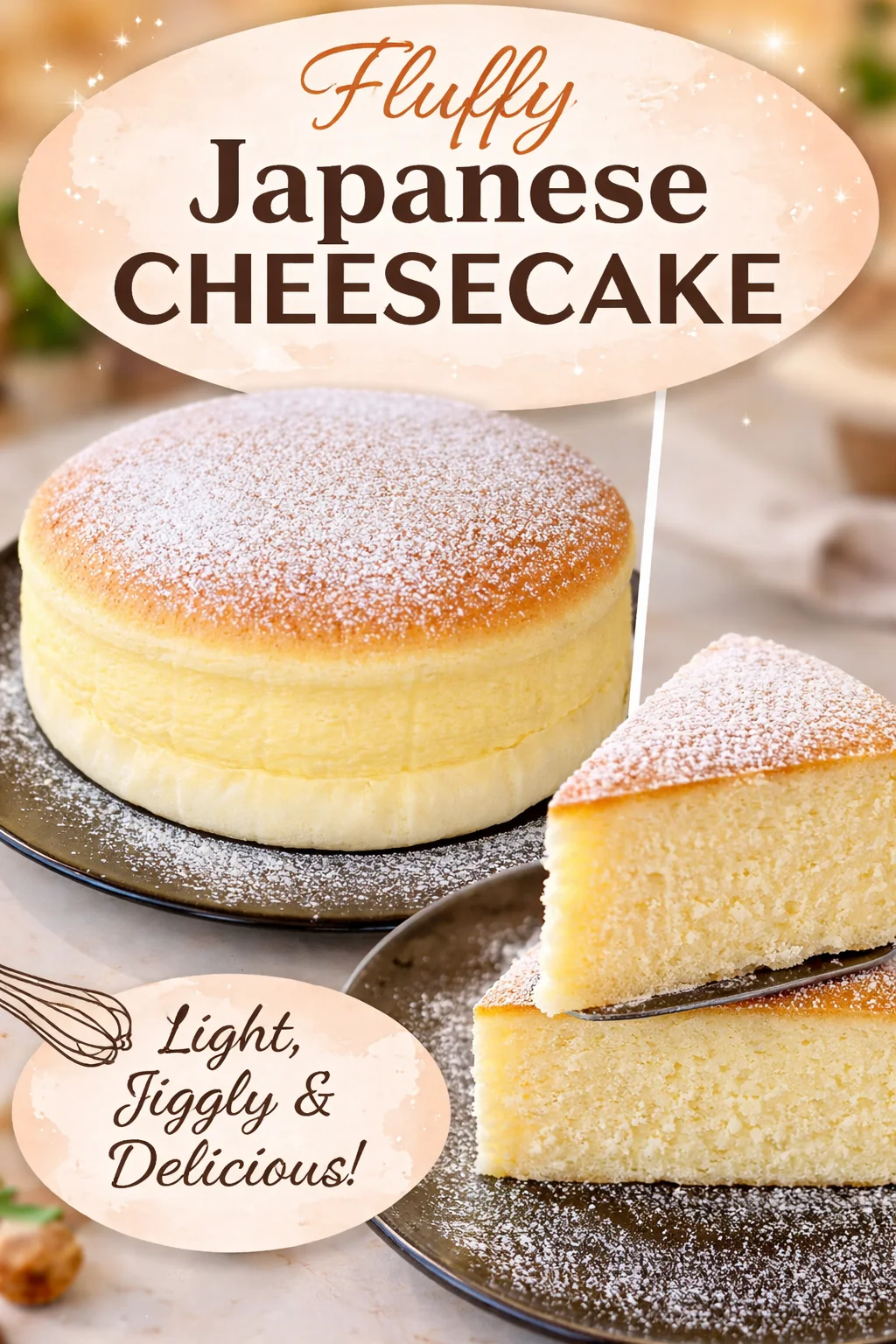

Fluffy Japanese Cheesecake
- Total Time: 75 minutes
- Yield: 8 servings
- Diet: Vegetarian
Description
A light and airy cheesecake that tastes like a cloud, perfect for those who want a comforting dessert that isn’t too heavy.
Ingredients
- 250 g cream cheese (room temperature)
- 50 g unsalted butter
- 100 ml whole milk
- 5 medium to large eggs (yolks and whites separated)
- 100 g granulated sugar (divided)
- 60 g cake flour
- 10 to 15 g cornstarch
- Juice and zest of half a lemon
- 1 tsp vanilla extract (optional)
- Pinch of cream of tartar or vinegar
- Pinch of salt
Instructions
- Preheat the oven to 320°F (160°C) and prepare an 8-inch round pan with parchment paper.
- Melt the butter and milk in a small pot, then whisk in the cream cheese until smooth.
- Cool slightly, then whisk in the egg yolks, cake flour, cornstarch, salt, vanilla, and lemon zest until combined.
- In another bowl, beat the egg whites and cream of tartar or lemon juice until foamy. Gradually add 100 g of sugar until soft peaks form.
- Fold one-third of the meringue into the batter to lighten it, then gently fold in the rest until no streaks remain.
- Pour the batter into the prepared pan and set it in a larger roasting pan filled with hot water.
- Bake for 20 minutes at 320°F (160°C), then reduce to 285°F (140°C) and bake for another 40-50 minutes until lightly golden and wobbly in the center.
- Turn off the oven, crack the door open, and cool for 15 minutes inside before transferring to a rack.
- Once cooled, refrigerate for at least 4 hours or overnight before serving.
Notes
Ensure all ingredients are at room temperature for a smooth batter. The cake is best served chilled.
- Prep Time: 15 minutes
- Cook Time: 60 minutes
- Category: Dessert
- Method: Baking
- Cuisine: Japanese