
This post contains Amazon affiliate links. As an Amazon Associate I earn from qualifying purchases.
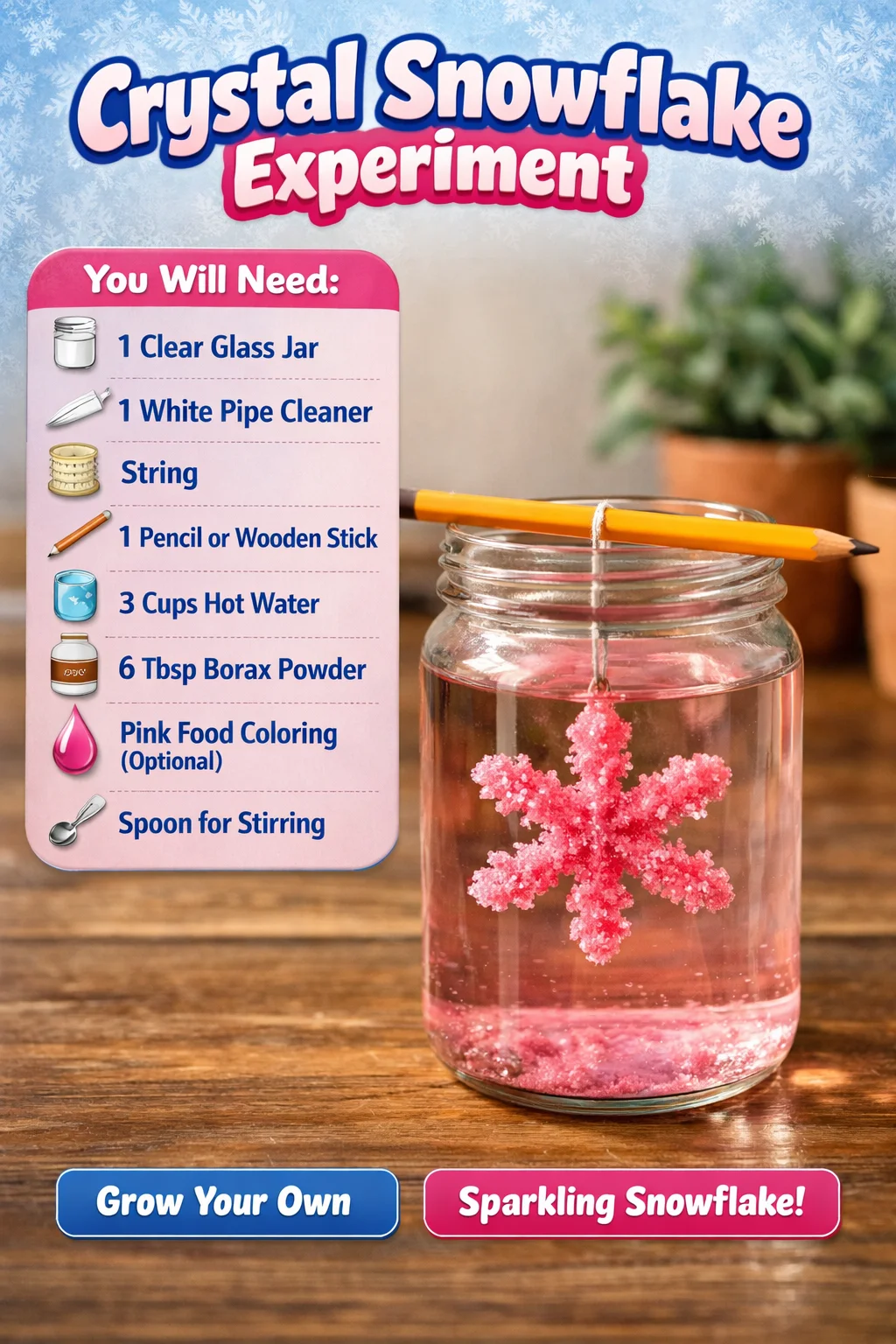
Creating crystal snowflakes is a delightful and enchanting science experiment that combines creativity and chemistry. This project not only results in stunning decorations but also provides valuable insights into the crystallization process. As the solution cools and evaporates, beautiful snowflake patterns emerge, akin to nature’s own winter wonders. It’s an excellent way to engage children in hands-on learning, encouraging them to explore the fascinating world of science through the lens of art. Perfect for chilly winter days or as a festive activity during the holidays, this experiment is sure to captivate both kids and adults alike.
Why You’ll Love This Crystal Snowflake Experiment:
- Educational Fun: Teaches concepts of crystallization and solubility.
- Creative Expression: Craft uniquely designed snowflakes that spark imagination.
- Visual Impact: Experience the joy of seeing crystals form before your eyes.
- Budget-Friendly: Uses common household materials you likely already have.
- Perfect for All Ages: Enjoyable for children, teens, and adults alike.
Materials:
- Water
- Epsom salt (or sugar)
- A glass or cup
- String
- Pencil or skewer
- Small pot for heating water
- Optional: Food coloring (to dye the crystals)
Full Step-by-Step:
1. Prepare Your Solution
- Heat 1 cup of water in a pot until it’s almost boiling.
- Gradually add 3-4 tablespoons of Epsom salt (or sugar), stirring until fully dissolved.
- Sensory Cue: Notice the warmth and the slight texture change in the water as the crystals dissolve.
2. Set Up the Snowflake Frame
- Tie one end of the string to your pencil or skewer.
- Lower the pencil so that the string hangs freely inside the glass or cup without touching the bottom.
- Key Action: Ensure the string is properly suspended for optimal crystal growth.
3. Add Food Coloring (Optional)
- If desired, add a few drops of food coloring to your solution for vibrant crystal color. Stir gently.
4. Let It Evaporate
- Leave the setup in a safe spot at room temperature.
- As the water begins to evaporate, crystals will start to form on the string over the next few hours or days.
- Sensory Cue: Observe the changes as the crystals begin to twinkle in the light.
5. Remove Your Snowflakes
- Once you’re happy with the size of your crystals, gently remove the string from the solution.
- Allow the snowflakes to dry on a paper towel.
Tips & Variations:
- Customize Shapes: Use pipe cleaners to create different snowflake shapes before dipping them into the solution.
- Swap Materials: Experiment with different types of salt or sugar to see how it affects crystal formation.
- Colorful Creations: Layer different colors of food coloring for a rainbow effect.
Frequently Asked Questions:
Q1: How long will it take to see the crystals form?
A1: You may start to see small crystals within a few hours, but larger, defined snowflakes can take 1-2 days.
Q2: Can I use table salt instead of Epsom salt?
A2: Yes, table salt works, but the crystals may not be as large or beautiful.
Q3: What should I do if my snowflakes look cloudy?
A3: This often means that the solution was too saturated. Try reducing the amount of solute next time.
Q4: How should I store my crystal snowflakes?
A4: Store them in a cool, dry place to prevent them from melting or breaking.
Suggestions:
- Use your crystal snowflakes as a festive holiday window decoration.
- Attach them to gifts as a unique and personal touch.
- Gift them to friends and family to showcase your crafting success.
Final Thoughts
This crystal snowflake experiment is a fantastic blend of science and art, perfect for enhancing creativity and curiosity. We hope you enjoy making your own frosty designs! Please share your versions or leave a comment below to let us know how your crystals turned out or any unique twists you added to the process!
Print
Crystal Snowflake Experiment
- Total Time: 490 minutes
- Yield: Variable, depending on crystal growth
- Diet: N/A
Description
An enchanting science experiment that combines creativity and chemistry to create stunning crystal snowflakes.
Ingredients
- 1 cup of water
- 3-4 tablespoons of Epsom salt (or sugar)
- String
- Pencil or skewer
- A glass or cup
- Small pot for heating water
- Optional: Food coloring
Instructions
- Heat 1 cup of water in a pot until it’s almost boiling.
- Gradually add 3-4 tablespoons of Epsom salt (or sugar), stirring until fully dissolved.
- Tie one end of the string to your pencil or skewer and lower it into the glass, ensuring it hangs freely.
- If desired, add a few drops of food coloring to your solution and stir gently.
- Leave the setup to sit at room temperature for several hours or days as the water evaporates and crystals form.
- Once satisfied with the crystal size, remove the string and let the snowflakes dry on a paper towel.
Notes
Customize shapes with pipe cleaners or experiment with different types of salt for varied results.
- Prep Time: 10 minutes
- Cook Time: 480 minutes
- Category: Crafts
- Method: Experimentation
- Cuisine: Educational