
This post contains Amazon affiliate links. As an Amazon Associate I earn from qualifying purchases.
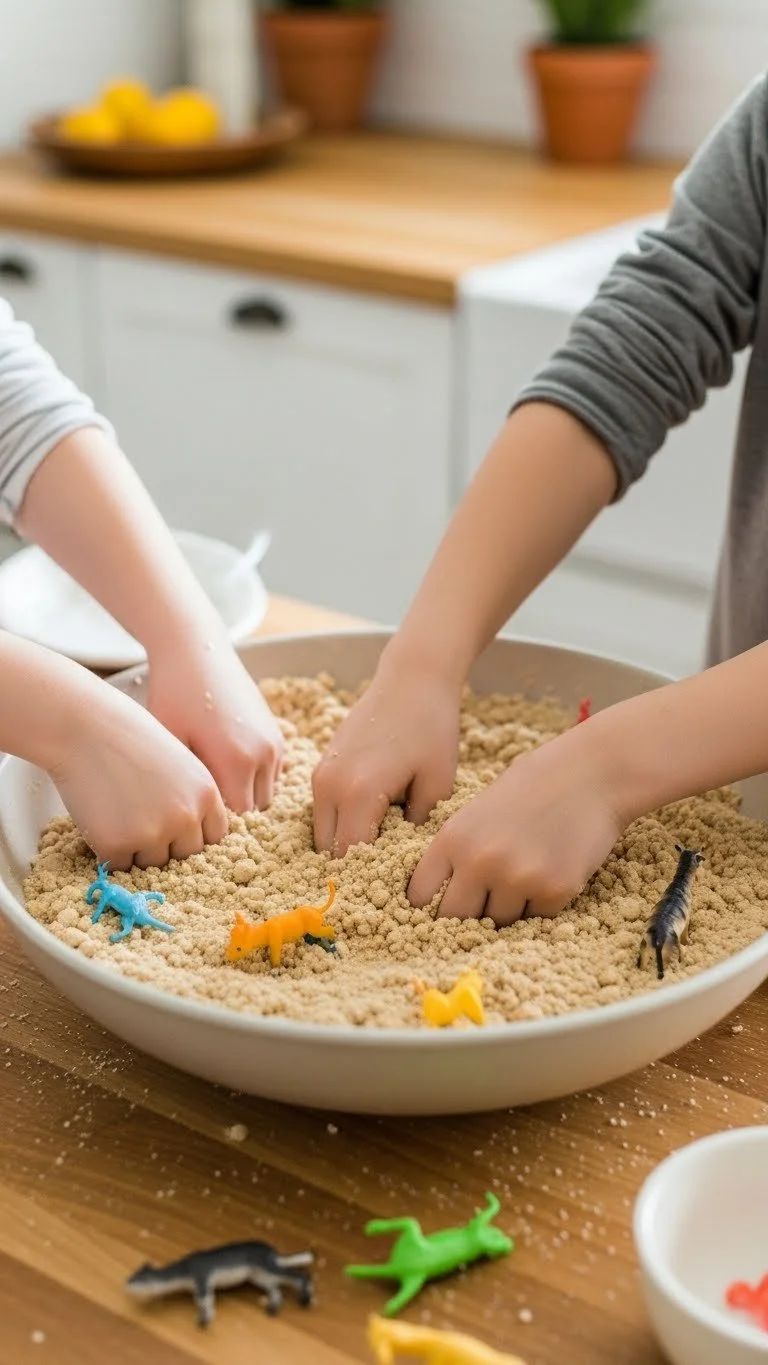
Homemade quicksand is a fantastic DIY project that combines fun with sensory play. Ideal for all ages, this craft lets you create a substance that behaves like both solid and liquid, offering endless opportunities for exploration and creativity. Whether you’re looking for a captivating activity for kids, an engaging science experiment, or simply a unique sensory experience, homemade quicksand provides a hands-on opportunity to observe the fascinating properties of non-Newtonian fluids. Plus, it’s a simple project you can whip up with common household materials, bringing both joy and learning right into your living room.
Why You’ll Love This Homemade Quicksand:
- Easy to Make: Quick preparation using common ingredients.
- Sensory Fun: Engaging for both kids and adults, offering tactile experiences.
- Educational: Teaches about the properties of materials and liquids.
- Versatile: Can be customized with colors and scents.
- Safe: Non-toxic ingredients mean it’s safe for kids to play with.
Materials:
- 2 cups of cornstarch
- 1 cup of water
- Food coloring (optional)
- A mixing bowl
- A spoon for mixing
- A tray or shallow container (for play)
Full Step-by-Step:
Step 1: Mix the Cornstarch
- In a mixing bowl, pour in 2 cups of cornstarch.
- Feel the powder: it should be soft and fine.
Step 2: Add Water
- Slowly add 1 cup of water to the cornstarch.
- Stir with a spoon until partially combined.
Step 3: Combine Ingredients
- Mix vigorously. You’ll notice the mixture begins to feel odd: it’s hard to stir but flows at the same time—this is the magic of quicksand!
Step 4: Adjust Consistency
- If the mixture is too thick, add a little more water. If it’s too runny, sprinkle in more cornstarch.
- Experiment until you achieve a balance—aim for a consistency that holds shape when molded but flows easily when you stop applying force.
Step 5: Add Color (Optional)
- A few drops of food coloring can be added to make it more visually appealing.
- Mix well to incorporate the color evenly throughout.
Tips & Variations:
- Scented QuickSand: Add a few drops of essential oils for a more enjoyable sensory experience.
- Glittery Touch: Mix in some glitter for a sparkly look.
- Colored Layers: Create layers of different colored quicksand by letting one layer set slightly before adding another color on top.
- Different Textures: Experiment with adding sand or flour to change the texture.
Frequently Asked Questions:
Q1: Can I use flour instead of cornstarch?
A1: Flour will not create the same non-Newtonian effect. Cornstarch is necessary for the desired quicksand consistency.
Q2: What if my quicksand is too liquid?
A2: Gradually add more cornstarch until you reach the desired thickness.
Q3: How do I store leftover quicksand?
A3: Store in an airtight container at room temperature. If it dries out, simply add a little water to reactivate.
Q4: Is this safe for toddlers?
A4: Yes, the ingredients are non-toxic. However, supervise young children to prevent ingestion.
Suggestions:
- Host a quicksand-themed science party.
- Use it as a sensory bin filler for younger kids.
- Incorporate it into a lesson about liquid states and phenomena in science classes.
Final Thoughts
Homemade quicksand is not only fun and educational; it offers a wonderful way to bond with children and explore the properties of materials together. We’d love to hear about your experiences! Share your versions, tips, or any variations you’ve tried in the comments below!