
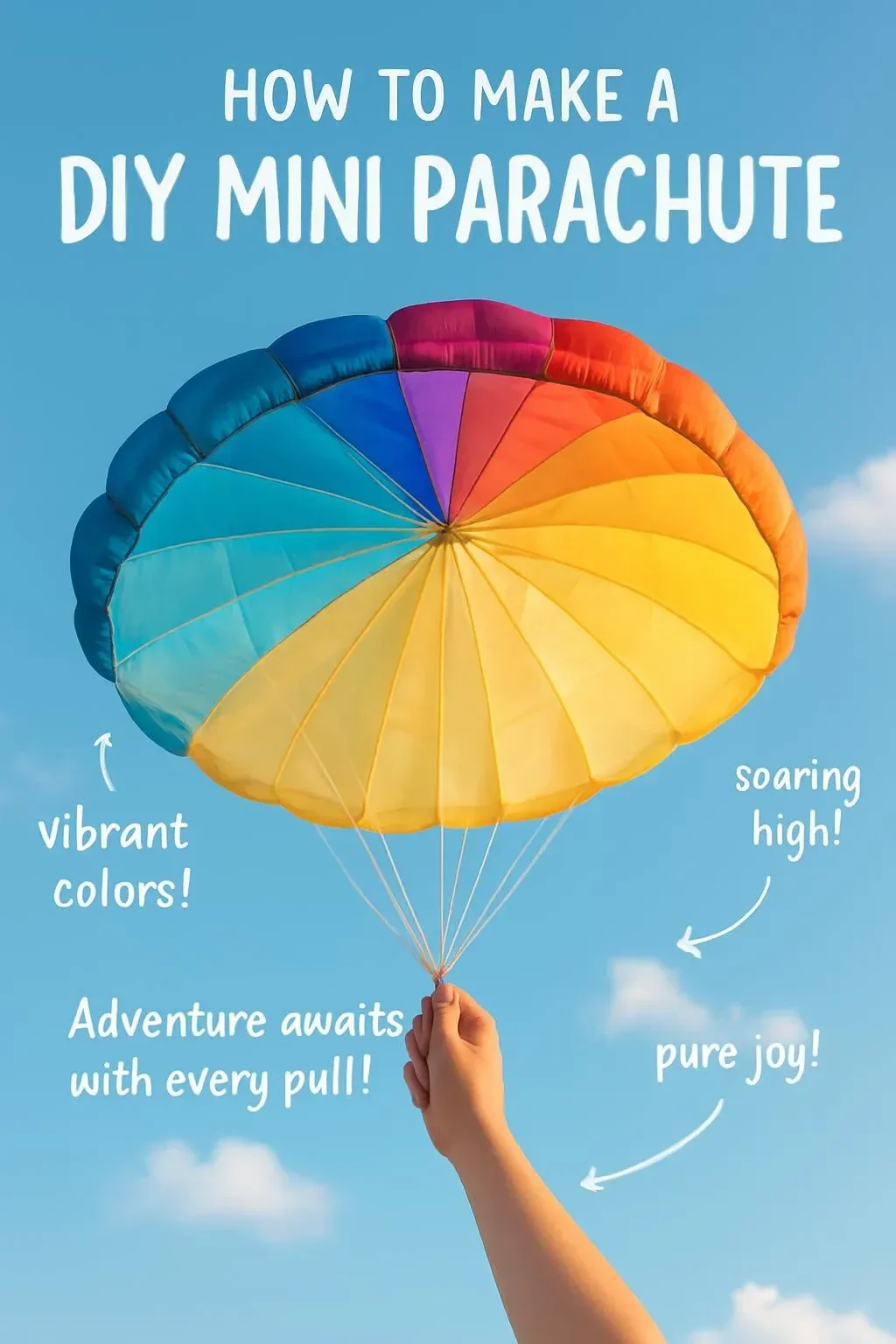
Creating a DIY mini parachute is an exciting and educational project that combines simple materials with the principles of physics. This craft is perfect for children and adults alike, providing a hands-on experience to understand how parachutes work. Not only is it a fun activity to do at home or in a classroom, but it also encourages creativity and problem-solving skills. The sense of accomplishment when watching your mini parachute float gracefully to the ground is truly rewarding. Whether you’re looking to engage young minds in science or simply find a delightful weekend project, this mini parachute craft is a fantastic choice.
Why You’ll Love This How to Make a DIY Mini Parachute:
- Educational Fun: Teach kids about gravity and air resistance.
- Easy to Make: Requires minimal materials and effort.
- Customizable: Create parachutes in different sizes, colors, and designs.
- Endless Play: Experiment with different weights and heights for thrilling results.
- Great for All Ages: Suitable for both kids and adults, making it a versatile project.
Materials:
- Plastic bag (a small grocery or sandwich bag works well)
- String (about 2-3 meters)
- Small weight (like a coin or small toy)
- Scissors
- Tape
- Optional: markers or stickers for decoration
Full Step-by-Step:
Step 1: Prepare the Canopy
- Cut the plastic bag into a large square. A 30 cm x 30 cm size is ideal.
- Feel the smooth, plastic texture as you handle the material; this will form the main part of your parachute.
Step 2: Attach the Strings
- Cut four equal lengths of string, each about 75 cm long.
- Use tape to attach each end of the strings to the corners of your plastic square, ensuring they are securely fastened. Think about the sensation of the string pulling taut as you do this.
Step 3: Create a Ring or Bundle
- Gather the loose ends of the strings together and tie them in a knot. This will allow your parachute to hang correctly.
- The feeling of the knot tightening will give you confidence that it’s secure.
Step 4: Add the Weight
- Attach your small weight to the knot of the strings using tape. This will help balance the parachute as it descends.
Step 5: Test Your Parachute
- Hold the parachute high above ground and let it go! Observe how it floats down. Listen for the sound of the wind as it catches the canopy.
Tips & Variations:
- Customize with Colors: Use markers or stickers to decorate your parachute for a personal touch.
- Swap Materials: Try different types of bags or fabrics to see how it affects the parachute’s descent.
- Experiment with Weights: Use different objects to see how weight changes the parachute performance.
Frequently Asked Questions:
Q1: Can I use a different type of material for the canopy?
A: Yes! You can experiment with thin fabric or even paper, but ensure they can catch air effectively.
Q2: What if my parachute doesn’t float?
A: Make sure the canopy is spread out properly and the strings are not tangled. Adjust the weight if necessary.
Q3: How high should I drop my parachute?
A: Start from a height of about 1-2 meters and gradually increase for more dramatic effects.
Q4: Can I make this project more complex?
A: Absolutely! You can add features like a release mechanism or try to measure how quickly different designs descend.
Suggestions:
- Organize a mini parachute competition with friends or family to see which one floats the best.
- Incorporate a science discussion to explore concepts like drag, gravity, and aerodynamics after the activity.
- Document the different trials and outcomes to enhance the learning experience.
Final Thoughts
Making a DIY mini parachute is not only a fun craft but also an opportunity to learn about science through play. We invite you to try this project and share your versions, experiences, or any tips you discover along the way. Leave a comment below; we’d love to hear from you!
Print
DIY Mini Parachute
- Total Time: 10 minutes
- Yield: 1 parachute
- Diet: N/A
Description
A fun and educational project to build a mini parachute using simple materials while learning the principles of physics.
Ingredients
- Plastic bag (small grocery or sandwich bag)
- String (2-3 meters)
- Small weight (coin or small toy)
- Scissors
- Tape
- Optional: markers or stickers for decoration
Instructions
- Cut the plastic bag into a large square (30 cm x 30 cm).
- Cut four equal lengths of string, each about 75 cm long, and tape them to the corners of the plastic square.
- Gather the loose ends of the strings and tie them in a knot.
- Attach the small weight to the knot using tape.
- Hold the parachute high and let it go to test its descent.
Notes
You can customize your parachute with different colors and materials or experiment with various weights to enhance the learning experience.
- Prep Time: 10 minutes
- Cook Time: 0 minutes
- Category: Craft
- Method: Crafting