
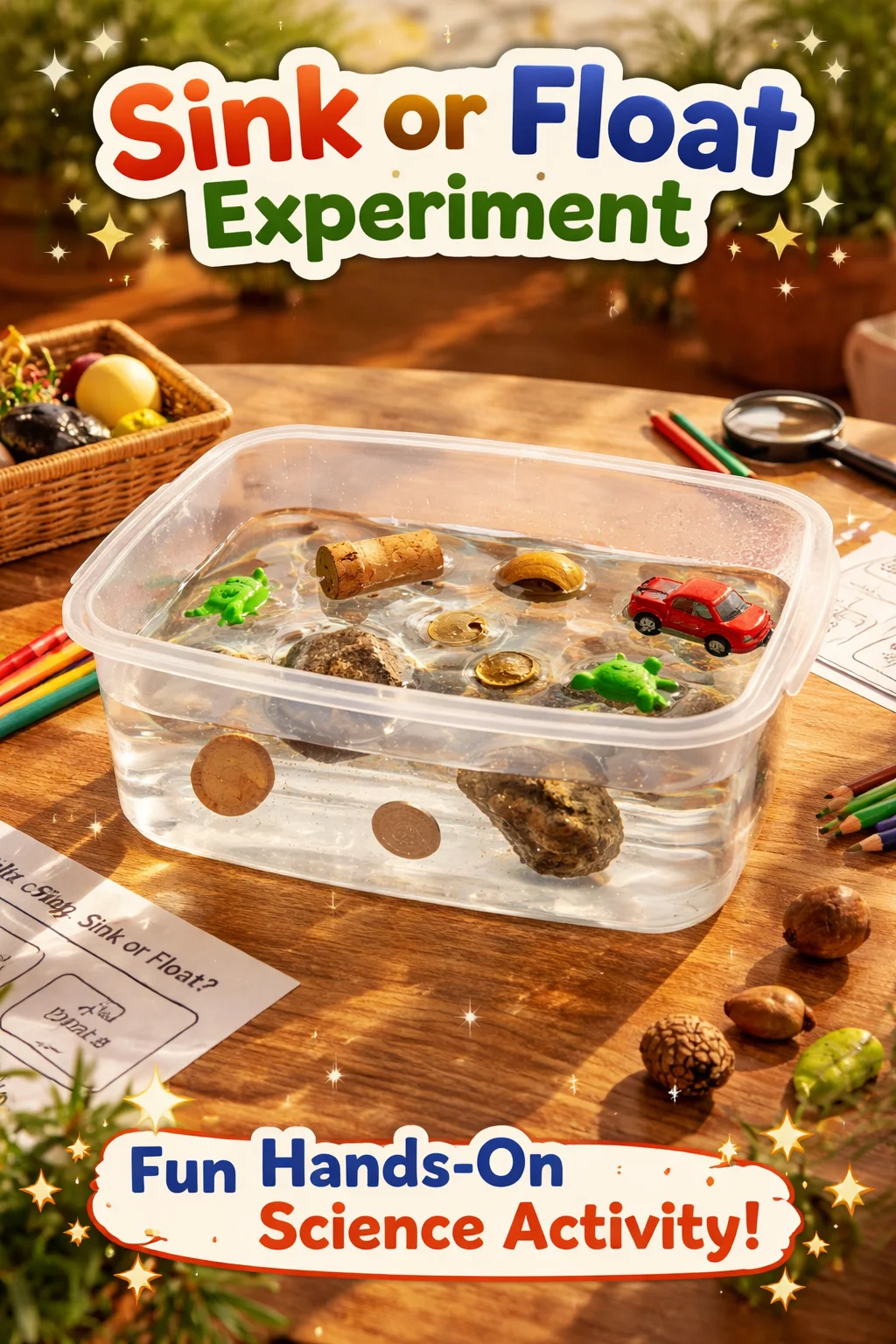
The Sink or Float Experiment is a delightful and educational activity that encourages exploration and curiosity. Perfect for children and adults alike, this experiment allows participants to engage hands-on with basic principles of buoyancy and density. By investigating what sinks and what floats, you can spark fascinating discussions about water, objects, and science in a fun and interactive way. This simple activity requires minimal materials and can be conducted indoors or outdoors, making it adaptable to various environments. Whether you’re a parent looking to entertain kids or a teacher aiming to enhance your science curriculum, this experiment promises to be an engaging experience packed with learning opportunities.
Why You’ll Love This Sink or Float Experiment:
- Educational Value: Teaches fundamental science concepts related to buoyancy and density.
- Hands-On Learning: Encourages active participation and observation.
- Versatile: Can be done at home, in the classroom, or outdoors.
- Customizable: Use different materials each time for varied results.
- Fun and Interactive: Creates excitement with surprising outcomes and discussions.
Materials:
- A large container (e.g., tub or basin) filled with water
- Various items to test (e.g., coins, fruits, plastic toys, rocks, etc.)
- Paper and pen/pencil for recording results
- A towel for cleanup
Full Step-by-Step:
1. Prepare the Experiment Area
- Set up your large container filled with water in a designated area.
- Lay out your materials and have your recording paper ready.
2. Introduce the Concept
- Explain the idea of buoyancy and why some objects sink while others float.
- Encourage curiosity by asking participants to predict the outcomes.
3. Conduct the Experiment
- Select an object from your materials and hold it above the water.
- Key action: Ask participants to predict whether it will sink or float.
- Gently place the object in the water.
- Sensory cue: Observe the splash, ripples, and the object’s behavior in water.
4. Record Results
- Write down whether the object sank or floated.
- Discuss the results with participants, encouraging them to think about why each item acted the way it did.
5. Repeat with Other Objects
- Continue testing each item and recording the outcomes.
- Encourage participants to refine their predictions based on previous results.
Tips & Variations:
- Customize the Materials: Use different items based on theme (e.g., kitchen items, nature objects).
- Swap Containers: Experiment with different water levels or types of containers.
- Add More Science: Introduce concepts of surface tension by including small, light items like paper clips.
- Follow-Up Questions: Discuss why certain items behaved differently and explore density in more detail.
Frequently Asked Questions:
1. What types of objects should I use for the experiment?
You can use a wide variety of objects such as toys, fruits, kitchen utensils, and stones. Just ensure they are safe and suitable for your participants.
2. What should I do if my container overflows?
Make sure to test your container’s capacity before starting. Consider using a waterproof sheet or conducting the experiment outside to minimize mess.
3. How can I make this experiment more challenging?
You can time the predictions or add more complex materials that defy expectations, like a combination of materials to see how they interact.
4. Is this experiment safe for young children?
Yes! Just supervise young children, especially around water, and make sure all materials used are non-toxic and safe for handling.
Suggestions:
- Take photos or videos of the experiment to share with friends or on social media.
- Create a poster summarizing the findings and display it for others to see.
- Organize a "Sink or Float" day where multiple experiments are conducted with different groups.
Final Thoughts
The Sink or Float Experiment is an excellent way to blend fun and learning seamlessly. By conducting this simple experiment, you not only uncover fascinating science concepts but also create lasting memories. We’d love to hear your thoughts or see your versions of this experiment! Feel free to share your results or leave a comment about your experience!
Print
Sink or Float Experiment
- Total Time: 30 minutes
- Yield: Multiple participants
Description
A fun and educational experiment that explores the principles of buoyancy and density through hands-on participation.
Ingredients
- A large container (e.g., tub or basin) filled with water
- Various items to test (e.g., coins, fruits, plastic toys, rocks)
- Paper and pen/pencil for recording results
- A towel for cleanup
Instructions
- Prepare the Experiment Area: Set up your large container filled with water and lay out your materials.
- Introduce the Concept: Explain buoyancy and encourage predictions about objects sinking or floating.
- Conduct the Experiment: Predict the outcome, gently place the object in water, and observe its behavior.
- Record Results: Write down whether each object sank or floated and discuss the results.
- Repeat with Other Objects: Continue testing items while refining predictions based on previous outcomes.
Notes
Customize the experiment by using different materials and containers to explore themes and scientific concepts further.
- Prep Time: 10 minutes
- Cook Time: 0 minutes
- Category: Educational Activity
- Method: Hands-On Experiment
Nutrition
- Serving Size: Varies by group size
- Calories: 0
- Sugar: 0g
- Sodium: 0mg
- Fat: 0g
- Saturated Fat: 0g
- Unsaturated Fat: 0g
- Trans Fat: 0g
- Carbohydrates: 0g
- Fiber: 0g
- Protein: 0g
- Cholesterol: 0mg