
- Introduction
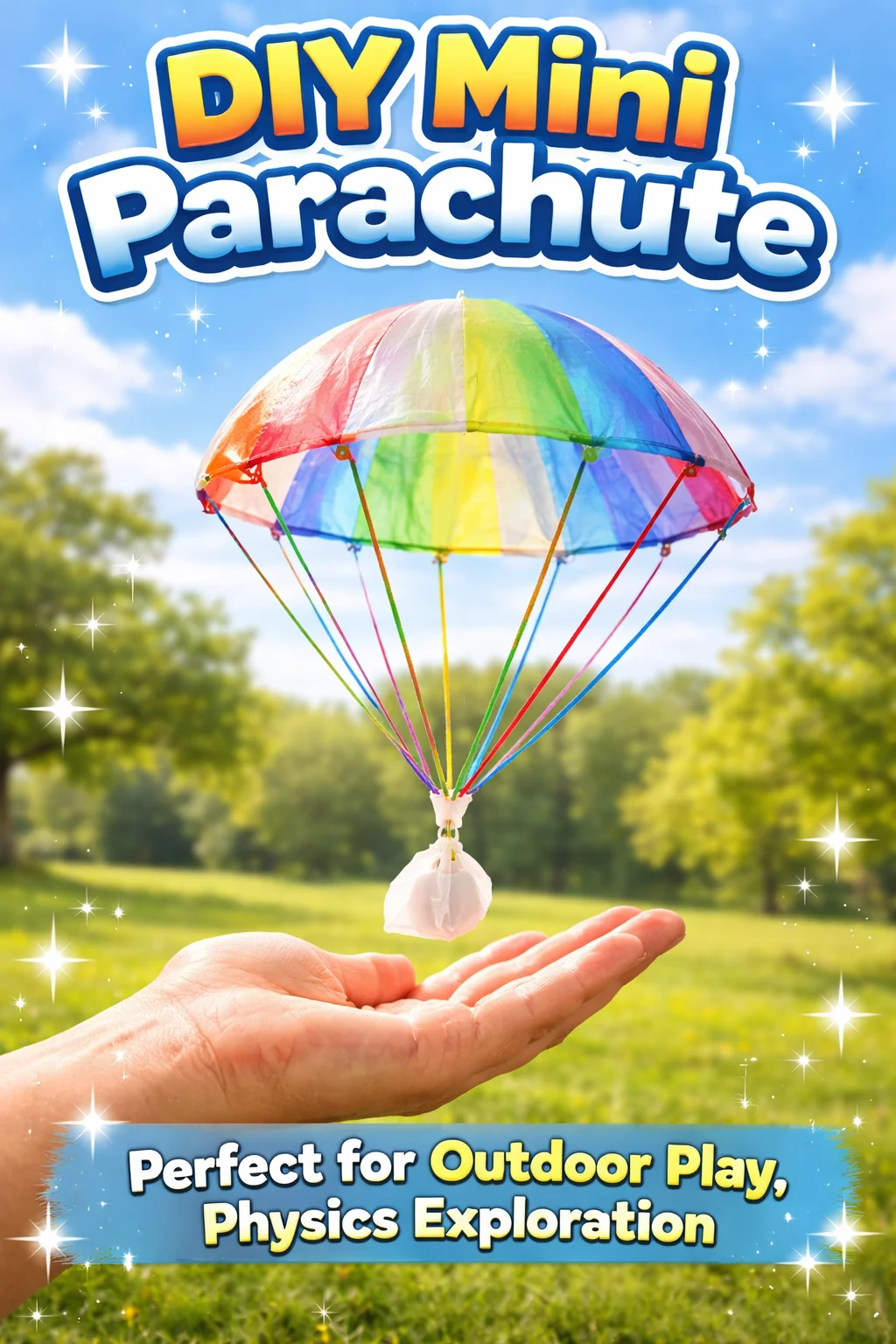
Creating your own mini parachute can be a fun and educational craft that brings the excitement of flight right into your hands! This project is perfect for children and adults alike, offering a unique way to explore principles of aerodynamics and gravity through hands-on learning. Not only does it inspire creativity, but it also provides an opportunity for outdoor play, where you can experiment with your parachute’s performance. In just a few simple steps, you can make a parachute that soars through the air, making it an excellent activity for parties, classrooms, or family time. Gather your materials, and let’s get started on this fun DIY adventure!
- Why You’ll Love This DIY Mini Parachute:
- Engaging and Fun: It’s a hands-on project that keeps everyone entertained.
- Educational: Teaches concepts of physics like gravity and air resistance.
- Customizable: You can personalize your parachute with colors and designs.
- Easy to Make: Requires minimal materials and can be done in under an hour.
- Great for Outdoor Play: Perfect for parks, backyards, or open spaces.
- Materials:
- Plastic bag (a sandwich bag or grocery bag)
- String or yarn (about 3-4 feet)
- Small object for weight (like a toy figure or a small ball)
- Scissors
- Tape
- Markers or crayons (optional, for decoration)
- Full Step-by-Step:
Step 1: Prepare the Canopy
- Cut the plastic bag into a square or circle (about 12-18 inches across).
- Key Action: Ensure your shape is even for balanced flight.
Step 2: Attach the Strings
- Cut four equal lengths of string (about 12 inches each).
- Tape one end of each string to the corners of your parachute.
- Sensory Cue: Feel the texture of the tape as you secure the strings.
Step 3: Add the Weight
- Tie the loose ends of the strings together, making a secure loop.
- Attach your weight (small object) to the knot.
- Key Action: Make sure it’s tied tightly for reliable release.
Step 4: Test Your Parachute
- Go to a high place like stairs or a balcony.
- Hold the parachute by its weight and drop it gently.
- Sensory Cue: Observe how the parachute billows out as it falls.
- Tips & Variations:
- Customize: Use different colors and patterns in your plastic bag for a unique look.
- Swap Materials: Try different weights (like small stones or other toys) to see how it affects the drop.
- Experiment: Adjust the length of the strings for varying flight perspectives.
- Frequently Asked Questions:
-
Q: What can I use instead of a plastic bag?
A: Fabric or an old t-shirt works well. Just ensure it’s lightweight and can catch air. -
Q: How do I increase the parachute’s effectiveness?
A: Make sure it’s wide enough and the weight is appropriately centered. Experiment with different shapes! -
Q: Can I make a parachute without string?
A: You can try using rubber bands or even strips of paper, but strings work best for stability. -
Q: What’s the best height to drop the parachute from?
A: A height of about 10-15 feet provides a good test for airflow without being too dangerous.
- Suggestions:
- Try making parachutes with your friends for a fun competition.
- Organize a landing zone to see which parachute lands closest to a target.
- Document your experiments and alterations for future projects or learning experiences.
- Final Thoughts
Making a DIY mini parachute is not just a craft but a delightful learning experience that fosters creativity and curiosity. We hope you enjoy every moment of this project and discover the magic of flight! Feel free to share your finished creations or leave a comment below about your experiences. Happy crafting!
Print
DIY Mini Parachute
- Total Time: 10 minutes
- Yield: 1 parachute
- Diet: N/A
Description
Create your own mini parachute with simple materials to explore the principles of flight and aerodynamics while having fun.
Ingredients
- Plastic bag (sandwich or grocery bag)
- String or yarn (3-4 feet)
- Small object for weight (toy figure or small ball)
- Scissors
- Tape
- Markers or crayons (optional, for decoration)
Instructions
- Cut the plastic bag into a square or circle (12-18 inches across) for the canopy.
- Cut four equal lengths of string (12 inches each) and tape one end of each string to the corners of the parachute.
- Tie the loose ends of the strings together and attach the weight to the knot.
- At a high place, hold the parachute by its weight and drop it gently to test its flight.
Notes
Customize your parachute with colors and patterns. Experiment with different weights and string lengths for varied flight perspectives.
- Prep Time: 10 minutes
- Cook Time: 0 minutes
- Category: Craft
- Method: DIY
- Cuisine: N/A
Nutrition
- Serving Size: 1 parachute
- Calories: 0
- Sugar: 0g
- Sodium: 0mg
- Fat: 0g
- Saturated Fat: 0g
- Unsaturated Fat: 0g
- Trans Fat: 0g
- Carbohydrates: 0g
- Fiber: 0g
- Protein: 0g
- Cholesterol: 0mg