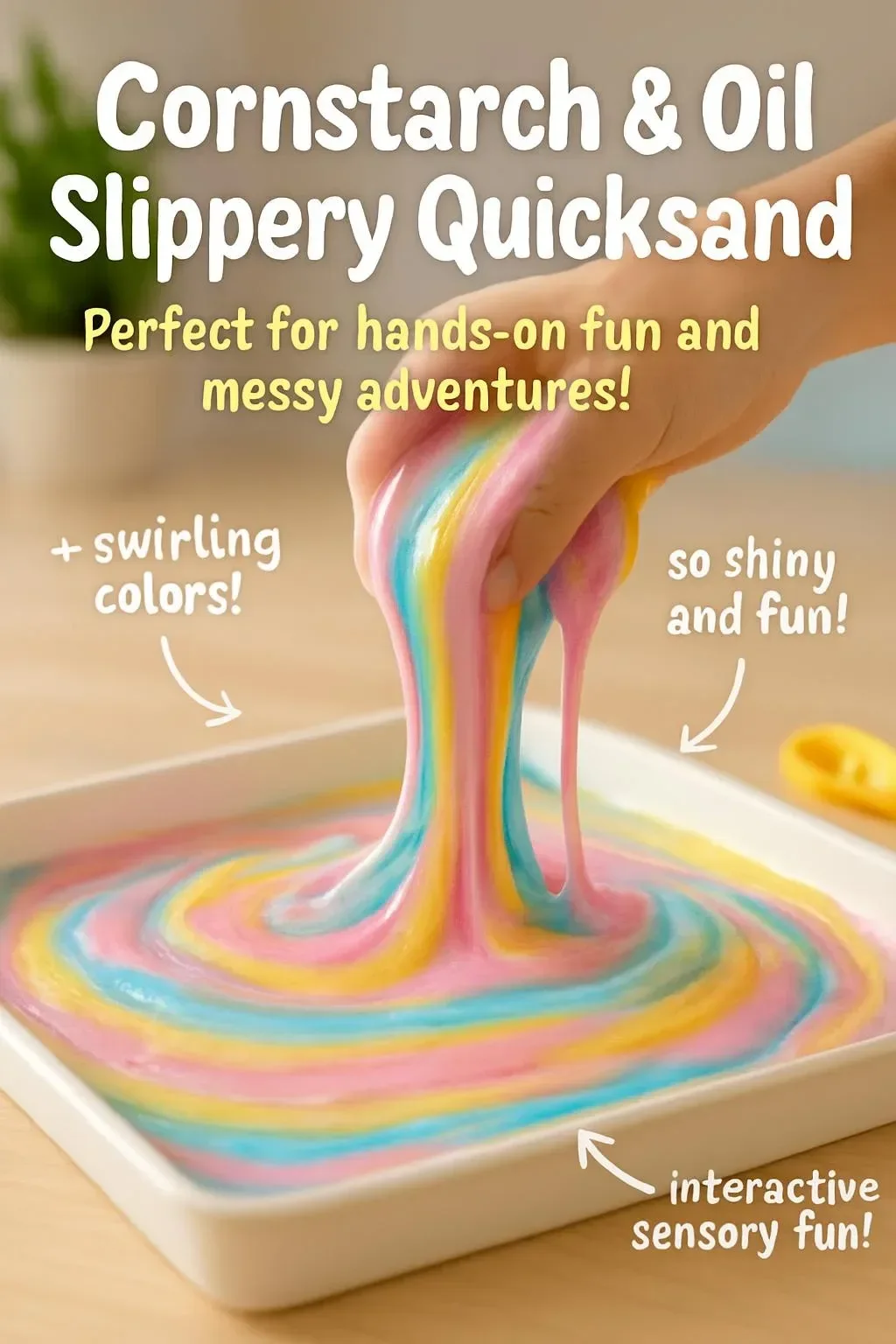
Are you ready to embark on a fun and educational crafting adventure? Making cornstarch and oil slippery quicksand is an excellent way to learn about non-Newtonian fluids while enjoying the tactile experience of crafting. This playful recipe mimics the fascinating properties of quicksand, offering a unique sensory experience for kids and adults alike. As you mix the ingredients, you’ll witness the transformation from a solid-like substance to a viscous, slippery medium that reactively changes with pressure and movement. Whether you’re looking to engage your children in STEM activities or simply want to explore the wonder of science through crafts, this cornstarch and oil slippery quicksand recipe is a delightful project packed with hands-on learning!
Why You’ll Love This Cornstarch & Oil Slippery Quicksand:
- Sensory Experience: The gooey texture is both satisfying and intriguing.
- Educational Fun: Teaches concepts of viscosity and states of matter.
- Easy to Make: Simple ingredients that are usually found at home.
- Customizable: Easy to add colors or scents for added fun.
- Perfect for Kids and Adults: Engaging for all ages, whether for a rainy day or a science class.
Materials:
- 1 cup cornstarch
- 1/2 cup vegetable oil (or baby oil)
- Food coloring (optional)
- A large mixing bowl
- A spoon for mixing
- A container for storage
Full Step-by-Step:
Step 1: Gather Your Materials
Start by collecting all the materials in your workspace. This ensures you have everything on hand.
Step 2: Measure the Cornstarch
Using a measuring cup, scoop out 1 cup of cornstarch and pour it into the large mixing bowl.
Step 3: Add the Oil
Next, measure 1/2 cup of vegetable or baby oil and pour it into the bowl containing the cornstarch.
Step 4: Mix the Ingredients
Use a spoon to stir the cornstarch and oil together. Initially, the mixture will seem dry and crumbly.
Step 5: Knead the Mixture
Use your hands to knead the mixture. As you apply pressure, it will begin to transform into a smoother, more viscous texture.
Step 6: Add Color (Optional)
If you’re using food coloring, add a few drops to your mixture and knead until the color is evenly distributed.
Step 7: Enjoy Your Slippery Quicksand
Play with the quicksand by pressing down with your hands to feel its unique properties. Store it in an airtight container when not in use.
Tips & Variations:
- Color Swaps: Try adding different colors for a more vibrant appearance.
- Scent Additions: Mix in a few drops of essential oils for a pleasant aroma.
- Texture Changes: Adjust the cornstarch or oil ratios to experiment with different consistencies.
- Add Glitter: Incorporate glitter for a fun, sparkly effect that enhances visual appeal.
Frequently Asked Questions:
Q1: Can I use different types of oil?
A1: Yes! You can substitute vegetable oil with coconut oil, olive oil, or baby oil, although the texture may vary slightly.
Q2: What if my mixture is too watery?
A2: If your quicksand is too liquidy, simply add more cornstarch incrementally until you reach your desired consistency.
Q3: How do I store the quicksand?
A3: Store your quicksand in an airtight container at room temperature. It should stay fresh for several days.
Q4: Is this recipe safe for kids?
A4: Yes, both cornstarch and vegetable oil are non-toxic. However, adult supervision is recommended for younger children to prevent messes and ingestion.
Suggestions:
- Use this activity as a hands-on science experiment in classrooms.
- Have a creative day with friends by experimenting with different colors, scents, and textures.
- Combine this quicksand with small toys for imaginative play or sensory bins.
Final Thoughts
This cornstarch and oil slippery quicksand recipe is not just a fun craft; it’s an opportunity to explore scientific principles in an engaging way! Whether you customize it or follow the basic recipe, you’re bound to have a memorable experience. We encourage you to share your versions or leave a comment below about your experiences! What did you add to your quicksand?
Print
Cornstarch and Oil Slippery Quicksand
- Total Time: 10 minutes
- Yield: 1 batch 1x
- Diet: Non-dietary
Description
A fun and educational project that mimics quicksand using cornstarch and oil, perfect for sensory play and learning about non-Newtonian fluids.
Ingredients
- 1 cup cornstarch
- 1/2 cup vegetable oil (or baby oil)
- Food coloring (optional)
- A large mixing bowl
- A spoon for mixing
- A container for storage
Instructions
- Gather your materials in your workspace.
- Measure 1 cup of cornstarch and pour it into the mixing bowl.
- Add 1/2 cup of vegetable or baby oil into the bowl.
- Mix the ingredients with a spoon until dry and crumbly.
- Knead the mixture with your hands to achieve a smoother texture.
- Add food coloring if desired and knead until even.
- Enjoy playing with your quicksand and store it in an airtight container when not in use.
Notes
Consider adding scents, glitters, or experimenting with different oil types for varied experiences.
- Prep Time: 10 minutes
- Cook Time: 0 minutes
- Category: Crafts
- Method: Mixing
- Cuisine: Educational
Nutrition
- Serving Size: As desired for play
- Calories: 50 (per serving, varies with variations)
- Sugar: 0g
- Sodium: 0mg
- Fat: 5g
- Saturated Fat: 0.5g
- Unsaturated Fat: 4.5g
- Trans Fat: 0g
- Carbohydrates: 12g
- Fiber: 1g
- Protein: 1g
- Cholesterol: 0mg