
- Introduction
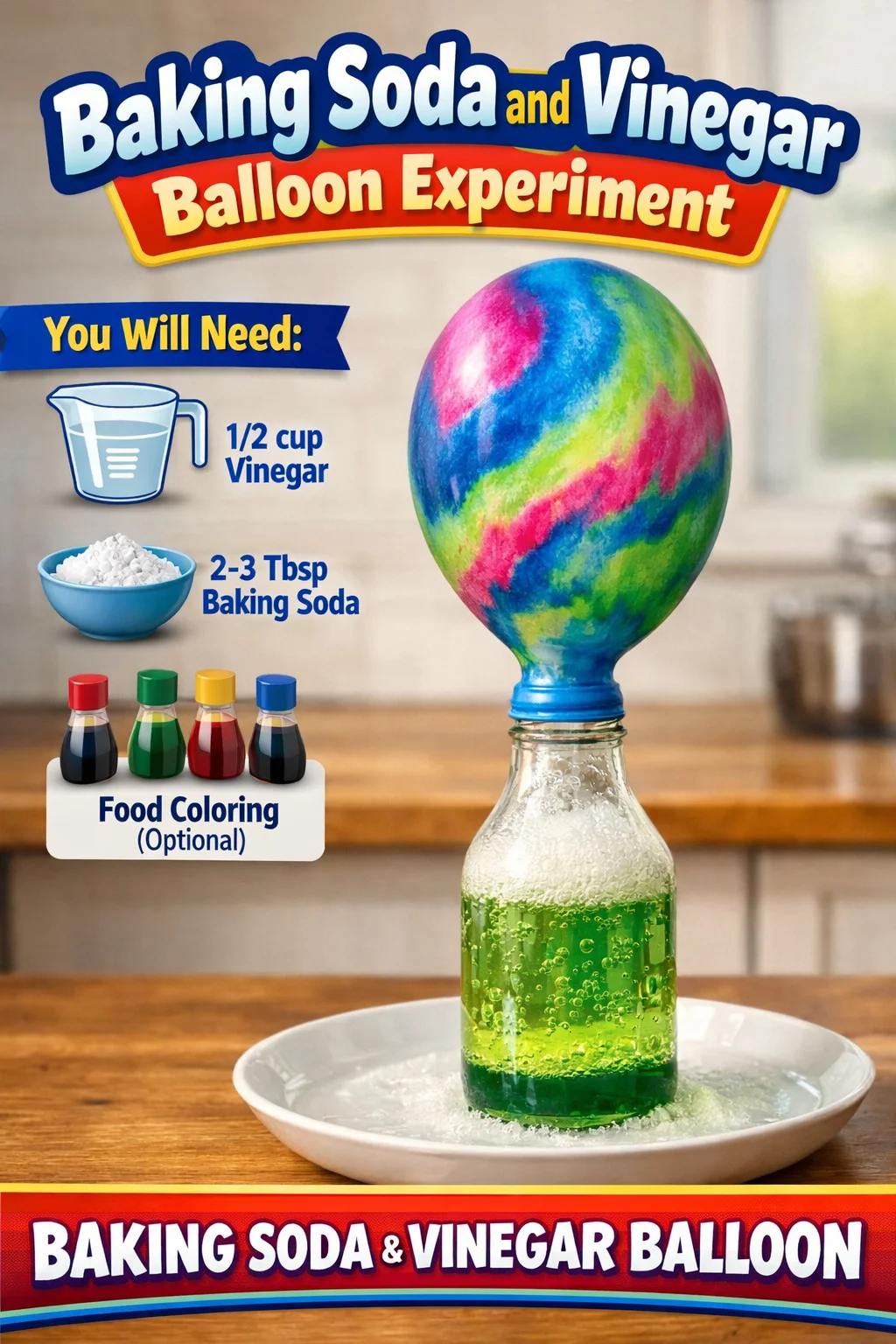
The Baking Soda and Vinegar Balloon Experiment is a thrilling, hands-on activity that combines science and creativity in a delightful manner. Not only does this experiment reveal the wonders of chemical reactions, but it also provides a fantastic way for kids and adults alike to engage in learning while having fun. As you witness the balloon inflate before your eyes, you’ll discover the magic of how two simple household ingredients can create an impressive display of science at work. Whether you’re looking to spice up a science lesson or just looking for a fun weekend craft, this experiment is sure to captivate and intrigue.
- Why You’ll Love This Baking Soda and Vinegar Balloon Experiment:
- Educational Fun: Teaches concepts of chemical reactions and gas expansion.
- Simple Ingredients: Uses common household items you probably already have.
- Visual Appeal: The balloon inflating is a visually exciting outcome.
- Easy Clean-Up: Minimal mess with a straightforward setup.
- Versatile: Modify the experiment for different age groups or learning levels.
- Shared Experience: Perfect for family bonding or classroom activities.
- Materials:
- 1 balloon
- 1 small plastic bottle (e.g., a soda bottle)
- 2 tablespoons of baking soda
- 1/2 cup of vinegar
- Funnel (optional, for easier pouring)
- Tissue or paper towel (for cleaning up spills)
- Full Step-by-Step:
Step 1: Prepare the Bottle
- Make sure your plastic bottle is clean and dry.
- Use a funnel if available for easier pouring.
Step 2: Add Baking Soda
- Pour 2 tablespoons of baking soda into the empty bottle.
- Ensure it settles at the bottom.
Step 3: Prepare the Balloon
- Carefully stretch the balloon to make it easier to expand.
- Use the funnel to pour 1/2 cup of vinegar into the balloon.
Step 4: Combine Ingredients
- Once prepared, carefully attach the balloon to the mouth of the bottle without letting any baking soda fall into the vinegar yet.
- Make sure the balloon is securely attached.
Step 5: Activate the Reaction
- Lift the balloon, allowing the baking soda to fall into the vinegar.
- Watch as the mixture begins to fizz and bubble!
Step 6: Observe the Results
- As the reaction occurs, carbon dioxide gas will fill the balloon, causing it to inflate.
- Marvel at the science happening right before your eyes!
- Tips & Variations:
- Color It Up: Add food coloring to the vinegar for a colorful effect.
- Different Bottles: Experiment with different bottle sizes to see how it affects balloon inflation.
- Try Different Ratios: Change the amounts of baking soda and vinegar for varying results.
- Experiment with Balloons: Use different sizes or shapes of balloons for a unique twist.
- Frequently Asked Questions:
Q1: What happens if the balloon doesn’t inflate?
A1: Ensure the baking soda is added after the balloon is correctly positioned, and check for any leaks in the balloon.
Q2: Can I use ingredients other than baking soda and vinegar?
A2: While this combination is classic, you can try other reactants, but results may vary.
Q3: How do I clean up after the experiment?
A3: Use tissue or paper towels to wipe up any spills, the mixture is usually easy to clean.
Q4: Is this safe for children?
A4: Yes, it’s safe for kids, but adult supervision is recommended to avoid spills or mess.
- Suggestions:
- Host a mini science fair to showcase your experiments to family and friends.
- Create a series of experiments using different reactions and display the results visually.
- Incorporate this experiment into a larger science lesson about gases and reactions.
- Final Thoughts
The Baking Soda and Vinegar Balloon Experiment is not just an educational activity; it’s an opportunity for creativity and curiosity. We hope you have fun exploring science through this engaging experiment! Don’t forget to share your own twists and versions of this project in the comments below. Happy experimenting!
Print
Baking Soda and Vinegar Balloon Experiment
- Total Time: 5 minutes
- Yield: 1 experiment 1x
- Diet: N/A
Description
A thrilling hands-on activity demonstrating chemical reactions with household ingredients, perfect for engaging kids and adults.
Ingredients
- 1 balloon
- 1 small plastic bottle (e.g., soda bottle)
- 2 tablespoons of baking soda
- 1/2 cup of vinegar
- Funnel (optional)
- Tissue or paper towel (for cleaning up spills)
Instructions
- Prepare the bottle by ensuring it is clean and dry. Use a funnel if available.
- Add 2 tablespoons of baking soda into the empty bottle, ensuring it settles at the bottom.
- Prepare the balloon by carefully stretching it for easier expansion. Use the funnel to pour 1/2 cup of vinegar into the balloon.
- Combine the ingredients by attaching the balloon to the mouth of the bottle without letting any baking soda fall into the vinegar yet.
- Activate the reaction by lifting the balloon, allowing the baking soda to fall into the vinegar, and watch it fizz!
- Observe the results as carbon dioxide gas fills the balloon, causing it to inflate.
Notes
Experiment with different balloon sizes and ratios of ingredients for varied results. Ensure adult supervision when kids are involved.
- Prep Time: 5 minutes
- Cook Time: 0 minutes
- Category: Educational Activity
- Method: Science Experiment
- Cuisine: N/A
Nutrition
- Serving Size: 1 experiment
- Calories: 0
- Sugar: 0g
- Sodium: 0mg
- Fat: 0g
- Saturated Fat: 0g
- Unsaturated Fat: 0g
- Trans Fat: 0g
- Carbohydrates: 0g
- Fiber: 0g
- Protein: 0g
- Cholesterol: 0mg