

The hook makes a small, steady sound as it passes through each loop, and the growing square rests lightly across your knees in the late afternoon light. The yarn feels warm between your fingers, even before your hands settle into their rhythm. The Cutest Little Cat Hiding in a Crochet Square is a small project with a sweet surprise at its center, made for a quiet cup of coffee, a basket beside the couch, or a slow Sunday morning when you want your hands busy and your mind unhurried.
Why The Cutest Little Cat Hiding in a Crochet Square Is So Soothing to Crochet
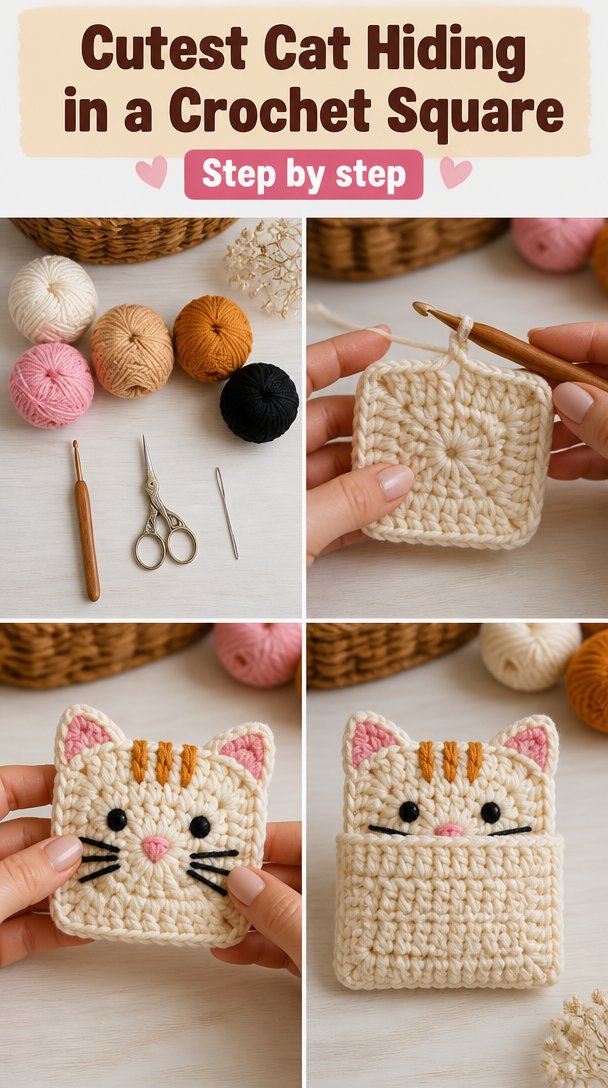
This project has a gentle kind of repetition. You make a square one round at a time, watching the fabric widen while the little cat shape takes form in the middle. The stitches are familiar, but the picture gives you something soft to notice as you work.
I made my first sample on the couch during a rainy evening, with a mug of coffee on the table and a yarn basket tucked near my foot. The first few rows curled at the edges, as crochet often does, but the piece settled once it grew heavy enough to hold itself flat.
That small change felt satisfying. The square did not need to be hurried or perfected. It only needed one more stitch, then one more round.
The project also suits ordinary American home life. You can work it on a screened porch in summer, beside a lamp during long fall evenings, or under a blanket when the first cold snap arrives. It fits into the spaces already waiting for a small, comforting ritual.
Many people find crocheting calming because the hands repeat a known movement while the eyes follow a simple path. This project gives you that rhythm without asking for a large commitment. You can finish a round during a television program or leave the work in a basket until the next quiet pocket of time.
How The Cutest Little Cat Hiding in a Crochet Square Comes Together
The square begins with a foundation chain, which is a row of chain stitches that forms the starting edge. From there, you work rows of double crochet, or dc, a taller stitch made by wrapping the yarn before pulling through loops. Double crochet suits this design because it grows quickly while still giving the cat motif a clear, tidy shape.
The cat appears through simple color changes rather than complicated shaping. You work the square in joined rows, carrying the unused color gently along the wrong side, or WS, which is the back of the work. The right side, or RS, is the side you will eventually display.
This pattern uses US crochet terms. UK readers often find these posts too, and the same word can mean a different stitch there, so please check your usual terminology before beginning.
The project is suitable for a confident beginner who knows how to chain and make double crochet. It takes about three to five evenings, depending on your pace, how often you pause, and whether you add a border. The cat motif feels fiddly for a few rows, but it becomes much easier once you place a stitch marker at the front of the work and keep the color chart nearby.
Pattern at a Glance
Here are the details to keep beside your yarn basket.
- Skill level: confident beginner
- Finished size: 12 inches (30 cm) square
- Gauge: 14 double crochet and 8 rows measure 4 inches (10 cm)
- Yarn: worsted weight (weight 4, medium), about 340 yards total, or two 100 g skeins plus one 50 g skein
- Hook size: H-8 (5.0 mm)
- Other supplies: yarn needle, scissors, tape measure, optional stitch marker
- Stitch multiple: 2 stitches plus 2 for the turning chain
- Estimated time: three to five evenings
What You Need for This Project
- About 340 yards of worsted weight yarn (weight 4, medium), preferably washable acrylic, in three colors: about 230 yards for the background, 80 yards for the cat, and 30 yards for the details. This equals two 100 g skeins plus one 50 g skein. A soft acrylic yarn such as one from Red Heart is an easy-to-find example.
- H-8 (5.0 mm) crochet hook. A half size up or down is fine depending on your tension.
- Yarn needle for weaving in the ends.
- Sharp scissors.
- Stitch marker, optional, for marking the front of the square or the first stitch of a row.
- Tape measure for checking gauge and the finished size.
- Small amount of polyester fiberfill if you want to add a tiny raised cat nose, optional.
- One scrap of contrasting yarn for marking the cat’s center line, optional.
Acrylic keeps this project affordable, washable, and easy to live with. It also holds the color blocks clearly, which helps the cat shape show against the background. The gauge is 14 double crochet and 8 rows over 4 inches (10 cm), measured without stretching the fabric.
The swatch is worth twenty minutes because it tells you whether your finished square will land near 12 inches (30 cm). If your swatch is smaller, use a larger hook. If it is larger, use a smaller hook. A foundation chain that pulls tight usually points to a tension issue, so you can make the chain with a hook one size larger, then return to H-8 (5.0 mm) for the first row.
You can substitute any smooth worsted weight acrylic with a similar yardage. Lion Brand offers another easy example of this yarn type, but the label matters more than the brand name. Choose a yarn that feels comfortable against your hands and gives you about 170 yards per 100 g skein. Do not mix a very thin worsted yarn with a bulky one, because the cat shape will lose its clean edges.
Step by Step
- Check the difficulty and stitch multiple. This is a confident beginner project using a stitch multiple of 2 stitches plus 2 for the turning chain. Make a small gauge swatch before beginning, and measure 14 double crochet across 4 inches (10 cm) and 8 rows across 4 inches (10 cm).
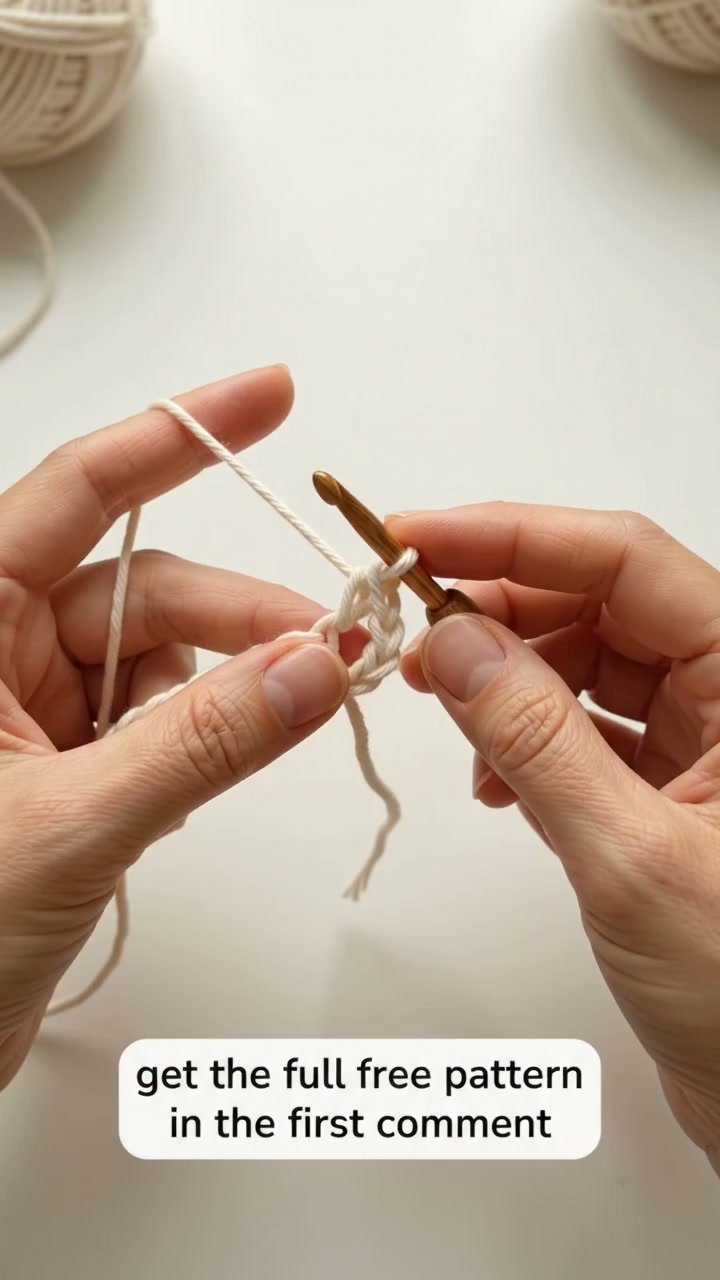
- Make the foundation chain. With the background color, chain 44. A chain, abbreviated ch, is made by pulling a loop of yarn through the loop already on your hook. This chain gives you 42 working stitches plus 2 extra chains for the turning chain.
- Work the first row. Make 1 double crochet in the third chain from the hook and in each chain across. A double crochet, or dc, uses a yarn over, then pulls through two loops twice. You will have 42 double crochet. Turn your work.
- Build the plain base. Chain 2, which counts as the turning chain, then make 1 double crochet in each stitch across. Repeat this row until you have 5 rows total. Each row has 42 double crochet. The yarn slides through your fingers easily here, and the fabric may curl slightly before it gains weight.
- Begin the cat motif. On row 6, chain 2 and make 12 double crochet with the background color. Join the cat color by completing the next double crochet with the new color. Make 18 double crochet in the cat color, then complete the final 12 double crochet in the background color. You still have 42 double crochet.
- Carry the unused color neatly. Keep the unused strand along the wrong side of the row and crochet over it for short sections. Do not pull it tight. The carried strand should rest behind the fabric with enough slack for the square to lie flat.
- Shape the cat’s head with color blocks. Work rows 7 through 12 using the same 42-stitch structure, but adjust the cat color by 2 stitches at each side. Use 10 background, 22 cat, 10 background on row 7; 8 background, 26 cat, 8 background on row 8; 6 background, 30 cat, 6 background on row 9; 4 background, 34 cat, 4 background on row 10; 6 background, 30 cat, 6 background on row 11; and 8 background, 26 cat, 8 background on row 12. Each row ends with 42 double crochet.
- Add the ears and face details. On row 13, use 10 background, 8 cat, 2 background, 10 cat, 2 background, 8 cat, and 2 background. This creates two small ear peaks with a narrow background space between them. On row 14, use 12 background, 6 cat, 6 background, 6 cat, and 12 background. On rows 15 and 16, use 10 background, 22 cat, and 10 background. Keep your tension gentle so the face does not pucker.
- Finish the cat shape. Work rows 17 through 20 in the cat color for the center 18 stitches, with 12 background stitches on each side. Then work rows 21 through 24 with 10 background, 22 cat, and 10 background. The cat will now look like a simple seated shape inside the square. Count 42 double crochet after every row.
- Return to the background. Work rows 25 through 42 in the background color, using 1 double crochet in each stitch across. Each row has 42 double crochet. If you want a small tail, embroider it later with the cat color rather than carrying another strand through the final rows.
- Check for mistakes calmly. Look at the top edge before turning each row. If you see only 41 stitches, you may have missed the last double crochet beside the turning chain. Pull back one row at a time by gently removing the loops from your hook, then work forward again. I pulled back three rows on my sample after a missing stitch shifted one ear, and the repair took less time than trying to hide it.
- Make the border. Turn the square so the right side faces you. Join the background yarn in any corner with a slip stitch, or sl st, which moves the yarn through a stitch without adding height. Chain 1, then make 1 single crochet, or sc, in each stitch around, placing 3 single crochet in each corner. Join with a slip stitch to the first single crochet.
- Finish the edge. Work one more round of single crochet if you want a firmer frame. Place 1 single crochet in each stitch along the sides and 3 single crochet in each corner. Keep the corners relaxed so they do not curl. Fasten off and leave a 6-inch tail for weaving in the ends.
- Weave in and block. Thread the yarn needle and weave every end back and forth through the wrong side of the fabric, changing direction once or twice. Block the square by gently dampening it, shaping it to 12 inches (30 cm), and letting it dry flat. Acrylic can be blocked cold or with steam held from a distance, but never press a hot iron directly onto acrylic because it can melt the fibers.
Where This Piece Finds Its Place
The finished square works beautifully as a small cushion front, a basket liner, a shelf accent, or a decorative cloth beneath a plant pot. I like it folded over the arm of the living room couch, where the cat appears when someone picks it up.
You can also sew the square to a plain fabric backing and turn it into a little wall hanging. Add a wooden dowel through a simple fabric sleeve, or display it flat in a basket beside your favorite armchair.
For a gift, pair the square with a small mug and a packet of tea for a quiet birthday present. It also makes a thoughtful handmade addition to a cat-loving friend’s holiday basket, especially when you include a handwritten note about the colors you chose.
If you turn your crochet into finished items to sell, my own policy is simple: I am happy to sell items made from my patterns, but I ask that you credit the pattern designer in the listing.
Keeping The Cutest Little Cat Hiding in a Crochet Square Looking Good
This sample uses washable acrylic, so wash it on a gentle cycle with cold or warm water and a mild detergent. Place it in a mesh bag if you wash it with other small items, and avoid bleach because it can weaken the fibers and alter the color.
Dry the square flat on a clean towel, shaping the corners while it is damp. Never hang it wet, because the weight of the water can stretch the stitches and pull the square out of shape.
Blocking remains useful after washing. Smooth the square back to 12 inches (30 cm) and let it dry completely. For acrylic, use cold shaping or very gentle steam held several inches away. Acrylic can melt under a hot iron, so do not touch the iron to the fabric.
Store the piece folded rather than hung, somewhere breathable and away from direct sunlight. If you use wool for a future version, keep cedar or lavender nearby for moth protection, and remember that untreated wool can felt while superwash wool usually tolerates a gentle washing machine cycle.
Keep leftover yarn with its label in a small bag. The label includes the dye lot, which helps you match the color later if you need more yarn.
Small Ways to Make It Your Own
Try a different yarn thickness. A bulky yarn will make a much larger, heavier square with a softer drape, while a light worsted yarn may create a smaller, crisper piece. Change the hook to match the yarn label, then measure as you work instead of expecting the original finished size.
Change the cat’s mood with color. A charcoal cat on a cream background feels quiet and classic. Rust, mustard, or deep green can bring in the colors of autumn without changing the construction.
Use single crochet for a denser fabric. Replacing the double crochet with single crochet will make the square smaller and firmer, and you will need more rows to reach the same size. This can suit a mug mat or a firm basket insert, but the cat will look more compact.
Resize with the stitch multiple. Add or remove stitches in groups of 2, keeping 2 extra chains for the turning chain. To keep the cat centered, add the same number of background stitches on both sides of the motif.
Add a personal border or gift detail. A round of reverse single crochet can make the edge look corded, while a plain single crochet border keeps the design gentle. For gifting, add a fabric backing, a small card, or a matching crochet coaster made from the leftover yarn.
Frequently Asked Questions About The Cutest Little Cat Hiding in a Crochet Square
Can I use a different hook size for The Cutest Little Cat Hiding in a Crochet Square?
Yes, you can use a different hook size if your gauge needs it. Start with H-8 (5.0 mm), then move to I-9 (5.5 mm) if your stitches feel tight or your swatch measures smaller than 4 inches (10 cm). Use G-6 (4.0 mm) or a similar smaller hook if your fabric looks loose and measures larger.
What yarn can I substitute for the recommended yarn?
Choose another worsted weight yarn, also called weight 4 or medium, with about 170 yards per 100 g skein. Acrylic gives this square easy washing and clear color blocks, but cotton will make it firmer and wool will add warmth. Check your gauge because yarn labels can share a weight category while still producing different fabrics.
What should I do if I find a mistake several rows later?
First, compare the row with the stitch counts and look for the place where the shape changed. If the mistake affects the cat outline, gently pull back one row at a time and rework it. If it only changes a background stitch and does not show, you can leave it. A calm repair usually looks better than a tight, hidden correction.
Is this cat square suitable for a beginner?
Yes, this project suits a confident beginner who knows chain, double crochet, and basic color changes. The cat motif makes the middle section fiddly, but every row still has 42 double crochet. Beginners should use a stitch marker and count the top edge before turning, while more experienced crocheters can work by the color blocks.
How long does this crochet square take to make?
The square takes about three to five evenings for most crocheters. A faster crocheter may finish sooner, while someone learning color changes may need extra time. The border and weaving in the ends add another half hour or so. It is a small working project, but the motif deserves a slower pace.
Does this pattern use US or UK crochet terms?
This pattern uses US crochet terms. That means double crochet refers to the US double crochet, not the UK treble crochet. The pattern also uses US terms for chain, slip stitch, single crochet, and the other stitches, so check a conversion chart if your usual instructions use UK terminology.
Taking It Slow
Let the square grow at the speed your hands choose. Some rows will feel smooth, and others may ask for a quiet count or a little undoing. That belongs to the making too. Set the project down when you need to, pick it up when the next loop feels welcome, and trust that steady attention will carry the cat home.
—META—
SEO Title: The Cutest Little Cat Crochet Square
Meta Description: Make The Cutest Little Cat Hiding in a Crochet Square with calm rows, simple color changes, and a sweet handmade finish for your home.
Slug: cutest-little-cat-crochet-square
Category: Crochet Patterns
Tags: crochet square, cat crochet, beginner crochet, crochet home decor, slow crafting
Image Alt Text: Crochet square with a small cat motif in the center
Close view of double crochet color changes forming a cat shape
Finished cat crochet square resting on a living room couch
Pinterest Title: Crochet Cat Square Pattern
Pinterest Description: Make a gentle crochet square with a little cat hiding in the center. Simple color changes and steady double crochet create a sweet handmade piece.

The Cutest Little Cat Hiding in a Crochet Square
- Total Time: 240 minutes
Description
The Cutest Little Cat Hiding in a Crochet Square is a calming crochet project featuring a sweet little cat shape in the center of a square. Suitable for a confident beginner, this project uses double crochet and simple color changes to create a charming piece for your home.
Materials
- About 340 yards of worsted weight yarn (weight 4, medium): about 230 yards for the background, 80 yards for the cat, and 30 yards for the details (equals two 100 g skeins plus one 50 g skein)
- H-8 (5.0 mm) crochet hook
- Yarn needle
- Sharp scissors
- Tape measure
- Optional stitch marker
- Small amount of polyester fiberfill for a raised cat nose (optional)
- One scrap of contrasting yarn for marking the cat’s center line (optional)
Instructions
- Check the difficulty and stitch multiple. This is a confident beginner project using a stitch multiple of 2 stitches plus 2 for the turning chain. Make a small gauge swatch before beginning, and measure 14 double crochet across 4 inches (10 cm) and 8 rows across 4 inches (10 cm).
- Make the foundation chain. With the background color, chain 44.
- Work the first row. Make 1 double crochet in the third chain from the hook and in each chain across.
- Build the plain base. Chain 2, which counts as the turning chain, then make 1 double crochet in each stitch across. Repeat this row until you have 5 rows total.
- Begin the cat motif. On row 6, chain 2 and make 12 double crochet with the background color. Join the cat color by completing the next double crochet with the new color. Make 18 double crochet in the cat color, then complete the final 12 double crochet in the background color.
- Carry the unused color neatly along the wrong side of the row and crochet over it for short sections.
- Shape the cat’s head with color blocks over rows 7 through 12 using specific counts of background and cat color stitches.
- Add the ears and face details on rows 13 and 14 using the same stitch pattern.
- Finish the cat shape with additional rows working in the cat color and background color, ensuring 42 double crochet for each row.
- Return to the background for rows 25 through 42.
- Make the border by joining the background yarn and creating single crochet around the square, placing 3 single crochets in each corner.
- Finish the edge with one more round of single crochet if desired.
- Weave in all ends and block the square to the correct size.
Notes
This project suits a confident beginner who knows how to chain and make double crochet. Adjust for different yarn thickness and add personal touches as desired.