

The little case grows quietly in your hands, one soft row at a time, while late afternoon light rests on the yarn beside your chair. This Soft Crochet Case Tutorial makes a simple fabric pouch with a gently ridged surface, roomy enough for a pair of glasses, a few pencils, or the small things that tend to wander across a coffee table. The hook pulls through each loop with a light, familiar tug, and the fabric slowly gains enough weight to settle across your knees. It is a peaceful project for a rainy evening, a porch in summer, or a Sunday morning when you want your hands occupied without needing to hurry.
Why This Project Is Such a Pleasure to Make
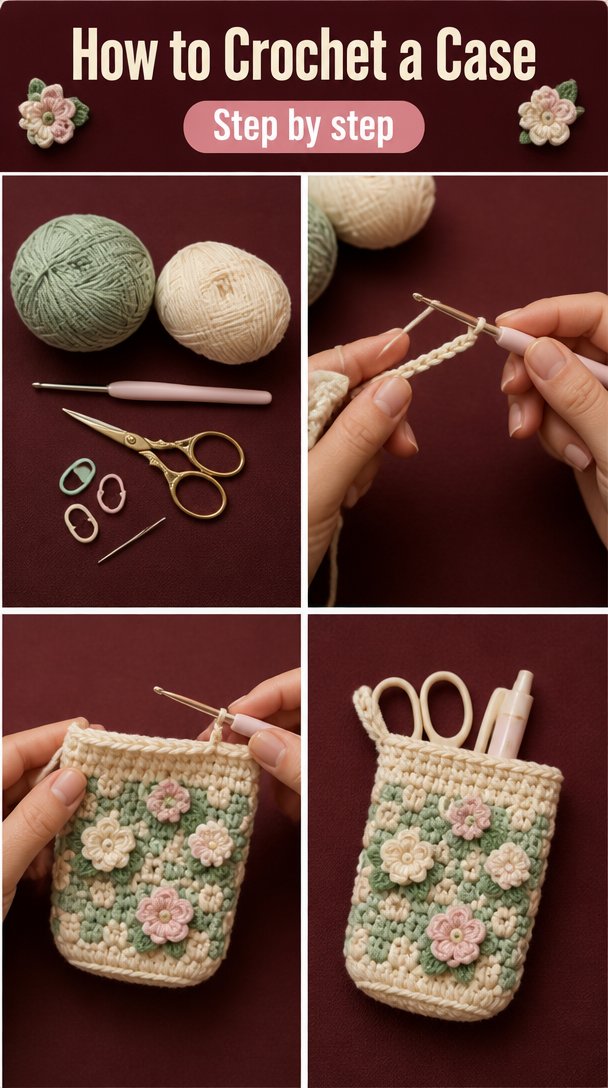
This case asks for very little from you. The shape comes from a simple rectangle folded in half, so you can focus on the steady movement of the stitches rather than counting complicated shaping. A row of half double crochet gives the fabric a soft, flexible body, while working some rows in the back loop only creates a subtle ridge that catches the light when you turn the case in your hands.
I like projects with a clear beginning and a small, useful ending. You can see the case changing after the first few rows, but it does not demand a whole weekend of concentration. The first rows may curl a little until the piece grows heavy enough to settle. After that, your hands usually find a comfortable pace, and the quiet click of the hook becomes part of the room.
There is a practical calm to making something that will hold an everyday object. Your coffee can sit beside the yarn basket, your stitch marker can rest on the arm of the couch, and the project remains small enough to tuck away when dinner needs your attention. Many people find crocheting calming because a repeated motion gives the mind a simple place to rest. This pattern leaves room for that gentle rhythm.
The design also suits a handmade gift. A finished case fits into a holiday stocking, a work bag, or a basket of small birthday presents. You can make one in a favorite color without needing a large yarn budget, and the recipient can use it almost immediately.
A Gentle Look at the Process
The case begins with a foundation chain, which is the first line of loops that sets the width. You will work half double crochet stitches across that chain, then use back loop only, often shortened to BLO, for selected rows. Back loop only means you insert the hook under the loop farthest from you instead of under both top loops. That small change makes the raised lines you can feel with your fingertips.
Half double crochet, or hdc, sits between single crochet and double crochet in height. To make one, yarn over, insert the hook, yarn over and pull up a loop, then yarn over again and pull through all three loops on the hook. It grows more quickly than single crochet but stays denser and less open than double crochet, which suits a case that needs a little body.
The pattern uses US crochet terms. UK readers often find crochet instructions here, and the same word can mean a different stitch in UK terminology, so keep that distinction in mind. The project is easy, with one repeated stitch pattern and a straightforward fold. Allow about two to three evenings, or roughly four to six hours, depending on your pace and how carefully you sew the sides.
Pattern at a Glance
Keep this little summary nearby while you work.
- Skill level: Easy
- Finished size: 8 inches wide by 5 inches tall (20 cm by 13 cm)
- Gauge: 14 half double crochet and 10 rows measure 4 inches (10 cm)
- Yarn: Worsted weight (weight 4, medium), about 180 total yards (165 m)
- Hook size: H-8 (5.0 mm)
- Other supplies: Yarn needle, scissors, tape measure, and 2 stitch markers, optional
- Stitch multiple: Any multiple of 2 stitches plus 1 for the turning chain
- Estimated time: Four to six hours, spread over two to three evenings
What You Need for This Project
- Worsted weight yarn (weight 4, medium), cotton or a cotton-acrylic blend, about 180 yards (165 m) total, usually one 100 g skein plus a small amount from a second skein. A typical skein may contain about 170 yards per 100 g skein.
- H-8 (5.0 mm) crochet hook. Half a size up or down is fine depending on your tension.
- Yarn needle with a rounded tip for sewing the sides and weaving in the ends.
- Small scissors, easy to keep beside your project basket.
- Tape measure for checking the gauge and finished measurements.
- Two stitch markers, optional, for marking the first stitch of a row or holding the folded sides in place.
For the sample, I used a smooth worsted weight cotton-acrylic blend because it gives the case enough structure without feeling stiff. A cotton blend also handles everyday handling well and does not show every small change in tension. A smooth worsted weight yarn from Lily Sugar’n Cream can work if you prefer a firmer cotton feel, while a comparable yarn from Lion Brand or Caron offers other fiber blends and colors.
Make a small gauge swatch before you begin if the finished size matters to you. Work 14 half double crochet across and 10 rows up, then measure the center four inches (10 cm), not the outer edge. Those twenty minutes can save you from finishing a case that feels too floppy or too narrow. If your chain pulls tight, try making the foundation chain with a hook one size larger, then switch back to H-8 (5.0 mm) for the first row.
You can substitute another worsted weight yarn, but check the label and choose a similar thickness. A thinner yarn will make a smaller, lighter case, while a thicker yarn will make a larger, heavier one. If you use pure cotton, expect less stretch and a firmer fold. If you use acrylic, remember that acrylic can melt under a hot iron, so block it cold or use steam from a distance without touching the fabric.
Step by Step
- Difficulty and repeat: This is an easy project. The stitch multiple is any multiple of 2 stitches plus 1 for the turning chain. The sample begins with a foundation chain of 29 chains, which makes 28 working stitches across.
- Make a chain, abbreviated ch, by drawing the yarn through the loop on your hook. Chain 29, keeping the loops relaxed rather than tight. This foundation chain measures about 8 inches (20 cm) when laid flat.
- Row 1: Make 1 half double crochet, or hdc, in the second chain from the hook and in each chain across. The chain you skipped does not count as a stitch. You will have 28 half double crochet stitches.
- Chain 1 to turn. This is your turning chain, and it does not count as a stitch in this pattern. Turn the fabric so you can work back across the row.
- Row 2: Work 1 hdc in the first stitch and in each stitch across, inserting your hook under both top loops. Count 28 hdc at the end of the row. The yarn may feel slightly snug at the turn, so lift the loop gently rather than pulling hard.
- Row 3: Chain 1 and turn. Work 1 hdc in the back loop only, or BLO, of each stitch across. You will still have 28 stitches. The unused front loops form a narrow ridge along the front of the fabric.
- Repeat Rows 2 and 3 until you have 20 rows total. Work even, meaning you do not add or remove stitches. Each row ends with 28 hdc, and the rectangle should measure about 8 inches wide by 5 inches tall (20 cm by 13 cm).
- Check your last row before fastening off. At the end of a row, look for the small V shapes along the top edge. If one V is missing, you may have skipped a stitch. If the edge looks wider, you may have worked twice into one stitch.
- If a mistake shows up, pause before pulling the yarn. Remove the hook from the loop, gently pull back one stitch at a time, and place the hook back into the live loop. If you find the error several rows later, it often takes less time to undo those rows than to force the side seam to fit.
- Fasten off by cutting the yarn with a 6-inch tail and pulling the tail through the final loop. Use a yarn needle to weave in the ends on the wrong side, or WS, of the fabric. The wrong side is the back of the work, while the right side, or RS, is the side you want to show.
- Fold the rectangle in half so the first and last rows meet. Use optional stitch markers to hold each side. Thread your yarn needle and sew the two side seams with small whipstitches through the edge loops, keeping the seam even.
- Weave in every remaining tail, changing direction for an inch or two so the ends stay secure. Trim only after the yarn feels anchored. If your cotton blend needs a softer, flatter look, block the case by lightly dampening it, shaping it to the finished measurements, and letting it dry flat.
The rows repeat in a simple rhythm, but the BLO row is worth checking at the beginning. It can feel fiddly for the first few stitches because the far loop sits lower than the full top edge. Once your hook finds that path, the fabric begins to show its quiet ribbed texture, and your hands often warm up after the first ten minutes.
You do not need to rush the sewing. Line up the edges, take a few stitches, and look at the outside before continuing. A slightly uneven seam can usually be adjusted while the yarn needle is still in your hand. The case is small enough that careful finishing makes a visible difference.
Where This Piece Finds Its Place
The finished case works well beside an armchair, inside a tote, or in the basket where you keep your current book and reading glasses. I like it on a living room table because it gathers the small objects that otherwise drift toward the edge: a pen, lip balm, charging cord, or a few crochet hooks.
Its soft sides make it pleasant to hold, but the cotton blend gives it enough structure to stand open while you place something inside. If you want a little more firmness, sew the side seams with close, even stitches and use a yarn with a higher cotton content. If you prefer a slouchier pouch, a blend with more acrylic will give a gentle flexibility.
For gifting, fill the case with a small notebook, colored pencils, or a handwritten note. It makes a thoughtful holiday gift when paired with tea, and it also works for a birthday or a simple thank-you. Choose a muted shade for a quiet desk, or make a bright color-blocked version for a child over age three, with no loose decorative parts.
I would not use this open case for a crib, stroller, or car seat, and I would keep it away from children under three if you add buttons, safety eyes, wooden rings, or other small pieces. A handmade item for a young child needs to stay snug and secure, with no long loose stitches or detachable parts.
Care and Storage
Care depends on the cotton-acrylic blend named in the materials list, but cold gentle washing is a safe starting point. Place the case in a small laundry bag, wash it on a gentle cycle with cold water, and use a mild detergent. For a quick refresh, hand wash it in cool water and press the water out without twisting.
Reshape the case while it is damp and dry it flat on a clean towel. Do not hang it wet, because the weight of the water can stretch the side seams and pull the rectangle out of shape. If the fabric needs blocking, pin or smooth it to 8 inches by 5 inches (20 cm by 13 cm) and let it dry naturally.
Acrylic fibers can melt under a hot iron, so never press this case directly with a hot iron. Use cold blocking, or hold steam several inches away and shape the fabric with your hands. Cotton can tolerate more heat than acrylic, but the blend makes a gentle approach the safer choice.
Store the case folded or resting flat in a breathable basket rather than hanging it by one corner. Keep it away from damp closets and strong direct sunlight. If you make a version with wool, use cedar or lavender nearby for moth protection, but do not assume the same wash routine applies. Superwash wool can tolerate a washing machine on a gentle cycle, while untreated wool can felt with heat, agitation, and sudden temperature changes.
Keep leftover yarn with its label in a small bag. The label gives you the fiber content, washing instructions, and dye lot, which helps if you later need matching yarn for a repair or another case.
Gentle Tips and Variations
Try a different yarn weight. A bulky yarn will make a larger case with a thick, cozy feel, but you will need to make a gauge swatch and may want a larger hook. A sport weight yarn will create a smaller, lighter pouch with more drape. Keep the stitch multiple in mind, and let the finished dimensions guide you rather than expecting the original measurements to remain exact.
Play with color blocks. Change colors after every four rows for soft horizontal bands, or use one color for the rectangle and a contrasting yarn for the side seams. When you change yarn, fasten off neatly and weave in the ends before sewing. Two calm neutrals can feel understated, while a deep blue beside a warm cream makes the ridges easier to see.
Swap the main stitch. You can replace half double crochet with single crochet, or sc, if you want a denser fabric with less stretch. Single crochet will take more rows to reach the same height and will make the case feel firmer. Double crochet, or dc, will work up faster and create a softer, more open fabric, but small items may show through and the case will have less structure.
Resize by the repeat. Add or remove chains in groups of 2, then keep one extra chain for the turning chain. For example, chain 25 for 24 working stitches or chain 33 for 32 working stitches. Adjust the number of rows to change the height, and measure the folded rectangle before sewing so you know how the finished case will sit.
Add a simple border. After sewing the sides, join yarn with a slip stitch, or sl st, in one corner and work a round of single crochet around the opening. A slip stitch moves the yarn without adding height. Keep the border loose enough that the opening does not pucker. You could also make a second rectangle in a contrast color and use it as a simple lining, though the lining should be sewn securely and never left with loose thread inside.
One more small choice can change the mood: soften the color for a bedside case, use a clear bright shade for a craft room, or make several in one palette for a family holiday gift. The pattern stays the same while the finished object finds a different place in the home.
Frequently Asked Questions About This Soft Crochet Case Tutorial
Can I use a different hook size for the Soft Crochet Case Tutorial?
Yes, you can use a different hook size, but it will change the fabric and possibly the finished size. H-8 (5.0 mm) gives this worsted weight case a balanced feel. Go down to G-6 (4.0 mm) for denser stitches, or up to I-9 (5.5 mm) for a softer fabric. Make a gauge swatch first so you can choose with intention.
What yarn can I substitute for the recommended worsted weight blend?
Choose another smooth worsted weight yarn, listed as weight 4 or medium, with a similar yardage. Cotton gives a firmer case, while acrylic or a cotton-acrylic blend adds flexibility and is often easy to wash. You need about 180 yards (165 m) total. Do not substitute by fiber alone, since two yarns with the same fiber can have very different thicknesses.
What should I do if I find a mistake several rows later?
Pull back calmly if the mistake changes the edge or leaves a visible gap. Remove the hook from the live loop, undo one stitch at a time, and place the hook back into the loop after the corrected section. If the error does not affect the shape, you can sometimes leave it. A small handmade irregularity is less troublesome than a stretched or crooked seam.
Is this crochet case suitable for a beginner?
Yes, this case suits a beginner who knows how to make a chain and a half double crochet. The only new detail may be back loop only, which means working under the loop farthest from you. The rectangle has no increases or decreases, so you can practice steady tension and learn to read the V-shaped stitches along the row.
How long does this crochet case take to make?
Plan on about four to six hours, spread over two to three evenings. A confident crocheter may finish sooner, while a beginner may take longer while checking stitch placement and sewing the side seams. The crochet portion usually moves steadily, but the finishing deserves unhurried attention because neat seams help the small case hold its shape.
Does this pattern use US or UK crochet terms?
This pattern uses US crochet terms. The main stitch is half double crochet, abbreviated hdc in US terminology. In UK terminology, the same words can refer to different stitches, so check your preferred conversion chart before beginning. The pattern also uses chain, slip stitch, single crochet, double crochet, back loop only, right side, and wrong side in their US meanings.
Take the Time You Need
Let the case grow at the speed your hands choose. You can pause with the hook resting in the live loop, return after a quiet cup of coffee, and continue without losing the gentle thread of the work. The finished pouch will carry the small evidence of your making, and that is part of its usefulness. There is enough room here for careful counting, a missed stitch corrected, and an ordinary evening made a little more deliberate.
—META—
SEO Title: Soft Crochet Case Tutorial for Slow Evenings
Meta Description: Make a soft crochet case with simple half double crochet rows, calm guidance, and a useful shape for glasses, pencils, or small gifts.
Slug: soft-crochet-case-tutorial
Category: Crochet Patterns
Tags: crochet case, easy crochet, slow crafting, crochet gifts, half double crochet
Image Alt Text: A soft crochet case resting on a chair beside a yarn basket
A crochet hook working half double crochet stitches in a small fabric case
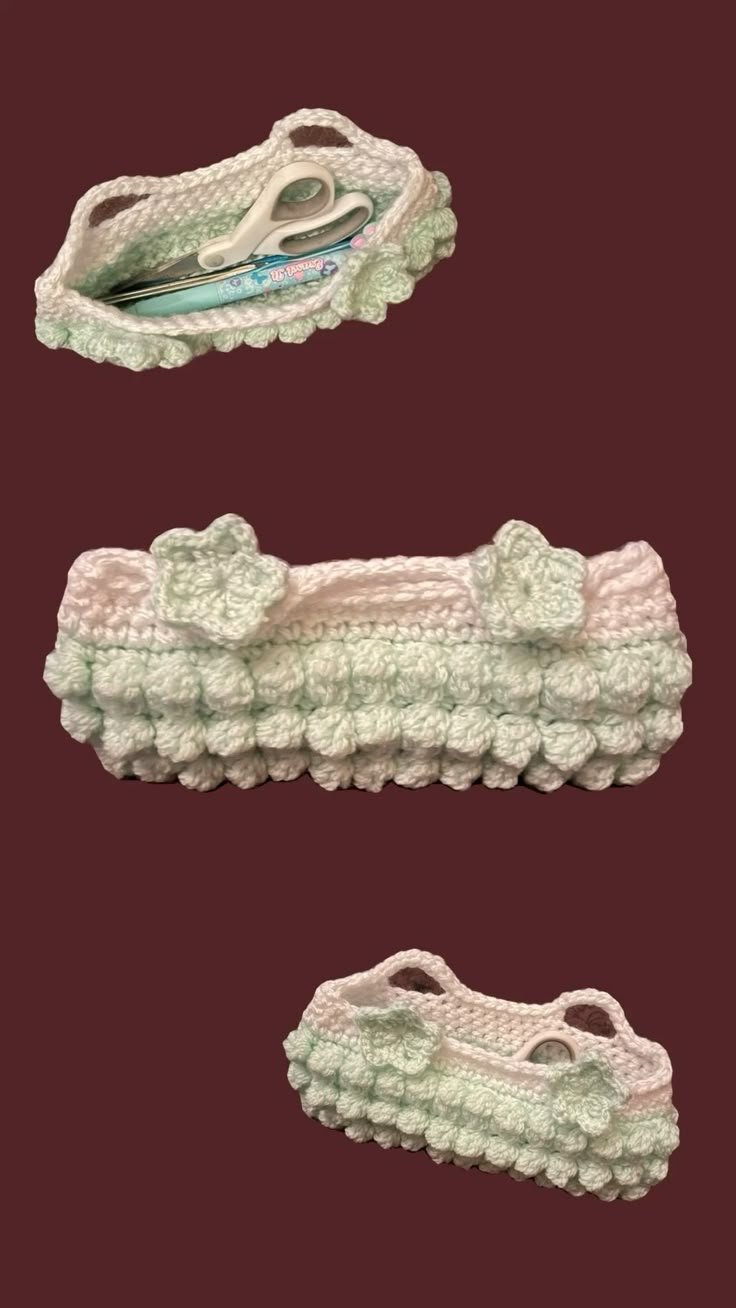
A finished ribbed crochet case folded beside yarn and scissors
Pinterest Title: Soft Crochet Case Tutorial
Pinterest Description: Make a gentle crochet case with simple rows and a useful everyday shape. A calm project for quiet evenings and thoughtful handmade gifts.